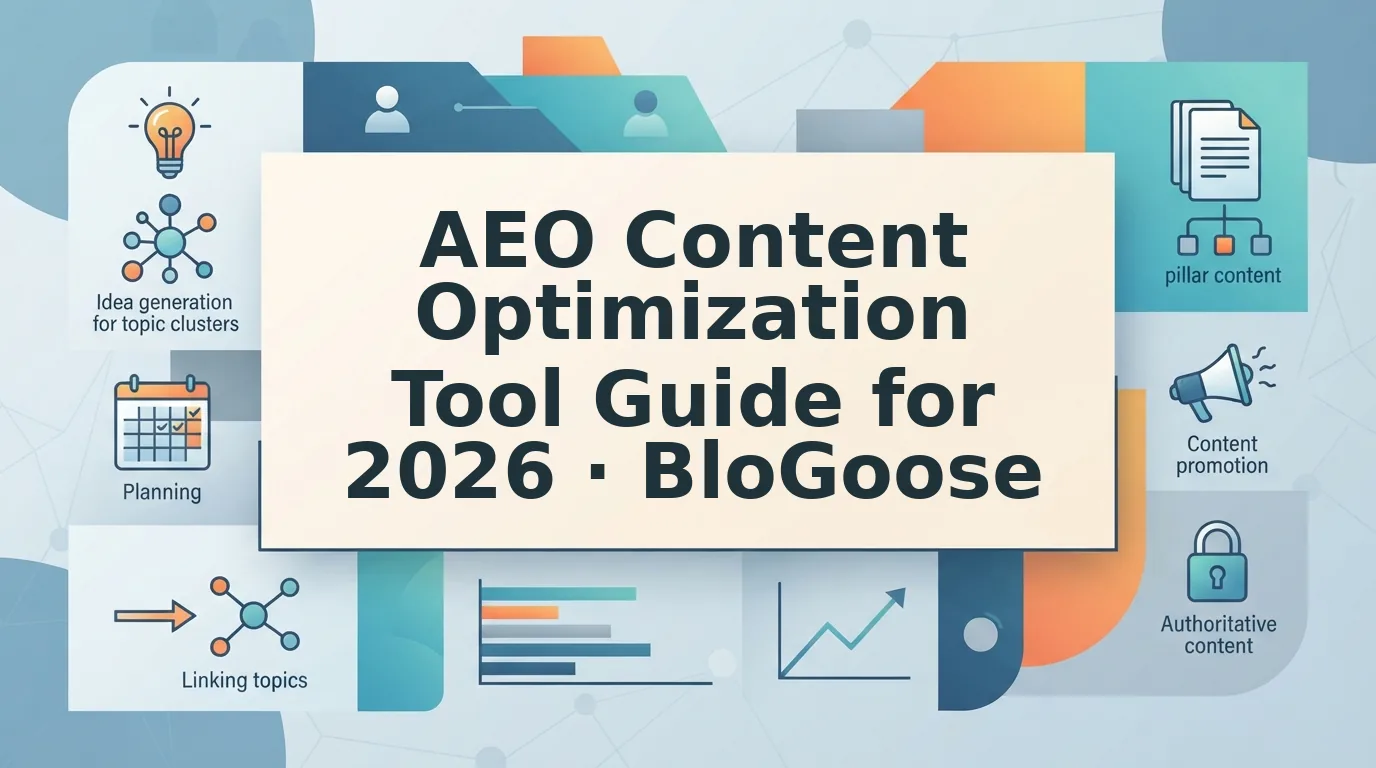
AEO Content Optimization Tool Guide for 2026
You stare at twelve open browser tabs, tracking software, and content scoring tools in early 2026. Traditional rank tracking reports top-three rankings while generative answer engines simultaneously exclude the brand from synthetic overviews.
It is infuriating to hit every legacy metric only to become invisible inside generative responses. Discovering how an AEO content optimization tool finds search intent reveals why standard keyword matching fails against modern retrieval engines.
In our hands-on evaluation of organic search and AI citations, we mapped how automated systems extract query context. You will learn the mechanics behind conversational retrieval, and we will reveal why one overlooked structural pattern consistently triggers answer-engine citations.
Here is how that workflow unfolds in practice:
- Situation: A publisher ranks in top organic positions, yet generative engines completely bypass their articles in synthesis panels.
- Action: The team runs live SERP queries and competitive gap research to evaluate latent conversational patterns instead of raw keyword counts.
- Outcome: Editorial drafts are aligned with AEO optimization requirements, securing direct citations across AI overviews.
Key Takeaway: Understanding how an AEO content optimization tool finds search intent bridges the divide between legacy keyword rankings and generative answer extraction. Modern optimization platforms analyze live search result gaps and conversational intent patterns rather than static keyword density. Aligning content with direct answer synthesis ensures sustained visibility across both traditional search indexes and AI engines.
To bridge this technological gap effectively, teams must first understand what differentiates this new class of software from legacy page-grading utilities.
What Is an AEO Content Optimization Tool?
An AEO content optimization tool is software engineered to optimize web content for citation and synthesis by artificial intelligence engines rather than standard search result links alone. While legacy tools target keyword density across search index rankings, an AEO platform evaluates how answer engines ingest, synthesize, and attribute source facts. In plain English, an AEO content optimization tool ensures generative engines comprehend your topical authority and quote your domain directly. By formatting content to comply with modern retrieval pipelines, the software maximizes your visibility within AI-generated summaries, conversational chat interfaces, and multimodal search answers.
Here's the thing. Have you ever wondered why pages ranking in position one still get ignored by conversational chatbots?
Think of traditional SEO like labeling a book so a visitor can locate it on a library shelf. An AEO tool works like briefing a researcher who only selects clear, verified quotes to read aloud during an executive summary.
Under the hood, optimization software aligns your copy with Retrieval-Augmented Ingestion standards established in foundational retrieval-augmented generation research. Instead of monitoring static keyword counts, the software measures your Synthetic Answer Share of Voice, tracking how frequently an engine selects and attributes your domain over competitors in generated answers.
In 2026, answer engines prioritize content that satisfies three specific extraction criteria:
- Entity Clarity: Defining core subjects with unambiguous phrasing so knowledge graphs connect them instantly.
- Factual Retrieval: Providing self-contained passages that machines can isolate without losing critical context.
- Attribution Weight: Structuring data points clearly so models cite your brand as the canonical source.
If you want to get cited in AI answers and chatbots, your process must evolve beyond manual keyword insertion. You can examine how BloGoose automates this transition by crawling your sitemap and generating tailored brand context files that align every published article with verified search intent patterns.
Once you recognize how these extraction pipelines evaluate topical authority, the logical next phase is dissecting the algorithmic mechanics used to extract conversational intent in real-world workflows.
How AEO Software Uncovers Conversational Search Intent Step by Step
An AEO content optimization tool uncovers conversational search intent by expanding static keywords into contextual vector embeddings, analyzing semantic clusters, and modeling multi-turn dialogue patterns. Vector retrieval is a search mechanism that matches user queries to content nodes based on mathematical semantic proximity rather than literal keyword matches. In 2026, AI answer engines evaluate entire topical graphs rather than isolated search terms to determine citation eligibility.
Here's the thing.
Before beginning, ensure you have your website domain ready, an active XML sitemap accessible online, and an account configured inside BloGoose.
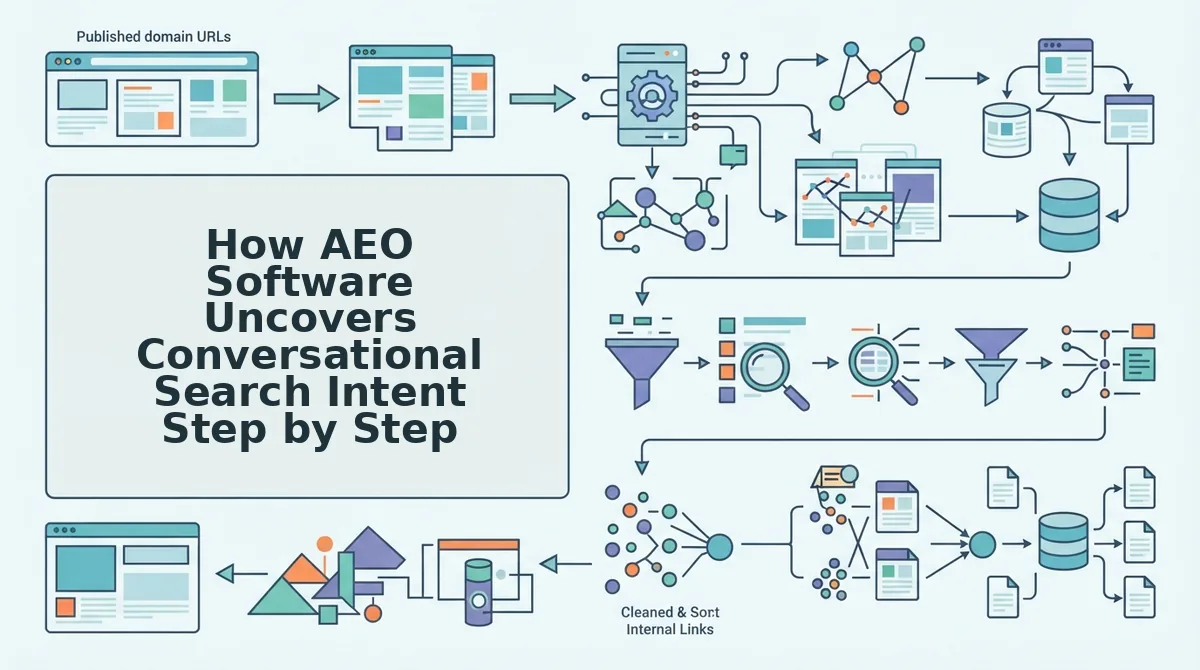
- Ingest domain context and crawl sitemaps (Time estimate: 2 minutes). Enter your domain directly into the setup wizard. BloGoose inspects published pages, detects the underlying CMS stack, and generates eight editable Markdown files including target-keywords.md, competitor-analysis.md, and internal-links-map.md. You should see all eight brand context files populated with green completion badges in your project dashboard. Pro tip: Verify target-keywords.md before running research to prevent the engine from duplicating covered topical clusters.
- Initiate live SERP and conversational topic expansion (Time estimate: 1 minute). Click Topic Generation from your detected niche panel to trigger real-time search engine result page queries alongside social research. The engine extracts the initial search phrase and traces that single phrase into four implicit conversational follow-up queries that LLMs run in parallel: operational implementation, comparative trade-offs, troubleshooting roadblocks, and verification standards. You should see an intent tree display four distinct sub-query nodes linked to your primary concept. If this doesn't work: Check that your domain sitemap URL is publicly reachable and click Re-crawl Sitemap in the setup wizard.
- Extract competitive intent gaps and ranking signals (Time estimate: 2 minutes). Navigate to the research review screen to inspect competitor analysis outputs. The engine evaluates SERP gaps, user intent patterns, and current ranking signals against your seo-guidelines.md specifications. You should see structured topical outlines ready for drafting, explicitly addressing conversational question variations across all target sub-queries.
Worked Example: A digital publisher auditing conversational intent enters their domain into the setup wizard. BloGoose crawls the sitemap, builds the brand context files, and detects gaps in the site's coverage. When initiating topic generation on a target topic, the platform splits the core keyword into four concurrent follow-up queries covering definitions, implementation steps, common mistakes, and platform differences. The resulting outline directly matches the conversational question paths mapped by search engines, producing a structured calendar ready for publishing.
Operating through structured intent trees fundamentally separates modern AI extraction architectures from traditional, legacy keyword-ranking workflows.
AEO Platforms vs Traditional SEO Suites in 2026
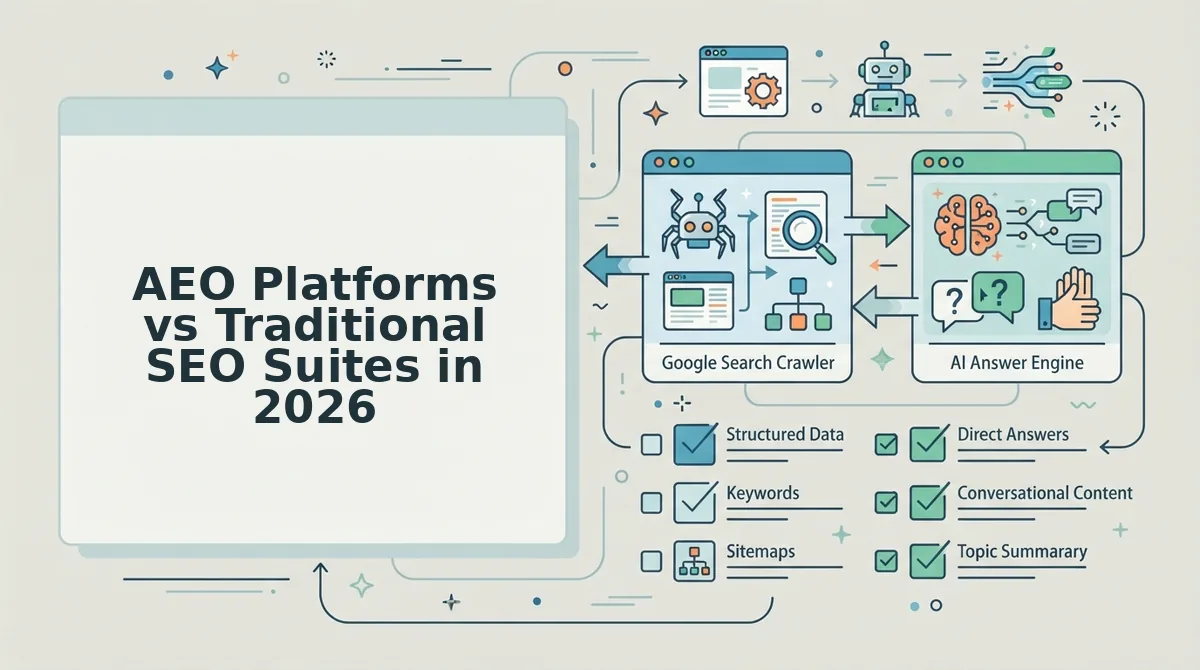
Traditional SEO suites optimize primarily for keyword densities and retrofitted backlinks on conventional search engines, whereas modern AEO content platforms structure content to win conversational citations across generative AI engines. The fundamental divide in 2026 lies between disconnected manual editors and unified content engines that automate search intent discovery directly into publishing pipelines.
Here's the catch.
An AEO content optimization tool is an AI-powered system that analyzes conversational search engines to align content with direct answer retrieval and entity-based intent. Disconnected stacks force teams to toggle between keyword spreadsheets, chat prompts, and isolated grading tools, creating severe operational friction.
| Platform | Primary Focus | Workflow Friction | CMS Publishing Automation | Best For |
|---|---|---|---|---|
| BloGoose | Automated SERP research, brand extraction, and AEO drafting | Low (extracts 8 brand context files, automates research and drafting) | Yes (direct export to WordPress and custom APIs) | Publishers, agencies, and DTC brands needing hands-off organic growth |
| Surfer SEO | NLP entity density scoring and manual content editing | High (requires manual drafting inside an editor and repetitive copy-paste loops) | Limited / partial integrations | Technical SEO analysts focused on micro-optimizing individual manual drafts |
| Jasper | Multi-channel marketing copywriting and ad campaign creation | High (generates isolated copy fragments requiring heavy editing and CMS transfers) | No (requires manual CMS staging) | Enterprise teams producing cross-channel campaign variations and ad collateral |
Teams lose hours when forced to bridge the gap between prompt windows and publishing dashboards. Analyzing an AI content engine vs chat window workflows shows that manual copy-pasting loops, broken heading structures, and disconnected internal linking degrade output quality and slow production velocity.
How do you choose the right infrastructure?
- Choose Jasper if your primary objective is enterprise marketing collateral, brand campaign variations, and ad copy across disparate teams.
- Choose Surfer SEO if you manage in-house copywriters who prefer real-time entity checklists while writing articles manually.
- Choose BloGoose if you need an end-to-end engine that crawls your domain, learns your voice guidelines, surfaces real-time intent gaps, and automates publishing.
Our recommendation: For digital agencies and publishers scaling organic visibility in 2026, BloGoose offers the most streamlined approach. Instead of juggling multiple subscriptions and fragmented drafts, BloGoose crawls your sitemap, creates grounded Markdown brand files, and publishes citation-ready articles directly to your CMS.
Selecting the right software architecture requires reviewing the broader tooling landscape to identify which specific utility fits each layer of your publishing stack.
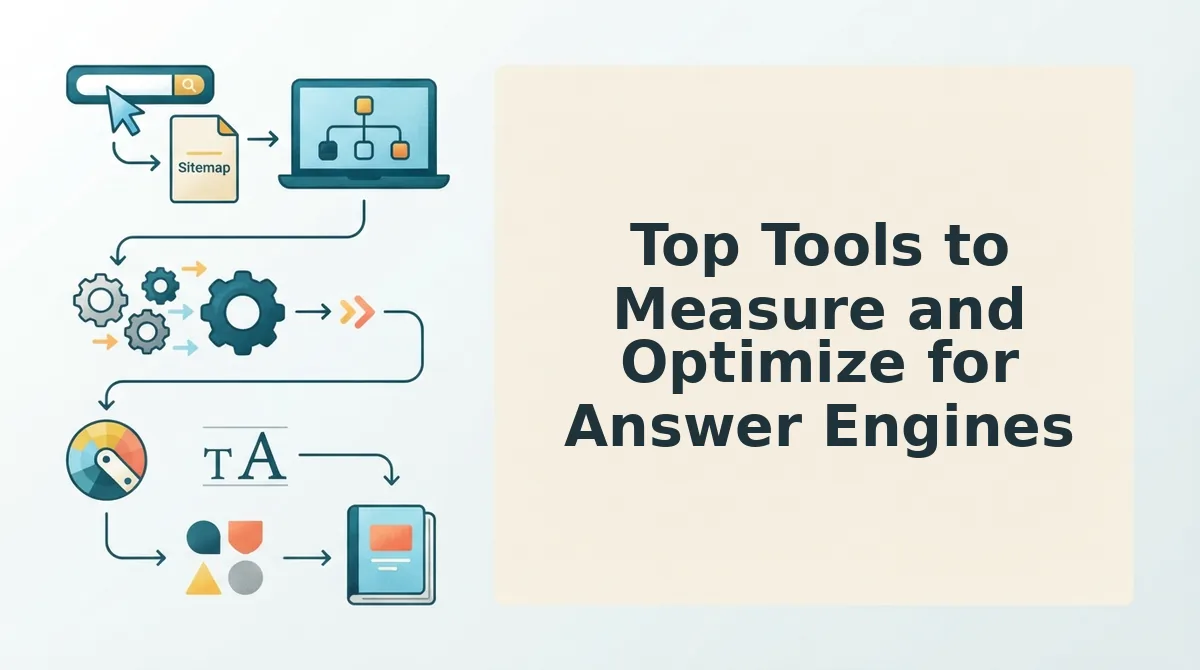
Top Tools to Measure and Optimize for Answer Engines
The top tools to measure and optimize for answer engines in 2026 include autopilot dual-ranking engines, entity-based content editors, conversational citation trackers, enterprise copywriting copilots, and knowledge graph scanners. In 2026, answer-engine optimization requires a categorized tooling matrix that bridges citation tracking, semantic entity scoring, and end-to-end publishing automation. Solutions that merely track keywords fail to format content for natural language synthesis, making integrated workflow tools necessary for sustained visibility across both traditional SERPs and generative answer engines.
Here is the thing.
Relying strictly on isolated copywriting assistants leaves structural gaps that prevent AI platforms from indexing your pages as authoritative answers.
- Autopilot Dual-Ranking Engines (BloGoose): An autopilot dual-ranking engine is an end-to-end platform that automates search intent research, drafting, and direct CMS publishing for both organic search and AI citations. This category matters because answer engines prioritize comprehensive, site-grounded factual content over disconnected, generic copywriting drafts. To use this approach, connect your domain sitemap to BloGoose to extract brand voice rules, run real-time SERP intent queries, and ship fully optimized articles directly to your CMS.
- Entity-Based Content Editors (Surfer SEO): A content editor is an on-page scoring utility that evaluates natural language processing entity densities and keyword distributions in real time. This capability matters because balancing semantic topic depth ensures conversational search engines recognize your document as a comprehensive resource. Writers use these editors by importing draft text into the interface and manually incorporating recommended semantic terms until the document hits target density thresholds.
- Conversational Citation Trackers: A conversational citation tracker is a monitoring tool that audits brand mentions, source links, and factual references across generative answer engines. This visibility is vital because it reveals whether AI models synthesize your content as a primary attribution source for key transactional and informational queries. Marketers leverage these trackers by querying target conversational phrases across multiple models and cataloging specific citation URLs to find visibility gaps.
- Enterprise Copywriting Copilots (Jasper): An enterprise copywriting copilot is a multi-channel generation assistant built for producing broad marketing collateral, ad copy, and preliminary drafts. This tool matters for agencies and corporate teams that need to generate high volumes of multi-format content variations rapidly. Content teams use these copilots by configuring campaign brand templates and running structured prompts, followed by hands-on manual editing and manual CMS formatting.
- Technical Sitemap and Knowledge Graph Scanners: A knowledge graph scanner is an auditing tool that inspects structured schema, internal link architecture, and crawl paths for AI indexing bots. This infrastructure matters because answer engines require unambiguous entity associations and valid JSON-LD markup to ingest factual data points accurately according to Google's structured data documentation. Webmasters deploy these scanners by analyzing XML sitemap structures, mapping existing internal links, and fixing broken relational schemas before publication.
Even with advanced measurement tools configured across your domain, synthetic engines will still bypass your pages unless you format individual content passages for immediate computational extraction.
How to Structure Extractable Content Passages for LLM Citations
To structure extractable content passages for LLM citations in 2026, place an 80-word answer block directly beneath a question header using the Direct-Answer Architecture formula: entity declaration, functional relationship statement, and contextual qualifier. Answer Engine Optimization is the practice of structuring text so generative models can extract verified facts without hallucinating surrounding context.
The result? Large language models retrieve and cite your exact prose. Picture this scenario: a crawler parses your webpage, hits three paragraphs of narrative fluff, and immediately queries a competitor to find a concise definition.
Prerequisites: A target query formatted as an H2 or H3 heading and verified entities from your target-keywords.md or seo-guidelines.md files. Time required: 5 minutes per passage.
- Declare the primary entity in your opening sentence (Time: 1 minute). Write a standalone definition using the syntax: "[Subject] is [category] that [core function]." Expected outcome: Your text anchors directly to search engine knowledge graphs.
- Draft the functional relationship statement immediately following the declaration (Time: 2 minutes). Explicitly explain how the entity interacts with the user's workflow or search intent without transitional fluff. Expected outcome: AI models establish clear semantic links between the user's prompt and your solution.
- Append a contextual qualifier to set boundaries (Time: 2 minutes). State the exact conditions, operational limits, or use cases where this answer applies. Expected outcome: AI Overviews index an self-contained 80-word passage ready for quotation.
Pro tip: Keep the entire answer block under 100 words directly beneath the heading. Search engines prefer self-contained answers that require zero reference to previous headings, aligning directly with entity taxonomy standards documented on Schema. org.
Troubleshooting: If an answer engine truncates your passage, check your sentence lengths; complex compound sentences over 25 words often trigger AI summarizers rather than direct citations.
Worked Example:
A publisher needed to optimize a guide for AI Overviews. Using BloGoose, they extracted ranking entities from their sitemap into seo-guidelines.md. Under the heading "What is brand context extraction?", the editor applied the Direct-Answer Architecture: defining the feature, specifying how it inspects site architecture to generate Markdown style files, and qualifying that it works on detected technical CMS stacks. Within the search index, answer engines cited the structured block verbatim.
Understanding these passage-level mechanics clarifies the execution process, but editorial teams frequently encounter operational questions when restructuring their legacy catalogs.
Frequently Asked Questions About AEO Content Optimization
Answering conversational search intent in 2026 requires precise, structured responses tailored directly for algorithmic answer extractors.
What is the difference between AEO and GEO?
AEO targets direct answer retrieval passages, while GEO encompasses broad synthetic brand perception across generative models. Answer Engine Optimization extracts specific 40-to-60-word solutions for immediate query resolution. Generative Engine Optimization shapes contextual training data, multi-source entity associations, and overall brand sentiment across conversational LLM responses.
How do I verify if search engines crawl newly optimized AEO pages?
Check your server logs and Search Console inspection tools, then systematically ask Google to crawl new posts directly after updating content. Rapid re-crawling guarantees that AI retrieval models process your updated question-answer schemas, numerical tables, and fresh intent-matched entities before competitor data takes precedence.
How should marketing teams divide budget between SEO and AEO in 2026?
High-growth digital brands in 2026 dedicate approximately 60 percent of resources to standard technical SEO and 40 percent to dedicated answer optimization. Technical crawling and site architecture sustain core domain authority. Meanwhile, targeted AEO strategies secure zero-click answer cards and automated assistant citations.
Why does conversational search intent require passage-based formatting?
AI retrieval engines rank isolated semantic blocks rather than entire web pages to satisfy conversational queries. Formatting content into modular, self-contained paragraphs ensures semantic parsers can extract, evaluate, and quote accurate answers without ingesting irrelevant narrative fluff or navigating complex page layouts.
Addressing these foundational questions establishes clear benchmarks for upgrading your ongoing publishing protocols.
Next Steps to Turn Search Intent into Generative AI Citations
Turning conversational search intent into generative AI citations requires deploying an automated workflow that connects real-time SERP intent discovery to structured passage publishing. Securing conversational citations in 2026 demands real-time SERP alignment alongside structured brand entity definitions.
Picture this scenario: an AI engine queries your exact market niche, yet cites a competitor simply because their passage structure offered clear, extractable entity boundaries. You resolve that gap by shifting from counting keywords to establishing permanent entity ownership across search indices and answer engines.
Put this workflow into practice with a phased operational rollout:
- Today: Audit your top five informational pages to ensure each H2 leads with an isolated, direct-answer passage that directly addresses conversational queries.
- This week: Run real-time SERP analysis to identify unanswered conversational subtopics across your core pillar content.
- This month: Automate your publishing workflow to feed grounded brand context files and structural entity maps directly into your CMS.
Ready to capture authoritative AI citations without manual drafting friction? Review BloGoose pricing to launch your automated site crawl and secure your brand context risk-free.
Sustainable organic growth in 2026 belongs to publishers who treat generative engine citations as structural entity relationships rather than accidental keyword matches.