
Why an AI content engine with search indexing ranks new posts
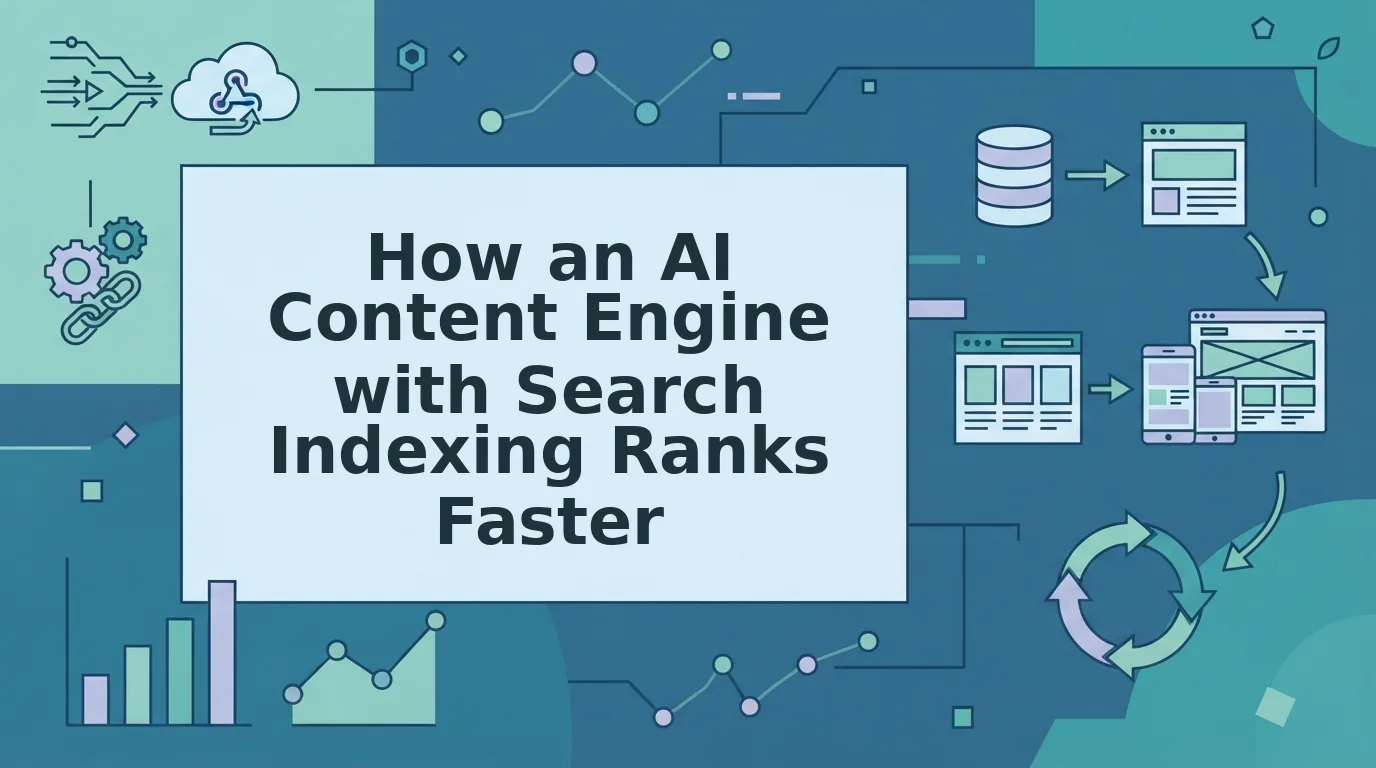
You hit publish on twenty comprehensive articles, check your analytics days later, and find they sit undiscovered in Search Console queues. Traditional XML sitemap discovery cycles take up to 19 days on average for unlinked or non-priority URLs on standard domains. Deploying an AI content engine with search indexing closes that visibility gap by pairing structured production directly with immediate crawl requests.
Managing separate tools for topic research, writing prompts, and manual submission drains critical distribution momentum. You will discover how automated publishing pipelines bypass standard discovery delays, and which technical crawl signal operators frequently overlook when launching content clusters. This guidance focuses strictly on organic search and citation performance across WordPress and custom API environments.
Consider this automated publishing workflow:
- Situation: A content publisher needs regular topic coverage without manual prompt engineering or detached spreadsheets.
- Action: An AI SEO content engine extracts brand voice rules from the domain, generates factual drafts from live SERP queries, and triggers indexing notifications upon publication.
- Outcome: Search engines receive direct crawl notifications the moment new URLs enter the CMS, bypassing passive discovery delays.
Auditing your existing publishing workflow to inspect whether CMS updates trigger instant indexing helps prevent freshly published assets from idling.
Understanding the mechanics begins with defining this combined architecture.
What Is an AI Content Engine with Search Indexing?
An AI content engine with search indexing is an automated publishing architecture that turns site data into rank-ready articles and programmatically notifies search engines via indexing APIs the moment posts go live. An AI content engine is a software platform that unifies content generation, search optimization, and automated CMS publishing. Instead of treating drafting and technical search engine notification as disconnected manual tasks, this integrated workflow executes live SERP research, on-brand writing, internal linking, and CMS publishing in one continuous operation. It eliminates the latency between creation and crawl discovery so search bots evaluate URLs immediately.
Most publishing teams assume that producing drafts faster with standalone generative AI models automatically accelerates search traffic. It does not. Drafting articles in disconnected chat tools simply creates a backlog of invisible website inventory. Think of isolated AI drafting like printing newspapers and storing them inside a locked basement; an engine with search indexing prints the pages and dispatches the delivery fleet simultaneously.
At an operational level, an automated SEO content platform coordinates research, drafting, and distribution through progressive technical layers:
- Context ingestion: The system crawls your domain sitemap, evaluates existing pages, and establishes editable Markdown context files to anchor voice and keyword parameters.
- Live research and drafting: The engine inspects real-time SERP intent, generates structured sections, and injects relevant internal links directly into the copy.
- Programmatic signaling: The platform publishes the finished post to your CMS stack and immediately pings search engines via automated indexing API endpoints.
When operators write in standalone tools and rely entirely on passive search engine crawls, bots can take weeks to register fresh topic clusters. Unifying creation with programmatic indexing allows digital publishers and founders to extract brand context from existing sitemaps, ship finished articles directly to WordPress or custom APIs, and secure immediate bot evaluation while topic competition remains low.
Yet even the most efficient automated pipeline fails if foundational site infrastructure blocks search bots from processing submitted URLs.
Prerequisites and Why New Posts Get Trapped in Crawl Limbo
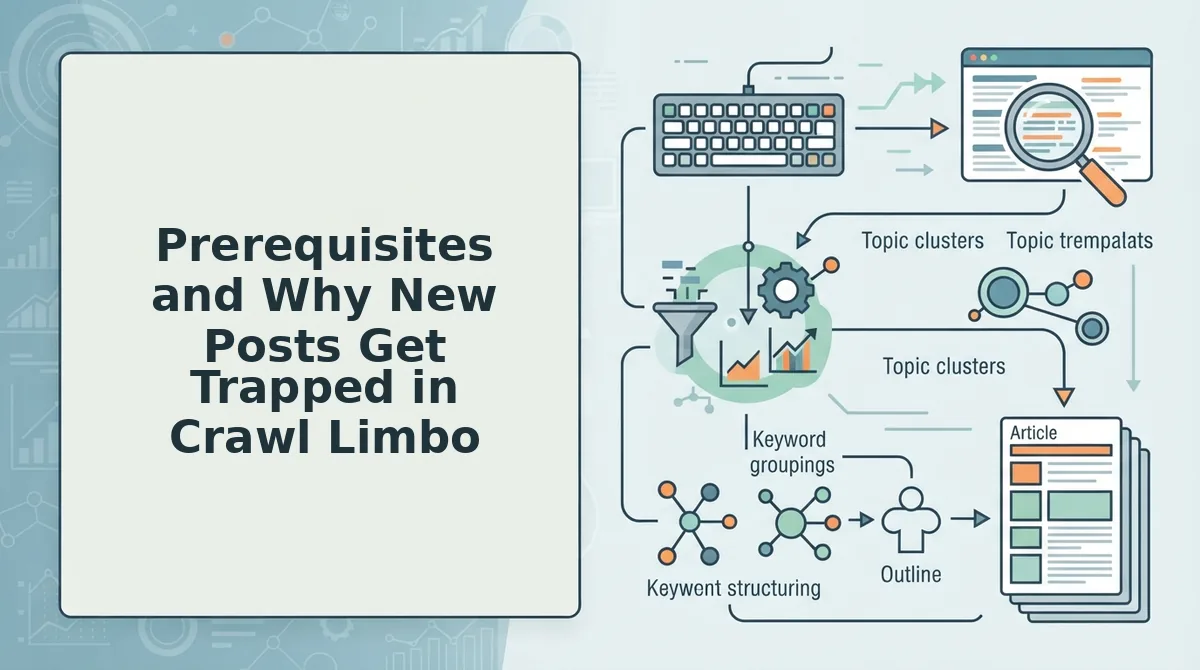
New posts get trapped in crawl limbo when search engine bots discover URLs but deprioritize rendering them due to weak structural trust signals and low perceived content uniqueness. Without prerequisite architecture in place, submission endpoints simply queue pages into Google Search Console's "Discovered - currently not indexed" status instead of serving them to searchers.
Why do newly published URLs stall before ever reaching the search engine results page? Crawl limbo is a holding pattern where web crawlers log an address from an XML feed but allocate no processing resources to index its content. According to SE Ranking research, automated publishing sprees regularly collapse in indexing rates when articles lack foundational domain context and factual anchors. Pushing volume without structural readiness burns resources and signals low topical authority.
- Missing Brand Context Grounding: Unanchored drafts lack domain-specific entity relationships and read like generic training data. Search evaluators flag this uniform text as redundant filler, stalling indexing across the entire batch. Resolve this by compiling explicit brand markdown rules to anchor every post to your unique domain perspective before drafting.
- Absent Topical Information Gain: Content repeating SERP consensus verbatim offers zero incremental utility to users. Search engines detect identical semantic footprints across competing pages and deprioritize rendering copies that add no novel insight. Inject proprietary data anchors, original comparisons, or direct product workflows to pass algorithmic information-gain thresholds.
- Deficient Internal Link Mapping: Orphaned posts lack incoming contextual links to validate their structural relevance within a content cluster. Crawlers rely on existing authority pathways to determine how urgent a new page is relative to your core topics. Connect every drafted URL immediately to established parent pillars and sibling guides using a pre-planned internal links map.
- Overloaded Host Crawl Budget: Triggering rapid-fire crawl requests on unoptimized servers leads search engines to throttle crawler frequency. If database response times spike or asset delivery slows, bot schedulers protect the host by deferring page evaluation. Preserve your site's technical crawl budget by caching dynamic assets and staggering bulk publications across structured intervals.
- Broken Canonical and Sitemap Parity: Inconsistencies between declared canonical tags and submitted sitemap URLs cause conflicting crawl directives. Bots encounter redirect chains or contradictory self-referencing tags and abandon the indexing pipeline to prevent duplicate indexing loops. Validate your server headers, XML sitemap feeds, and CMS metadata so that every published URL resolves cleanly to an identical canonical target.
Fixing these prerequisite structural gaps prepares your CMS for a reliable submission workflow.
How to Automate Search Indexing Pipelines Step by Step
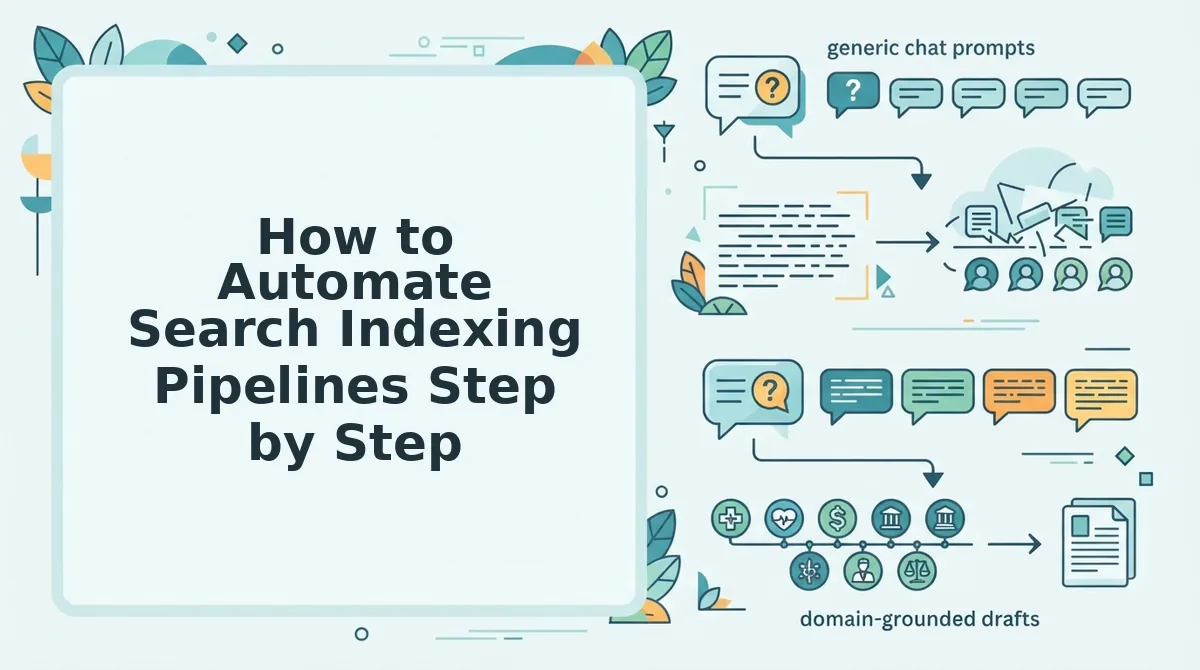
Automating a search indexing pipeline requires linking your content publishing hook directly to search engine submission endpoints via authenticated service accounts and webhook payloads. This process eliminates standard XML sitemap crawl lag by notifying search bots the exact second an article deploys.
Before you begin, ensure you have administrative access to your CMS, verified site ownership in Google Search Console, and an active Google Cloud Platform project. You will need 15 minutes to complete this initial setup.
Picture this scenario: you ship a time-sensitive teardown to your production blog, but search engines take days to locate your sitemap updates, leaving your content invisible to early queries. Setting up automated endpoints solves this issue permanently.
- Create a service account in the Google Cloud Console by navigating to IAM & Admin, selecting Service Accounts, and clicking Create Service Account. You should see a unique client email address generated once you finish the wizard.
- Generate a private JSON key file by clicking the Actions menu on your new service account, selecting Manage Keys, and clicking Add Key to download the credential file. You will see a prompt confirming the JSON download to your local drive.
- Grant Search Console owner permissions by opening Google Search Console, clicking Settings, selecting Users and Permissions, and adding your service account client email as an Owner. The console should list the service account with full administrative rights. Review our walkthrough on how to ask google to crawl new posts via indexing api for complete credential permissions.
- Configure IndexNow API keys by generating an API key string in your webmaster dashboard and hosting the corresponding verification text file at your domain root. Navigating to the key URL in your browser should return the plain text key value.
- Deploy automated JSON Web Token handshake protocols that transmit publish webhooks directly to index queues within 120 seconds of CMS render. Your publishing endpoint will receive an immediate HTTP 200 response acknowledging the submission.
A search indexing pipeline is an automated event-driven protocol that transmits newly published URLs straight to search engines without waiting for periodic sitemap crawls. Automating this delivery mechanism guarantees that newly published assets get crawled on demand.
Consider an editorial workflow where a publisher generates a cluster of articles. Instead of logging into external dashboards to trigger manual inspect-URL requests, the CMS runs an automated publishing hook upon saving. The integration generates a signed token, contacts Google and IndexNow endpoints, and triggers search bot discovery within two minutes of live deployment.
If you prefer an all-in-one setup that bypasses tool sprawl, BloGoose functions as an autopilot SEO content engine that generates rank-ready articles and pushes them directly to WordPress or custom APIs with search indexing pipelines built in.
Once raw crawling and indexing are secured, the operational challenge shifts to how search engines interpret your text versus how emerging platforms extract it.
Search Engine Crawling vs AI Answer Engine Retrieval
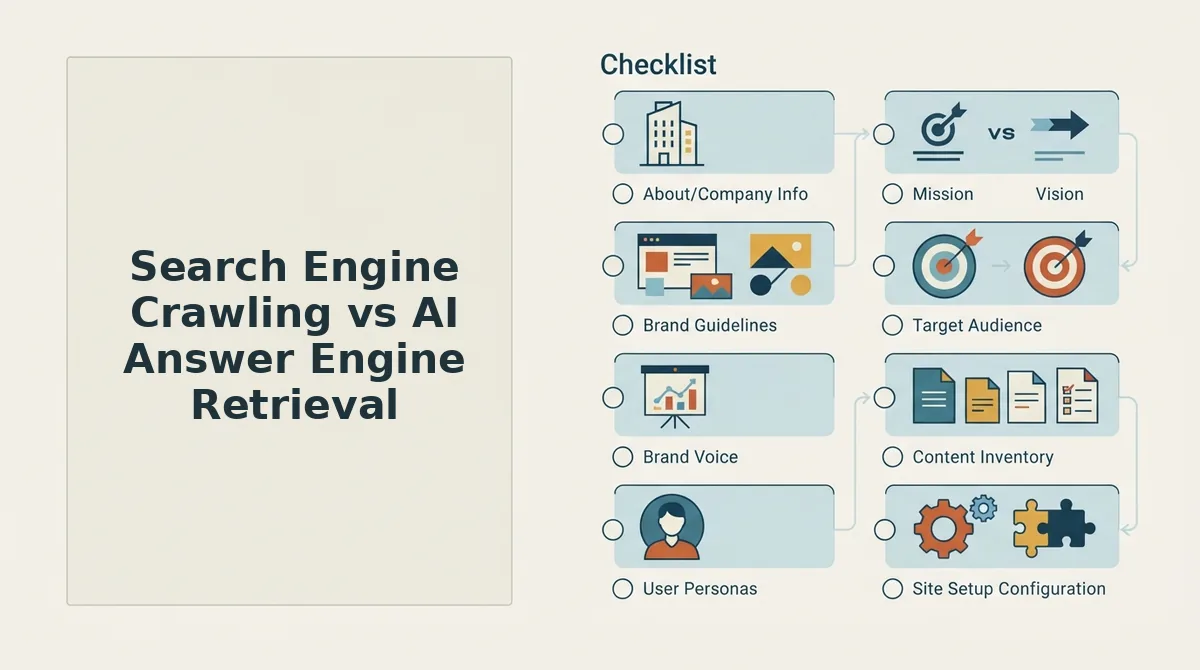
Search engine crawling discovers and indexes web pages through link graphs and XML sitemaps, whereas AI answer engine retrieval parses structured entity definitions to synthesize contextual answers during live queries. Ranking at the top of organic search results does not guarantee citation inside generative AI responses.
Traditional web spiders render entire document structures to calculate topical authority, keyword density, and backlink distribution across a site. Answer Engine Optimization is the process of structuring digital text so retrieval-augmented generation systems can extract factual answers without processing extraneous page noise. If a bot cannot extract a standalone answer in under two seconds, the engine skips to another source.
AI engines evaluate content differently than legacy search crawlers. While Googlebot requires clean canonical tags, sitemaps, and managed crawl budgets to store documents in its index, answer engines isolate modular passages that resolve specific conversational prompts. Direct-answer definition blocks and schema tables yield up to 3x higher citation frequency in AI Overviews compared to unstructured narrative paragraphs. When content lacks clear schema or concise definitions, a traditional crawler may index the URL, but an answer engine will discard the passage during semantic reranking.
How do the underlying technical requirements actually diverge across these environments?
| System | Primary Mechanism | Ingestion Requirement | Best For |
|---|---|---|---|
| Traditional Search Engine (Googlebot) | XML sitemap discovery and backlink graphs | Clean crawl budget, fast server response, standard HTML tags | Solo operators focused purely on high-volume organic clicks |
| Standalone LLM Scrapers | Mass static web crawls and tokenization | High factual density and open robots.txt permissions | Publishers targeting foundational model training data |
| Hybrid Answer Engines (AI Overviews, Perplexity) | Live RAG retrieval from search indices | Direct-answer headings, structured tables, schema markup | Growth leads targeting zero-click citations and organic rankings |
Optimization platforms like Surfer SEO excel at tuning entity densities for traditional SERPs, but they leave editorial teams to format extraction snippets manually. Enterprise writing copilots like Jasper assist with multi-channel copywriting, yet they ignore search indexing mechanics and passage retrieval syntax entirely.
Choose traditional crawling optimization if your acquisition channel relies exclusively on standard SERP clicks and navigational queries. Choose answer engine retrieval formatting if your audience uses conversational chatbots to evaluate tools, solve technical problems, or discover service providers.
Our recommendation is to deploy a dual-index architecture using an AEO content optimization tool that writes for human search intent while structuring tabular data and direct-answer definitions for automated machine ingestion.
Once both systems can access your articles, tracking the speed of indexation reveals whether your pipeline actually works.
How to Verify Indexing and Monitor Ranking Velocity
To verify indexing and monitor ranking velocity, cross-reference server access logs for crawler hits, run live URL inspections in Google Search Console, and track position movements for target search terms. This multi-point check confirms that programmatic push requests prompted an immediate crawl rather than leaving the page stranded in sitemap queues.
Before beginning, confirm you have administrative access to your server access logs or CDN edge logs, a verified Search Console property, and a deployed pipeline aligned with the Google indexing documentation.
- Filter server access logs for crawler requests. Open your raw access logs or CDN analytics console and search for Googlebot user-agent entries targeting your published slug within 4 to 24 hours of publication. Expected outcome: You should see HTTP 200 response codes confirming Googlebot visited and fetched the rendered HTML payload.
- Inspect the URL in Google Search Console. Paste the published URL into the top search bar in Search Console and click Test Live URL (takes 1 to 2 minutes). Expected outcome: The inspection report displays a green checkmark stating the URL is available to Google and eligible for indexation.
- Measure initial SERP position velocity. Query your exact primary target keywords in search results 24 to 48 hours post-crawl to determine where the page initially enters search engine result pages. Expected outcome: You should see the page populate in search results, confirming that live indexing took place without multi-week discovery lags.
Ranking velocity is the rate at which a newly discovered URL registers an initial search position and advances through search result pages.
Consider a team publishing a new technical post through an automated CMS workflow. Instead of waiting weeks for standard XML sitemap discovery, the team monitors server logs and confirms Googlebot crawled the post 6 hours after API notification. A subsequent live URL inspection confirms clean indexation with valid metadata, and the article logs its first recorded search placement within 48 hours. Programmatic indexing eliminated the traditional crawl backlog.
Review the technical answers below to resolve common edge cases with search engine crawling and index status.
Frequently Asked Questions About Automated Search Indexing
Automated search indexing accelerates content discovery by programmatically dispatching new URLs to search crawlers the instant your CMS publishes them.
How does the Google Indexing API handle daily quota allocations?
Google assigns a standard baseline quota of 200 Indexing API publish requests per day per project. Search operators confirm this allocation comfortably covers standard blog publishing cadences. Multi-site publishers managing higher volumes can request quota extensions or schedule staggered batches across Cloud Console service accounts without triggering crawl throttles.
Why do programmatic publications lose rankings after fast indexing?
Programmatic pages lose positions when they pass initial crawl queues but fail secondary quality audits. Operators observe rankings drop within days if posts lack original entity depth, exhibit generic phrasing, or miss proper internal linking structures necessary to signal genuine subject authority during deeper algorithmic evaluation passes.
Can automated indexing pipelines cause search engine penalties?
Automated indexing pipelines do not cause search penalties when dispatching compliant content. Search algorithms evaluate page value separately from the submission mechanism:
- Submission method: Direct API calls remain entirely compliant with search protocols.
- Quality threshold: Penalties apply strictly to thin, unedited, or duplicated programmatic text.
How fast do search engines crawl posts submitted via API?
Search engines typically fetch API-submitted URLs within two to 24 hours of notification. In contrast to traditional XML sitemaps that wait for scheduled bot revisits, direct push pings alert the crawl scheduler immediately, helping time-sensitive blog posts secure early visibility and citation eligibility in AI answer engines.
Deploying these capabilities across your domain requires connecting CMS endpoints with automated crawl pipelines.
Next Steps to Launch an Autopilot Content Indexing Workflow
Transitioning from fragmented drafting tools to an automated indexing engine requires connecting your CMS credentials and triggering direct crawl requests at publish time.
Picture publishing an entire topic cluster on Monday and finding your URLs indexed and cited in AI overviews by Tuesday morning without touching a manual submission console. That resolves the crawl limbo bottleneck: search bots no longer need to stumble across buried URLs organically. Eliminating manual CMS upload sprawl saves editorial teams an estimated 8 to 12 hours per week while establishing faster SERP topical authority.
Take these concrete steps to activate your pipeline:
- Drop your website domain into the BloGoose setup wizard to automatically inspect your XML sitemap and generate your eight brand context files.
- Connect your WordPress or custom API credentials to authorize direct post delivery alongside automated search indexing pings.
Real organic search velocity is achieved when automated content creation and immediate search indexing operate as a single continuous loop rather than disconnected manual chores.