
Byword vs Direct CMS Publishing Engines for Blogs
Every week, content teams burn 4-6 hours per article on the same unglamorous loop: export the draft, reformat it, hunt for images, upload to WordPress, fix the broken embeds, repeat. The writing was never the bottleneck, the publishing was. If you've ever stared at a folder of finished AI drafts that never made it live, you already know the real question behind Byword vs direct CMS publishing engines: does your tool stop at the draft, or does it carry the article across the finish line?
You're right to be frustrated. Bulk generation tools promise scale but quietly hand you a manual assembly line at the end of every batch. This guide will show you exactly where Byword's workflow ends, what direct CMS publishing engines like BloGoose do differently, and which one fits your publishing reality. Here's the roadmap: Byword's strengths and its export gap, the mechanics of direct CMS publishing, and a feature-by-feature comparison. One finding may surprise you, the tool that wins for pure volume is often the wrong tool for actually getting posts live.
What Byword Does Well (and Where It Stops)
Byword is an AI article generation tool built for high-volume, SEO-structured drafts. It excels at turning a list of keywords into long-form articles quickly, but it stops at the draft, leaving export, formatting, image sourcing, and CMS upload as manual steps.
Think of Byword like a high-output printing press that produces thousands of finished pages per hour, but drops them all in a pile on the floor. Someone still has to collate, bind, and shelve every single one. The printing is excellent. The shelving is entirely on you.
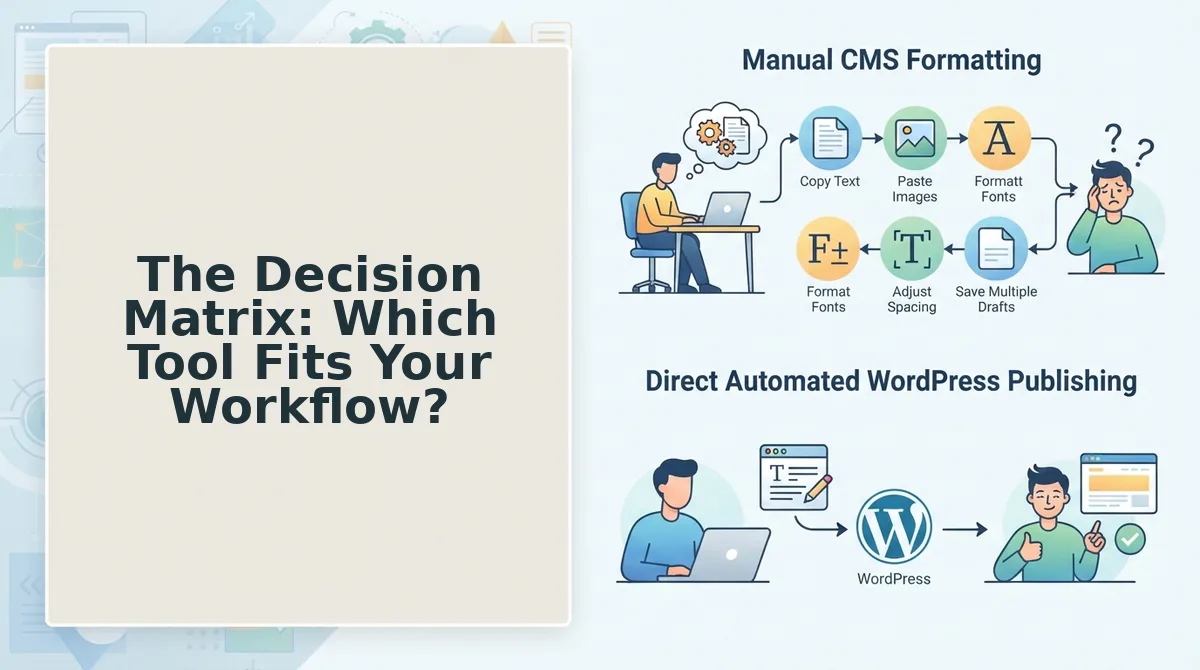
Here's the workflow in practice. You upload a keyword list or topic cluster. Byword generates articles in bulk, applying your chosen tone and structure. So far, so efficient. But then the export gap appears: each draft must be copied out, pasted into your CMS, reformatted for your theme, checked for heading hierarchy, and paired with images you source separately. Multiply that by 50 articles and the "autopilot" feeling evaporates.
The export gap is the manual sequence of copy-paste, re-formatting, and image uploads required after every AI draft before it can go live. Users consistently describe this as the most tedious part of AI-assisted publishing, and it's the exact step Byword doesn't automate.
None of this makes Byword a bad tool. If your bottleneck is idea-to-draft speed and you have a VA or editor who handles publishing, Byword's bulk generation is genuinely strong. The limitation is architectural: it was designed to produce text, not to operate your CMS. For teams whose bottleneck is draft-to-live, that distinction matters more than raw word count.
What Direct CMS Publishing Engines Do Differently
A direct CMS publishing engine is an AI content tool that crawls your site, extracts brand context, generates articles and images, and pushes finished posts to WordPress or custom APIs without manual export. The entire draft-to-live pipeline happens inside one system.
Think of it like a self-checkout grocery lane versus a checkout clerk. Byword hands you the groceries; a direct CMS publishing engine bags them, scans them, and puts the receipt in your hand. You walk out with the same items, but one path removes every repetitive step between selection and completion.
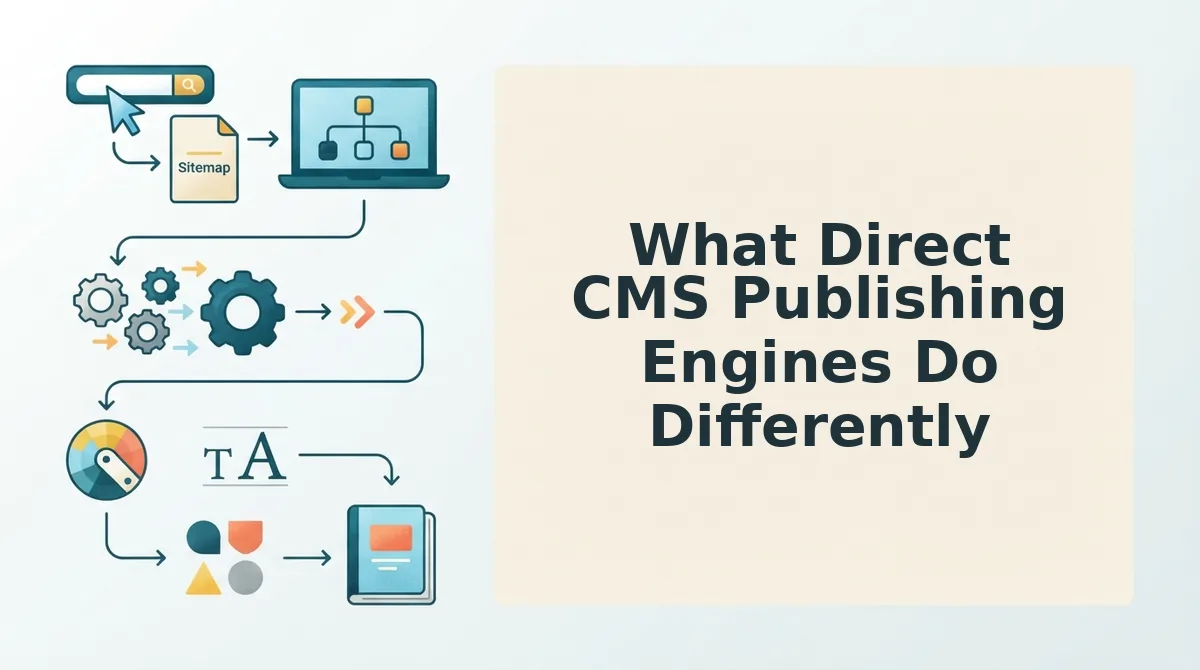
The workflow starts with a sitemap drop. BloGoose, for example, crawls your XML sitemap, inspects your published pages, and extracts brand voice rules into 8 Markdown context files. Those files become the guardrails for every future article, tone, terminology, formatting preferences, and audience assumptions are baked in automatically. Next, the engine generates articles and images together, so no separate image sourcing step exists. Finally, it pushes the finished post directly to WordPress or a custom API, already formatted for your theme.
For a publisher running a 200-page content site, the difference is structural. A bulk generator produces 200 drafts that sit in a queue. A direct CMS publishing engine produces 200 live, indexed posts, because the publishing step was never a separate task. That's the core distinction: one tool optimizes for draft throughput, the other for published output.
The feature-by-feature breakdown next shows exactly where these two approaches diverge.
Feature-by-Feature: Byword vs BloGoose
Byword and BloGoose both produce AI-written articles, but they diverge sharply on brand voice extraction, image generation, and what happens after the draft is finished. Byword is a strong drafting tool that stops at export; BloGoose is a direct CMS publishing engine that carries content through to indexing.
Byword's core strength is its clean, fast drafting experience. Users configure tone manually through prompts and settings, then generate articles at scale. That works well for writers who already have a polished publishing workflow and just need raw material. What Byword does not do is crawl your site to learn how you actually write, generate images inline, or push posts to WordPress automatically.
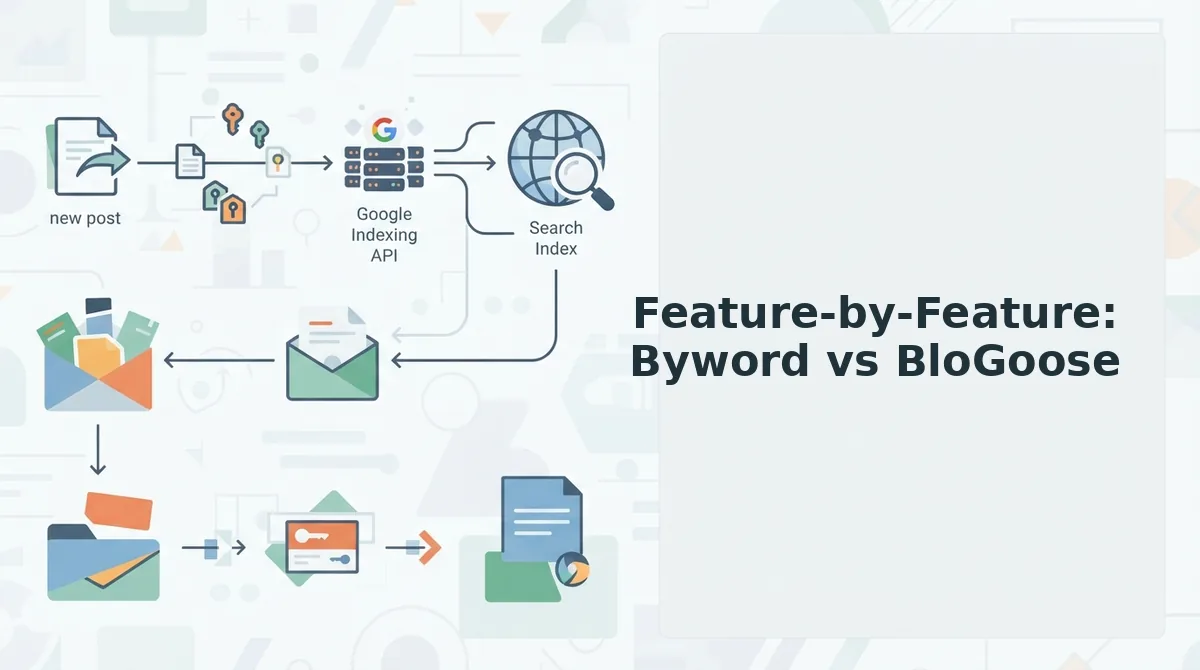
BloGoose takes a different path. During setup, it crawls your sitemap and published pages to extract brand voice rules automatically, no manual tone configuration required. It then generates images inline as part of the article, publishes directly to your CMS, and requests indexing through the Google Indexing API immediately after the post goes live. Byword has no equivalent post-publish indexing assistance.
| Feature | Byword | BloGoose |
|---|---|---|
| Brand voice extraction | Manual tone configuration via prompts | Automatic extraction from sitemap crawl |
| Image generation | Not included; requires separate tool or subscription | Generated inline with each article |
| Publishing | Exports drafts for manual upload | Publishes directly to WordPress or custom API |
| Post-publish indexing | None | Google Indexing API integration for immediate crawl requests |
| Content calendar | Not a core focus | Pillar-based calendar built from site structure |
| AEO content optimization | Limited; focuses on traditional SEO drafts | Built-in optimization for AI chatbot citations |
Best for solo writers and lean teams who already have a publishing stack: Byword. If you need high-volume drafts and are comfortable uploading, formatting, and adding images yourself, Byword's drafting speed is genuinely useful.
Best for founders, agencies, and publishers who want the full loop automated: BloGoose. If you want brand-accurate articles, inline images, direct CMS publishing, and indexing requests in one tool, a direct publishing engine removes the manual steps Byword leaves behind.
One self-contained answer worth noting: the difference between these tools is not article quality in isolation, it is how much of the publishing chain each one automates. Byword automates drafting. BloGoose automates drafting, brand voice extraction, image generation, publishing, and indexing requests. The right choice depends on whether you want a drafting assistant or an end-to-end publishing engine.
The Decision Matrix: Which Tool Fits Your Workflow?
Choosing between Byword and a direct CMS publishing engine comes down to one question: do you need drafts, or do you need published, indexed articles? Use this decision matrix to self-select based on your actual workflow.
- Choose Byword if you need high-volume drafts and already have a separate publishing workflow. Byword excels at generating many articles quickly when you have a team member or process for uploading, formatting, and adding images manually. It fits operations where drafting is the bottleneck, not publishing.
- Choose a direct CMS publishing engine if you want brand-accurate articles, images, and direct publishing in one tool. A platform like BloGoose extracts your brand voice from a sitemap crawl, generates images inline, and publishes straight to WordPress or your API. It fits teams where the manual loop between draft and live post is the real bottleneck.
- Choose Byword if you prefer to control tone manually per article. Some writers want hands-on control over voice for every piece. Byword's prompt-based tone configuration supports that granular control, even though it requires more setup per project.
- Choose a direct publishing engine if you manage multiple client sites. Agencies benefit from per-site brand context extraction and direct publishing to each client's CMS. BloGoose stores voice rules per domain, so switching between clients does not require reconfiguring tone settings each time.
- Choose Byword if image generation is already handled elsewhere. If you have a designer, a stock photo subscription, or an existing image workflow, Byword's lack of inline image generation is not a dealbreaker. You are already covering that step.
- Choose a direct publishing engine if post-publish indexing speed matters. BloGoose integrates with the Google Indexing API to request crawling immediately after publishing. Byword has no post-publish indexing assistance, so new content waits for natural discovery.
- Remember: bulk generation is a feature, not a strategy. Volume without brand context and direct publishing creates content debt, dozens of drafts sitting in a folder, waiting for manual upload, formatting, and image sourcing. An autopilot SEO content platform closes that loop so volume translates into live, indexed pages, not backlog.
FAQ: Byword vs Direct CMS Publishing Engines
Direct answers to the most common questions readers ask when comparing Byword with direct CMS publishing engines like BloGoose.
Does Byword publish directly to WordPress?
No. Byword exports drafts that require manual upload to WordPress or your CMS. A direct CMS publishing engine like BloGoose publishes finished articles to WordPress or a custom API automatically, with no manual upload step.
Can BloGoose match Byword's bulk generation volume?
BloGoose can generate articles in bulk, but it prioritizes brand-accurate, publish-ready posts over raw volume. The tradeoff is intentional: each article includes extracted brand voice, inline images, and direct publishing, which takes more processing per piece than a draft-only tool.
Which tool is better for agencies managing multiple client sites?
Agencies managing multiple client sites benefit from BloGoose's per-site brand context extraction and direct publishing to each client's CMS. Byword requires manual tone configuration per project, which adds setup time across many domains.
Do I need a separate image tool with Byword?
Yes. Byword does not include image generation, so you need a separate tool or subscription for article images. BloGoose generates images inline as part of each article, eliminating the extra step and cost.
How does post-publish indexing work with each tool?
BloGoose integrates with the Google Indexing API to request crawling immediately after publishing, speeding up indexation. Byword has no post-publish indexing assistance, so new articles rely on natural discovery through sitemaps and internal links.
For teams that want to stop managing drafts and start shipping live, indexed content, the next section covers the verdict.
The Verdict: Stop Drafting, Start Publishing
Byword wins the draft. BloGoose wins the publish. That's the entire gap in one sentence.
If your bottleneck is generating 50 keyword-targeted drafts per week, Byword does that well. But if your bottleneck is getting finished articles live without a manual assembly line, the choice flips. Direct CMS publishing engines exist precisely because drafting was never the hard part, the last mile was.
Here's the contrarian take: more drafts don't compound. More published pages do. A draft sitting in Google Docs earns zero rankings, zero citations, zero compounding traffic. The tool that ships directly to WordPress turns output into an asset the moment it's generated.
Your next move depends on where you're stuck:
- Stuck at volume? Byword's bulk generation is a legitimate fit.
- Stuck at publishing? BloGoose closes the loop with site crawl, brand context extraction, image generation, and direct WordPress publishing, no export, no reformatting, no manual upload.
The article opened with a question: which tool actually gets content live? The answer is now unambiguous. Byword gets content written. BloGoose gets content live.
Start with BloGoose and connect your site. The crawl extracts your brand voice, the calendar builds itself, and the first article ships to WordPress without you touching a single export file. Expect a published, rank-ready post, not another draft in a queue.
Drafts are inventory. Published pages are revenue. Choose the engine that ships.