How do I evaluate an AI writer that drafts by section?
One published draft sits in tab one. The vendor's demo sits in tab two. Between them, a writer is re-cutting a single wall of generated text into the six sections the brief asked for â the exact work the subscription was meant to remove.
To evaluate an AI writer that drafts by section, stop reading finished drafts and start checking what exists before prose appears: a visible outline, a word budget per H2, an openable brand context file, a research trail per heading, per-section review, stable voice, per-section images, and a publishing path that writes or exports. Seven tests, run in that order.
The comparison market grades whole finished drafts side by side and never the sections inside them, so you cannot separate a section-level drafter from a single-prompt generator until you have already paid.
Run the evaluation on one post you have already published, not on a fresh demo topic. Keep the finding the rest of this piece unpacks in view: human-sounding output is not accurate output.
What Does an AI Writer That Drafts by Section Actually Do?
It writes to a structure rather than a page: seven or eight separately editable units, each one reviewable and regenerable on its own.
Section-level drafting is a generation mode where the outline exists as a visible, editable structure before any prose is produced, and every H2 carries its own word budget instead of one total target. The unit of revision is the section, not the article.
Three supporting terms carry the rest of the evaluation. An H2 budget is the word count assigned to a single section, so a 1,600-word article arrives as eight instructions of roughly 200 words each. A brand context file is inspectable markdown generated from your own site, which is what sitemap context extraction produces. Outline grounding means each H2 traces back to live SERP research, not a keyword sitting in a heading.
Think of approving a table of contents before an author writes a chapter, rather than drawing chapter breaks into a finished manuscript.
Prerequisites are one already-published post, two writing samples, and CMS access. What you are testing for is seven units that justify themselves, not pretty prose.
A quick field test separates the two modes in under a minute. Ask the vendor to show the planning screen before drafting begins, then ask for the word budget attached to one H2. If both exist and can be edited, the tool plans in sections. If the outline only appears after a draft is generated, or the only number on screen is a total word count, the tool produces one block of text and the structure gets added afterward, by you.
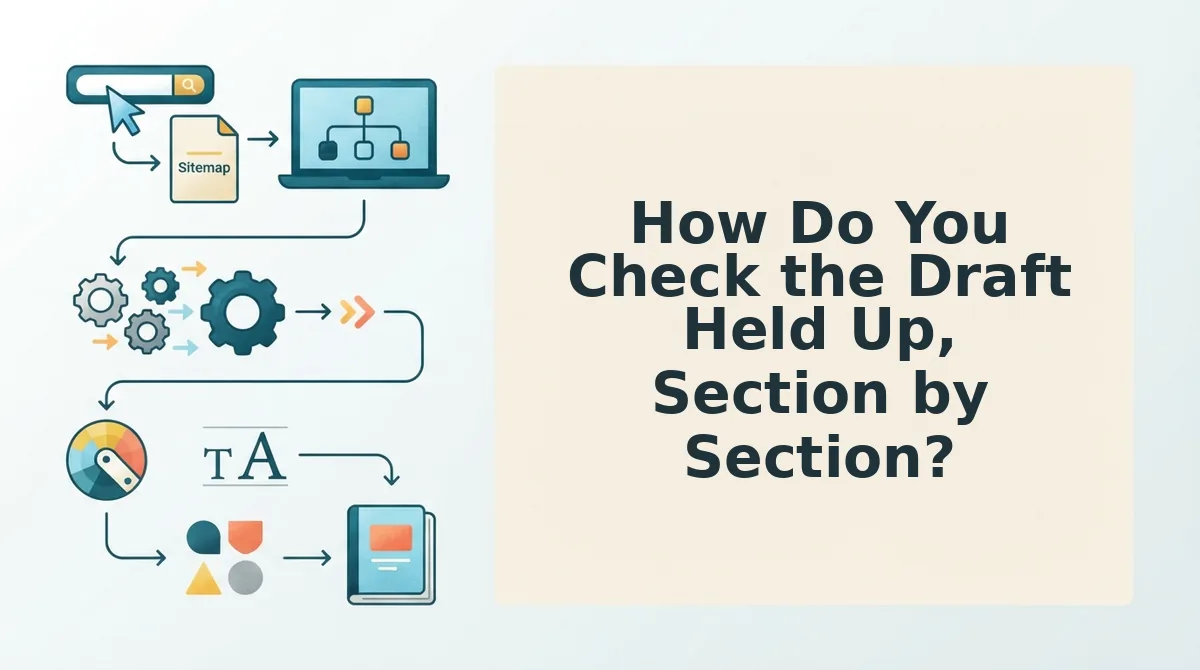
BloGoose goes a step further: a domain crawl writes eight context files, so the voice rules are files you open rather than a setting you hope was captured.
How Do You Run the Seven Tests, in Order?
Run the cheapest tests first, because the structural ones disqualify a tool before you spend an afternoon on voice matching or a CMS connection.
Collect three things before you start: one post you have already published, two writing samples in your house voice, and WordPress or custom API credentials. Block 90 minutes.
- Open the outline before any draft exists (5 minutes). Ask the vendor to show the planning screen, then edit one heading yourself. The artifact to demand is a word budget attached to every H2. You should see a numbered outline you can rename, reorder, and delete. Failure mode: one blob you have to re-cut by hand, the signature of single-prompt AI blog posts.
- Open the brand context file (10 minutes). Select Settings, ask where the tone rules are stored, and request the file itself. The artifact is editable markdown naming voice, audience, and banned phrases. Failure mode: tone inferred from a pasted sample, which you can neither inspect nor correct.
- Request the research trail for one H2 (10 minutes). Pick the heading you understand best and ask what it is built on. The artifact is a source list or SERP snapshot per section, the trail a disciplined live SERP analysis leaves behind. Failure mode: a confident heading with nothing behind it.
- Ask how each section is reviewed (10 minutes). Confirm whether review happens per unit or once at the end of the document. The artifact is a per-section score or revision note. Failure mode: a single aggregate number, which hides a weak middle section behind a strong opening.
- Draft three sections from your own samples (30 minutes). Upload both samples, generate three sections, then diff them against your writing for register, average sentence length, and banned phrases. You should see your contractions, your paragraph rhythm, your vocabulary. Failure mode: voice drift that arrives by section three, polished and generic and not yours.
- Check images section by section (10 minutes). Ask whether each section generates its own visual with alt text and a descriptive filename, or whether images get bolted on after publishing. The artifact is a generated file whose name reads like a sentence. Failure mode: stock filler and empty alt attributes, which undo any image SEO work downstream.
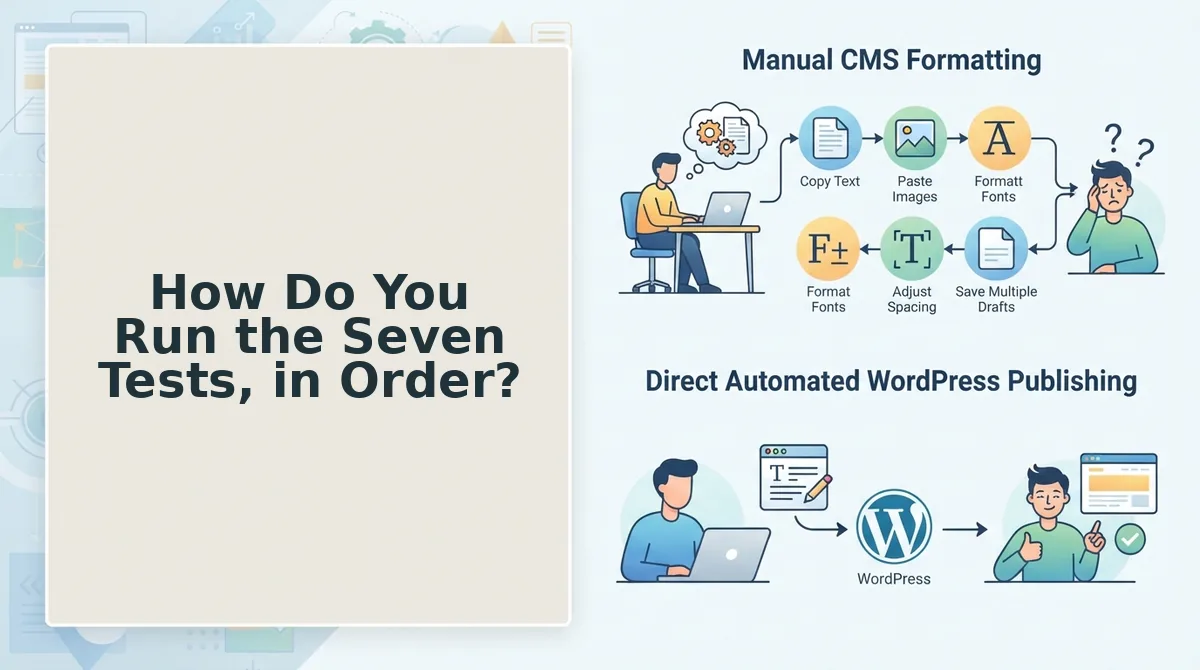
- Confirm the publishing path (15 minutes). Ask whether the tool writes to WordPress or posts to a custom API endpoint, and whether it publishes directly or exports a file for review. You should see a draft land in your CMS with heading levels intact. Failure mode: copy-paste, which reinstalls the manual loop you were removing.
Fast disqualifiers. End the evaluation on the spot if any of these is missing:
- No editable outline before drafting begins.
- No inspectable brand context file.
- No per-section regenerate control.
Any one of the three makes the remaining tests irrelevant, because you would be grading a single-prompt generator with better marketing.
Structure checks out â now the question is whether the prose holds up once it exists.
How Do You Check the Draft Held Up, Section by Section?
A draft passes a section-by-section check when every H2 carries its own verdict: claim grounded, word budget met, voice intact. Seven verdicts beat one document score because they name the failing section, and re-drafting one H2 costs a fraction of regenerating the whole article.
Whole-document scoring is not useless. A single content score is the fastest way to triage forty drafts in an afternoon, and the tools built around that number â the Surfer SEO alternatives set included â are genuinely good at handing an editor one comparable benchmark across writers. The weakness is arithmetic: averaging hides the outlier.
| What you get | Whole-document score | Section scoreboard |
|---|---|---|
| Output | One number, e.g. 90/100 | Seven pass/fail verdicts, one per H2 |
| Locates the failure | No â the number cannot say which section failed | Yes â names the H2 and the test it missed |
| Grounding check | Invisible in a readability or keyword score | Source demanded per section |
| Cost of a fix | Regenerate the article | Re-draft one H2 |
| Best for | Editors triaging volume; agencies needing one client-facing benchmark | Publishers who must defend every claim, including YMYL and fact-checked niches |
The worked re-run is the argument. A draft returns 90/100 overall, but H2 three asserts a figure nobody sourced. Regenerating the article re-rolls the four sections that were correct. Re-drafting H2 three keeps them intact and takes one pass â and because readability never flags an unsourced number, the score would have shipped it.
That is the practical reason to insist on per-section regenerate: the scoreboard turns one expensive rewrite into one cheap fix. BloGoose drafts from an editable outline, so you can send a single section back and publish the rest. See how the section workflow runs.
What Do Buyers Still Ask Before They Commit?
How long does one evaluation take?
Under an hour for a single post, provided the tool exposes an editable outline before it drafts. You are running seven pass/fail checks, not editing a full article. If the outline is hidden until the draft lands, budget the extra time for reverse-engineering what the tool planned.
Do I have to test on a live published post?
No, but it is the better test. Testing on an existing published post means you already know what the correct answer looks like, so a confidently wrong section is obvious. A demo topic hides those errors because you have no ground truth to compare against.
What if my CMS is custom?
A custom CMS is a valid test target. What matters is the mechanism: whether the tool writes through an API or exports a file you paste manually. An API path means the section draft reaches the page intact; a file dump means your formatting survives only as well as your paste.
What does AEO content optimization change about a draft?
It changes section shape, not just keywords. Each H2 opens with a self-contained answer of roughly 40 to 60 words so a chatbot or featured snippet can lift it without surrounding context. That is a structural requirement you can verify per section in about two minutes. More on AEO content optimization.
What Should You Do With the Scorecard?
The scorecard converts a vague impression into a shortlist decision and a publishing rhythm. The finding worth keeping: the 90/100 draft that hid an ungrounded H2 is not an edge case, it is the normal failure mode of document-level scoring â which is why the seven verdicts are the artifact to demand.
Run the seven tests on one post today. Then ask every vendor you are shortlisting to produce the same scorecard, and treat a refusal as an answer. Finally, map the winner onto a cadence you can actually sustain.
Note that volume and difficulty for this query are unmeasured, so weigh the checklist as buyer-side criteria rather than a ranking claim. BloGoose is built for the cadence part: point it at your domain, let it extract brand context and a pillar calendar, and ship section-drafted articles straight to WordPress or your API. The first shipped cluster is the only proof that survives a trial.