Why a featured image goes missing after WordPress publishing
You open your published article expecting a complete visual layout, but you find a blank hero banner staring back at you. Encountering a missing featured image after auto publish routines deploy is an infuriating roadblock for any publisher running programmatic pipelines. You verify that the graphic uploaded properly, yet the layout remains completely bare.
You are not dealing with a corrupt image file or a broken browser cache. This guide shows you how to resolve the architectural API mapping error that causes published posts to detach from their visual assets. You will inspect the underlying database relations, correct REST API payload configurations, and ensure your visual assets bind reliably on every automated release cycle.
Publishing regular automated SEO content requires dependable asset linking across every stage of generation. WordPress site administrators frequently discover that while graphics sit safely inside wp-admin media archives, the associated articles never display them. Later in this guide, you will uncover why a hidden execution sequence conflict inside standard theme code quietly erases valid media attachments during automated creation.
Why Does an Automated Image Upload Without Attaching to the Post?
An automated image uploads without attaching to an article when a publishing workflow transfers an asset binary to the WordPress media library without passing the resulting integer ID to the post record. In programmatic environments, uploading a graphic and assigning a post thumbnail are two entirely separate database operations.
Featured media mapping is the process of linking a stored asset ID to the dedicated thumbnail metadata parameter of an individual post object. When you publish manually inside the WordPress block editor, selecting an image automatically links that file to your draft. Automated publishing engines interact differently through headless endpoints, requiring explicit code instructions to associate the two records.
Think of this process like checking luggage at an airport. Uploading an asset to the media archive is like dropping a suitcase onto the central baggage carousel; unless the baggage handler stamps your specific ticket number onto the luggage tag, the suitcase reaches the airport terminal but never arrives in your hotel room.
The standard WordPress REST API splits content ingestion across independent routes. An automation engine first transmits binary data to /wp/v2/media, which generates an attachment record and returns an integer ID. If the subsequent payload sent to /wp/v2/posts omits the featured_media parameter or passes an invalid string instead of a numerical integer, WordPress creates the post successfully while leaving the hero image unassigned.
An integrated engine like BloG00s3 prevents these coordination failures by handling generation, asset storage, and direct CMS binding in a single cohesive flow rather than relying on fragmented multi-tool webhooks.
How to Fix Missing Featured Media in Your Automated Workflow
To fix missing featured media in an automated publishing workflow, ensure your REST API credentials contain media write permissions, update your post generation payload to include the integer media ID, and verify theme thumbnail support. Resolving these three integration points permanently aligns image creation with post delivery.
Before beginning, ensure you have an active WordPress Administrator account, access to your automation tool's webhook or request body editor, and your site's SFTP credentials or theme file editor. Completing this fix requires approximately 10 to 15 minutes.
- Verify REST API user role permissions. Open Users, select All Users, and click on the account used to generate your application password. Confirm that the assigned role is set to Administrator or Editor so the API key possesses full authorization to write to the media library.
- Capture the media attachment ID. Open your automation workflow, locate the HTTP POST step targeting
/wp/v2/media, and configure your pipeline to store the integer value returned in theidfield of the JSON response body. You should see a positive number such as1042returned in your test execution logs. - Map the featured media parameter in the post payload. Open the subsequent HTTP POST request targeting
/wp/v2/posts, navigate to the JSON body editor, and add the keyfeatured_mediamapped directly to your stored media ID variable as an integer. You should see the parameter populated as a clean numerical value without surrounding quotation marks. - Validate theme thumbnail declaration. Open Appearance, select Theme File Editor, click
functions.php, and inspect the file for the lineadd_theme_support('post-thumbnails'). If the declaration is missing, type this function into your setup script and click Update File to confirm your active theme permits post thumbnail rendering.
To verify that WordPress REST API featured media mapping works correctly, trigger a test submission from your automation tool and open Posts in your WordPress dashboard. Inspect the new article in draft or published view. The hero container will display your uploaded image, and the Featured image panel in the post settings sidebar will show the selected graphic rather than an empty upload button.
Establishing flawless asset mapping ensures your programmatic articles publish with complete structured layouts ready for search indexing and rapid indexation. BloG00s3 provides native publishing integrations that automatically construct correct REST API payloads, eliminating manual webhook troubleshooting.
Next, we will examine which plugin hooks break auto-published post thumbnails during automated save cycles.
Which Plugin Hooks Break Auto-Published Post Thumbnails?
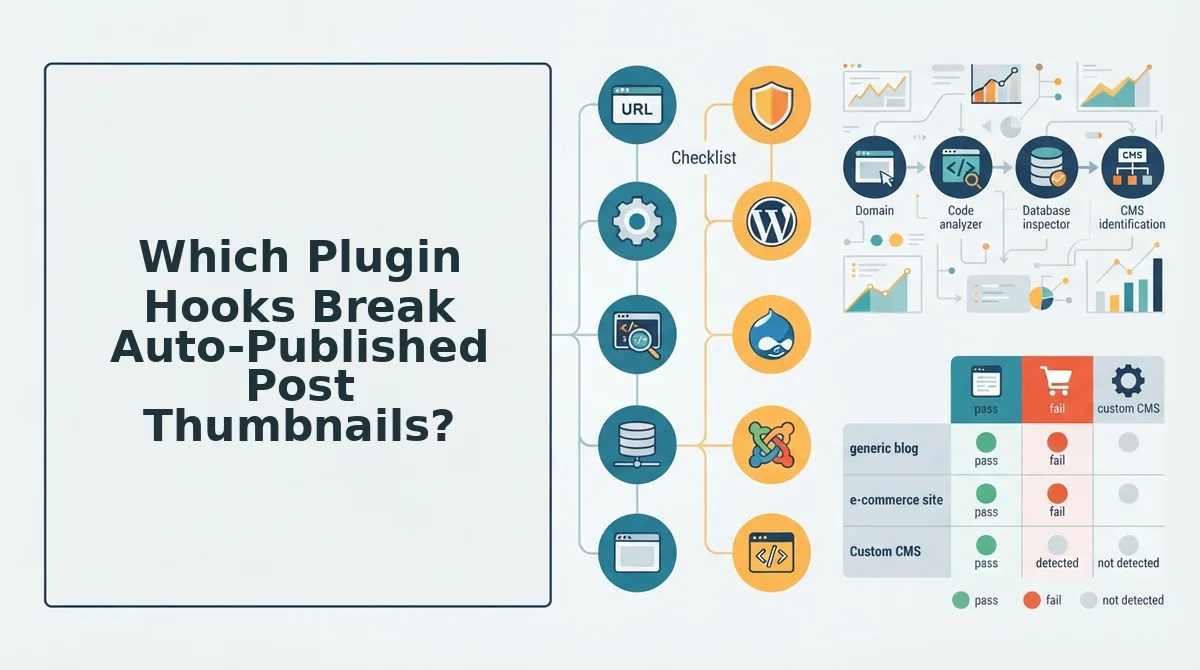
Specific plugins break auto-published post thumbnails by intercepting the WordPress save_post action and clearing programmatic metadata before database commits occur. Isolating how different plugin categories handle incoming programmatic payloads prevents post-thumbnail relationships from being dropped during automated delivery.
| Plugin Category | Interference Mechanism | Operational Strengths | Best For |
|---|---|---|---|
| Image Optimization Plugins (e.g., Smush, ShortPixel) | Hooks into upload routines to process compression asynchronously, occasionally delaying attachment ID availability before the post binds to it. | Superior lossy and lossless image compression, automated WebP delivery, and robust bulk library processing. | Publishers prioritizing raw asset speed who can tolerate offloading compression queues after publication. |
| SEO Suite Plugins (e.g., Yoast, Rank Math) | Runs secondary validation cycles via save_post hooks that prioritize custom Open Graph tags, sometimes overwriting empty default thumbnail assignments. |
Comprehensive structured data output, XML sitemap generation, and granular social preview overrides. | Growth teams needing strict metadata control where manual or automated Open Graph settings take priority. |
| Advanced Caching Tools (e.g., WP Rocket, LiteSpeed) | Caches the published page template immediately upon the API call, frequently displaying the page before the thumbnail relationship finishes writing. | Best-in-class page speed delivery, database cleanups, and dynamic preloading for site visitors. | High-traffic blogs running programmatic pipelines that can automate dynamic cache purge requests. |
Diagnosing these collisions eliminates the need to disable all site tools. Ensuring your delivery pipeline supports robust image SEO safeguards media references without sacrificing compression or metadata generation.
Frequently Asked Questions About Auto-Publish Image Failures
Auto-publishing image failures stem from API field assignment lapses, asynchronous background processing delays, or theme template overrides. Below are targeted resolutions for specific programmatic thumbnail delivery issues.
Why does my featured image show in the WordPress editor but disappear on the live post?
Your active theme template likely bypasses the standard the_post_thumbnail() function in favor of a custom field. When an automated script populates the native media ID without updating the specific custom field key expected by your layout, the frontend displays a blank header.
How do I prevent image upload timeouts during programmatic publishing?
Configure your pipeline to upload media assets in an isolated request prior to creating the post. Uploading large images directly within the post-creation payload triggers execution timeouts on shared hosting environments, which drops the post-thumbnail attachment while saving the text.
What causes Yoast SEO to overwrite auto-published post thumbnails?
Yoast hooks into the save_post action to map dedicated Open Graph image tags. If an automated script sends an empty social metadata array, Yoast can overwrite the native thumbnail association unless your API explicitly defines the social fallback image parameters.
Why does the WordPress REST API accept the image but leave featured_media blank?
The REST API treats asset creation and post attachment as two distinct database operations. Merely uploading an asset creates a media item; you must explicitly return that generated attachment ID and pass it within the featured_media property of your post payload.
Clean Up Your API Publishing Pipeline
A successful programmatic content pipeline requires acknowledging that an image upload is only half the transaction without verified post-object ID assignment. Resolving the blank hero image dilemma demands strict two-stage API sequencing: upload the media file to return a valid attachment ID, verify user capabilities, and confirm your theme utilizes standard template tags rather than disjointed custom fields.
Eliminate fragile webhook connections by switching to a dedicated automated SEO content engine that inspects your WordPress architecture and binds featured media reliably on every publish run. Drop your website domain into the BloGoose setup wizard to automatically configure your brand context, site structure, and direct CMS publishing settings.