How to spot questions the top SERP results answer badly
Most content teams waste hours juggling a 12-tab content stack, only to scrape competitor pages that regurgitate the exact same evasive non-answers. You already know how frustrating it is to publish well-researched pieces that get buried behind legacy domains whose ranking #1 no longer guarantees user satisfaction when answers are buried under filler.
In this guide, you will master how to spot questions the top SERP results answer badly and exploit those blind spots to secure top rankings and AI answer citations. We will unpack a diagnostic audit process to uncover weak competitor passages, map them into high-converting editorial frameworks, and capture high-intent search traffic.
Later in this walkthrough, you will discover why ranking algorithms routinely elevate legacy answers that fail fundamental evaluation tests, and how you can overturn them with a single paragraph structure. Rather than manual scraping loops, an automated AI SEO content engine like BloG00s3 can automate this research across your entire site structure.
Why Top SERP Results Evade Hard Questions
A SERP content gap is a blind spot where ranking pages satisfy basic crawling signals but fail to provide a definitive, actionable answer to a user's core question. Competitor analysis tools prioritize keyword density over qualitative answer precision, leaving high-ranking URLs vulnerable to displacement by direct, comprehensive coverage.
Think of search engine indexing like a school grading rubric that awards full marks for length and vocabulary while ignoring whether the student actually solved the assigned problem. Legacy articles accumulate authority signals over time, building algorithmic inertia that keeps them afloat even when their recommendations become obsolete or circular. A rigorous live SERP analysis reveals that top-ranking domains survive primarily on domain trust rather than real information gain.
To pinpoint why incumbents fail searchers, evaluate competitor coverage against the 4-Pattern SERP Failure Taxonomy:
- Hedged: The text ducks a specific inquiry by leaning on non-committal phrases instead of decisive rules.
- Circular: The content defines the subject by merely restating its title words without adding context.
- Outdated: The recommendations rely on superseded platform versions, legacy tooling, or retired guidelines.
- Buried: The actionable resolution is hidden after multiple narrative paragraphs and repetitive background context.
Algorithmic consensus creates structural vulnerabilities across competitive SERPs because competing publishers scrape one another to build copycat outlines. When four consecutive ranking articles summarize the same conceptual overview without providing execution steps, search engines actively seek a definitive passage to feature. Crafting a self-contained answer that defines the premise in the first sentence and delivers actionable criteria in the next two establishes immediate informational utility, allowing newer, voice-aligned articles to capture AI snippet selections and outrank established competitors.
How to Audit Ranking Pages for Content Gaps Step by Step
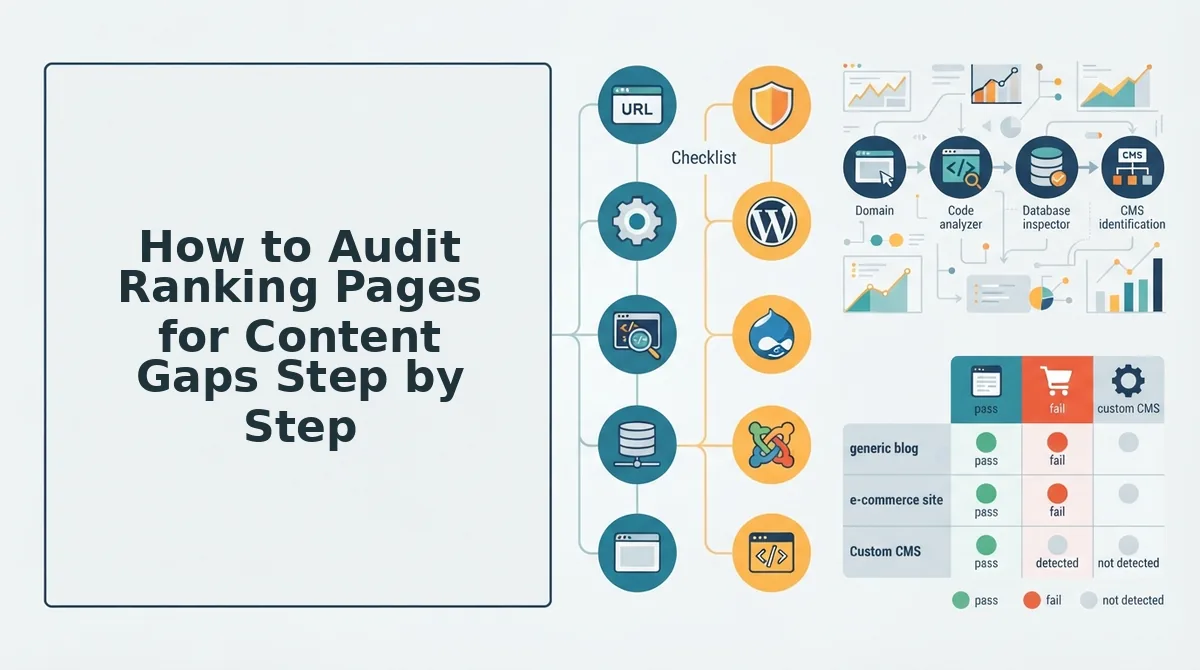
Auditing ranking pages for content gaps is the process of comparing top search results against unresolved user queries to expose evasive answers and build superior content. Completing this manual audit takes approximately 20 minutes per search topic.
Before starting, prepare a spreadsheet with columns for Target Query, Ranking URL, Competitor H2, Gap Category, and Replacement Answer. You will need a clean browser session and direct access to search results.
- Open the top five search results for your target phrase in separate browser tabs, bypassing ad placements and sponsored listings. Read every H2 heading across all five pages, recording each heading in your spreadsheet alongside its corresponding URL. You should see a uniform list of competitor subheadings that expose identical topical choices.
- Inspect the opening 100 words beneath each competitor subheading to locate unresolved ambiguities and evasive explanations. Flag instances where authors rely on vague hedge markers like "it depends" or "various factors" without providing clear decision matrices. When competitors evade precise trade-offs, document the omission in your audit sheet as a confirmed content gap.
- Cross-reference user queries by reviewing discussion threads and community inquiries to identify where standard search results fall short, applying the methods for mining forums for blog topics to spot recurring complaints. Enter the top user follow-up questions directly into search to inspect the AI Overview panel for missing procedural steps. You should produce a finalized list of validated questions that incumbent publishers fail to answer cleanly.
- Formulate an answer-first replacement outline that addresses each identified deficiency within a self-contained 80-to-120-word passage. If you are refreshing outdated articles, replace every vague competitor narrative with direct numerical criteria, clear constraints, and unambiguous execution workflows. You should see a complete article outline featuring definitive answer blocks tailored for prominent search placements.
Instead of manually compiling these audits across individual browser tabs, BloG00s3 reads your site structure, inspects published pages, and automatically drafts citation-optimized articles with search indexing principles baked directly into the content pipeline.
Next, explore turning SERP openings into answer-first content architecture.

Turning SERP Openings into Answer-First Content Architecture
An answer-first architecture restructures an evasive search result into a self-contained block that solves the user's inquiry in the first sentence before providing contextual evidence. Converting a competitor’s thin coverage into rank-ready copy requires matching the exact structural format preferred by answer engines and traditional indexers.
To capture featured snippets and AI citations, an answer-first passage must resolve the core sub-question immediately within an 80-to-120-word self-contained block. For example, when answering how to spot weak content: Identify thin SERP content by locating competitor headings that defer specifics, checking for circular definitions that repeat the query terms, and verifying if core implementation steps are omitted. Top-ranking pages frequently hedge complex answers behind vague conditional statements to avoid committing to precise recommendations. By auditing ranking H2 sections against secondary user inquiries, publishers can write definitive, 80-to-120-word factual blocks that AI engines extract as authoritative consensus replacements. Implementing this structure directly satisfies the requirements of AEO content optimization.
| Approach | Core Mechanism | Strengths | Limitations | Best Persona |
|---|---|---|---|---|
| Hedged Legacy Copy | Conditional clauses and multi-paragraph preambles | Safe editorial consensus that rarely contradicts edge cases | Low answer extraction rates; vulnerable to passage replacement | Large enterprise compliance teams |
| Manual Snippet Chaining | Hand-drafting direct definitions under custom H2s | Total contextual nuance and precise bespoke voice control | Time-consuming; prone to stack sprawl and spreadsheet overhead | Solo research analysts |
| Answer-First Passage Engineering | 80-to-120-word self-contained blocks directly beneath headings | High citation frequency in AI Overviews and fast snippet capture | Requires strict discipline to avoid burying steps or contextual drift | Growth leads and content publishers |
Legacy formats excel at broad stakeholder safety, but structured passage engineering consistently wins conversational real estate across modern answer engines.
How to Validate Your Gap Coverage and Track Search Outcomes
Validating gap-focused content requires measuring prompt-level citations in AI engines alongside conventional ranking movements in search performance dashboards. Tracking whether an updated section successfully displaces an evasive competitor confirms that your passage architecture met algorithmic precision criteria.
The solution to echo-chamber search results is not adding word count, but systematically eliminating the hedged, circular, and buried answers that legacy publishers leave behind. Once an answer-first block is indexed, confirm your coverage by following these two validation steps:
- Audit Target Query Footprints: Run target queries through conversational answer engines to verify whether your domain is cited as the definitive factual source for the previously unanswered sub-question.
- Monitor Search Console Passage Pulls: Check performance logs for impressions on precise long-tail variations, which indicates search engines have isolated your 80-to-120-word block for snippet delivery.
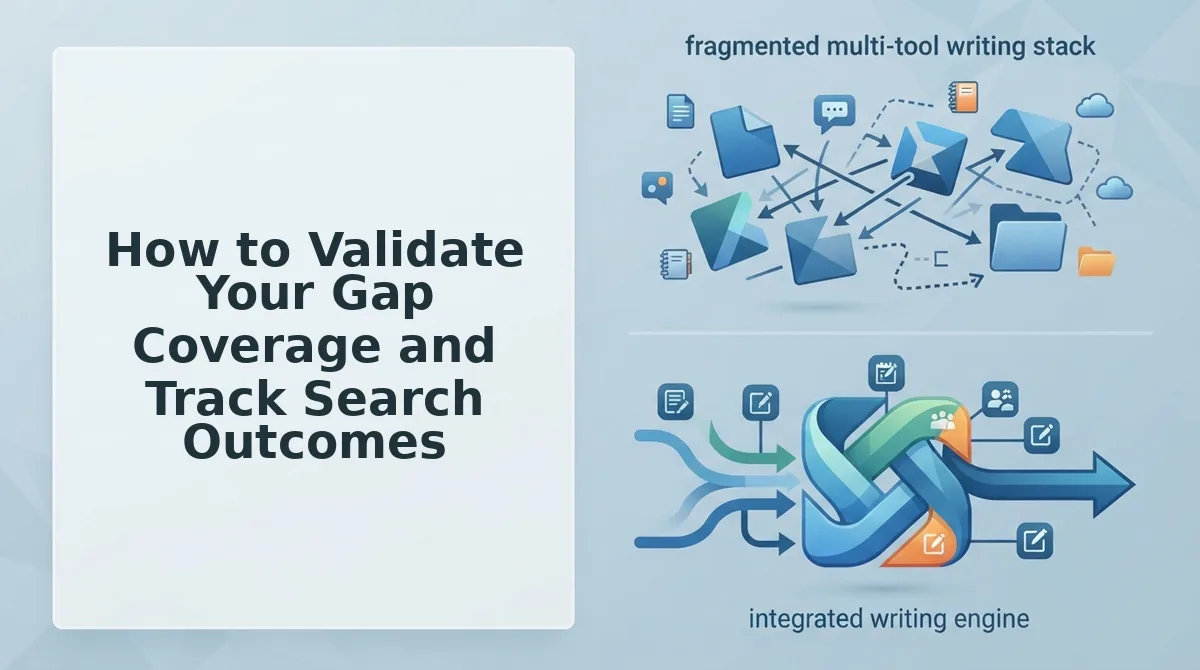
Publishers looking to bypass manual spreadsheet coordination and multi-tool writing stacks can utilize an automated SEO content engine to crawl existing pages, build structured calendars, and publish citation-ready articles directly to WordPress or a custom API. Drop your website domain into the setup wizard to inspect your existing site structure and turn overlooked search gaps into authoritative organic coverage.