What social threads to check before committing to a topic
Targeting search terms straight out of an SEO tool without checking what practitioners argue about online leaves your site buried under bounce-heavy, surface-level articles. Search queries routinely lag behind real-time community friction and emerging vocabulary by multiple months, creating an editorial blind spot where perfectly optimized pages answer questions nobody asks anymore.
You already know the mental fatigue of the 12-tab content stack, juggling raw keyword spreadsheets, search console exports, and manual drafts while trying to keep your calendar on schedule. Before locking an editorial topic into production, identifying the exact social threads to check before committing to a topic ensures your article solves an active, unresolved operational bottleneck. In this guide, you will learn the four thread archetypes that expose genuine search intent, the exact questions to cross-examine, and a systematic framework to harvest high-intent community insights.
Mastering this pre-flight check protects your publishing runway, and learning how to mine Reddit forums for blog topics reveals an overlooked intent pattern where low-volume queries with intense comment debates consistently outperform vanity search terms in downstream AI citations.
Which Social Threads Should You Check Before Committing to a Topic?
To validate an editorial topic before drafting, you must review four distinct social thread archetypes: unfiltered vent threads, stack migration debates, beginner conceptual roadblocks, and operational workflow breakdowns. These community discussions expose user pain points, software friction, and terminology gaps absent from standard keyword tools.
Checking social threads before publishing provides verified community evidence that a proposed search query represents active human confusion rather than dead search volume. When optimizing for conversational AI platforms, this practice ensures your article answers specific objections that modern language models synthesize into direct answer snippets. Teams deploying automated workflows rely on this research layer alongside AEO content optimization to earn persistent AI engine citations while reducing topic churn.
- Unfiltered Vent and Rant Threads: These discussions capture raw frustration regarding broken software features, pricing changes, or industry bottlenecks. Reading emotional complaints uncovers the exact stakes behind a search query so your outline addresses what genuinely angers or stresses your target audience. Search community forums using negative qualifiers like "worst experience with" or "broken workflow" to surface these candid critiques.
- Stack Migration and Tool Alternative Threads: These conversations involve buyers and operators actively seeking alternatives to legacy platforms after encountering restrictive limits or poor support. They matter because they reveal precise product shortcomings and decision criteria that generic comparison articles overlook. Extract the exact feature dealbreakers mentioned by commenters and use them as your article's central comparison benchmarks.
- Beginner Roadblock and Concept Threads: These threads highlight the recurring fundamental hurdles that newcomers face when entering an unfamiliar technical domain. Reviewing these basic questions prevents your content from skipping necessary intermediate context that causes high bounce rates among early-stage practitioners. Locate these queries under community tags such as "Explain Like I'm 5" or weekly beginner Q&A megathreads.
- Operational Workflow Breakdown Threads: These posts detail edge cases where standard industry advice fails during actual field execution. They provide the practical nuances, error states, and troubleshooting workarounds that transform a basic tutorial into an authoritative, citation-worthy resource. Identify posts where users ask "Am I doing this wrong?" and document their broken configurations to build realistic solution steps.
Platforms like BloG00s3 crawl your site structure and extract brand context to keep content clusters anchored to verified search demands without requiring manual prompt engineering loops.
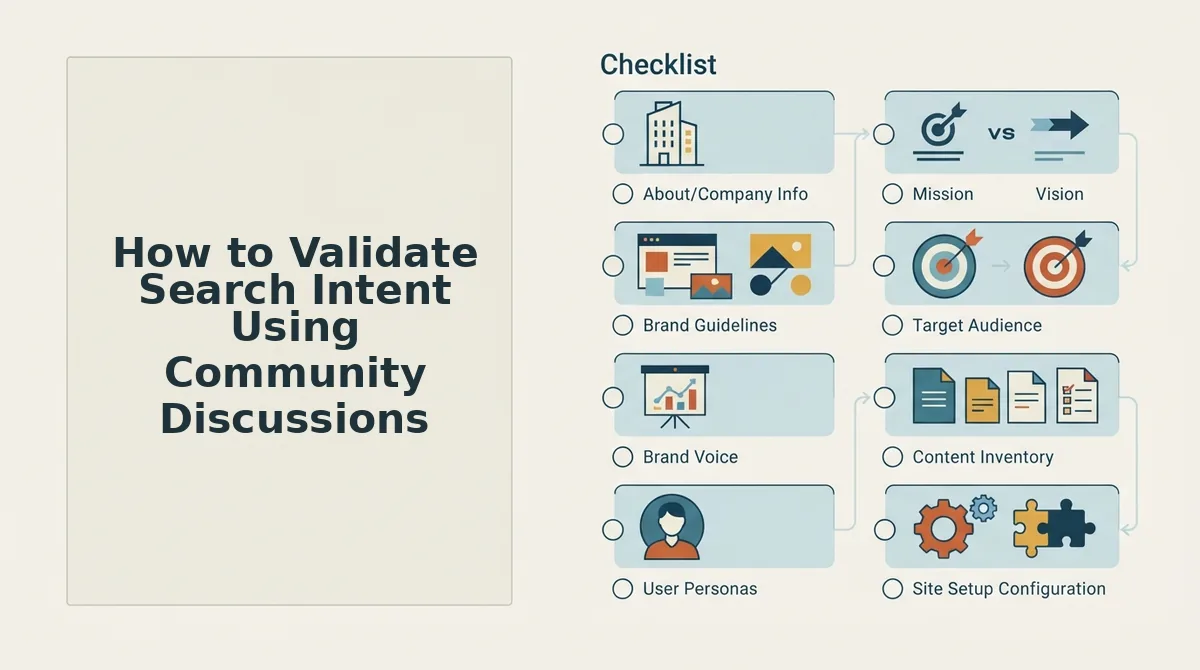
How to Validate Search Intent Using Community Discussions
Validating search intent with community discussions requires comparing top-ranking search results against recent forum debates to confirm that real user expectations match the SERP format. This process exposes intent mismatches early, ensuring your article resolves operational hurdles rather than generating redundant informational overviews.
Intent mismatch occurs when search engines reward broad informational guides while communities actively seek tactical troubleshooting steps or comparative software benchmarks. Auditing live community consensus prevents premature tool reviews and surface-level definitions that fail to solve the actual logistical questions raised in forum comment sections. Cross-referencing user complaints against search intent patterns on live SERPs ensures your outline directly addresses the specific friction points that existing ranking pages ignore.
- Open your web browser and search your primary keyword across targeted forums (10 minutes). Type your primary keyword followed by site-specific operators like
site:reddit.comorsite:community.[domain].cominto Google. You should see a search results page populated entirely by active user threads and comment histories. - Scan the top five community discussions for recurring complaint patterns (15 minutes). Select threads created within the last 12 months and read through the top comments to identify recurring software bugs, missing features, or unclear definitions. You should have a written list of at least three specific operational complaints that users mention repeatedly.
- Compare community complaints against the current top three organic SERP results (10 minutes). Open the top three organic articles ranking for your target keyword in incognito tabs and check whether they directly resolve the user complaints identified in step two. You will confirm an intent gap if the ranking articles offer only generic definitions while the community demands tactical, step-by-step troubleshooting.
- Align your working article outline with the verified community intent (10 minutes). Update your proposed H2 headings to address the specific workflow hurdles and feature comparisons identified in the forums. You should have a final content outline containing dedicated sections for each documented operational failure point.
Next, discover how to extract real audience language for content outlines directly from forum comments.
How to Extract Real Audience Language for Content Outlines
Audience language extraction is the systematic process of mining raw user phrasing, emotional triggers, and friction points from discussion threads to structure article outlines. Grounding your outlines in literal forum commentary guarantees that your search copy mirrors how practitioners speak rather than relying on generic corporate prose.
Think of community thread mining like casting a net in open water: instead of guessing what fish swim beneath the surface, you haul in the exact words, objections, and metaphors readers already use. This prevents AI voice drift, which happens when generative models smooth out industry nuances into bland, unconvincing filler.
Execute this workflow across three increasing levels of technical precision:
- Simple extraction: Pull three to five recurring emotional phrases directly from comment bodies and record them in a Verbatim Extraction Log.
- Intermediate mapping: Convert user grievances into search-aligned subheadings. For example, if a practitioner writes, "I am sick of stitching together five separate tools just to post one draft," transform that raw complaint into an authoritative H2: "Why the 12-Tab Content Stack Fails Modern Content Teams."
- Advanced integration: Seed that verbatim phrasing directly into introductory problem statements and transitional paragraphs to secure citation relevance in AI search engines.
Eliminate manual research loops by connecting your extracted audience criteria to an AI SEO content engine that automatically turns your validated site architecture into publish-ready articles.
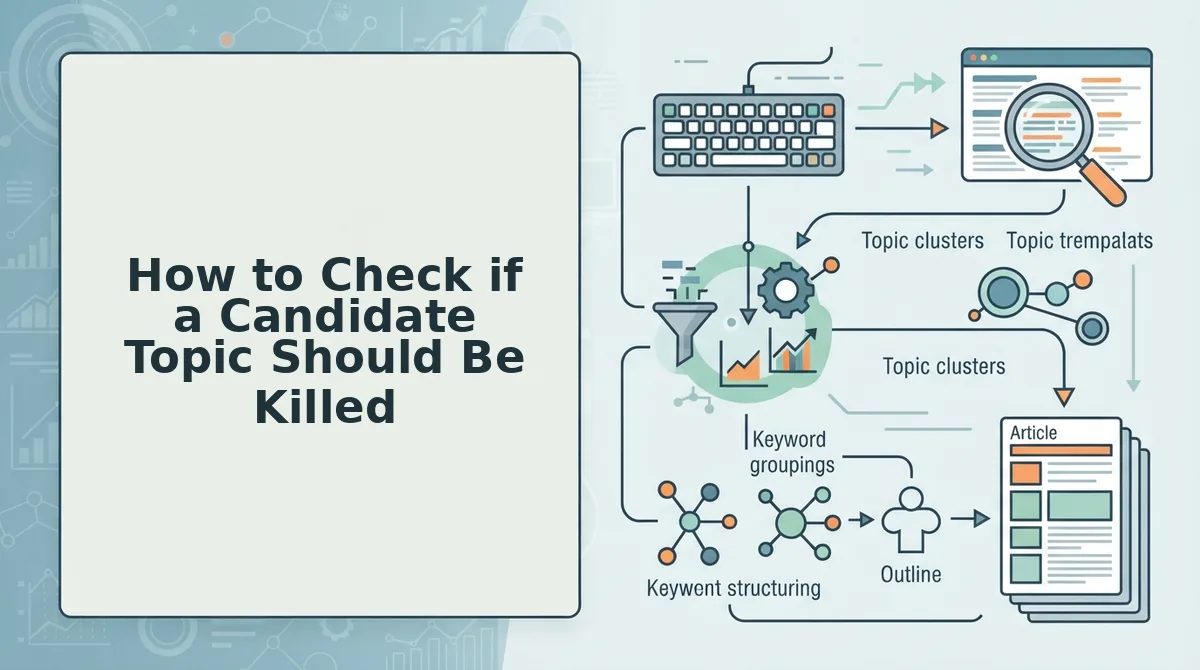
How to Check if a Candidate Topic Should Be Killed
A candidate topic should be killed whenever social discussions reveal settled technical consensus, vendor manipulation, or an absence of genuine practitioner friction. Prioritizing search volume over community tension leads to bounce-heavy articles that fail to capture organic interest or AI search citations.
- Unanimous technical consensus: Kill topics where community members consistently agree on a single, permanent fix. When forum threads show an issue is already settled by a single native setting or software update, drafting a dedicated long-form guide provides zero information gain for readers.
- Vendor astroturfing and affiliate bias: Scrap topics dominated by synthetic brand accounts and affiliate link spam. Unnatural praise or repetitive promotional scripts signal artificial interest rather than authentic demand, skewing search intent toward commercial echo chambers.
- Zero emotional friction: Discard high-volume keywords that generate neither questions nor debate in real community channels. High search metrics without active discussions usually point to navigational queries or bot traffic, producing hollow pages that fail to engage users.
Safeguard your editorial pipeline by pairing thread validation with structured topic cluster planning before committing editorial resources to unproven ideas.
Build Voice-Accurate Topic Clusters with Real Audience Proof
Validating candidate topics through social threads resolves the core editorial trap: targeting high-volume keywords that real practitioners no longer debate. Running a quick four-point audit across vent threads, tool alternatives, fundamental questions, and workflow failures guarantees your content solves active problems.
Take these concrete steps before publishing:
- Log three raw community comments for every target keyword on your editorial calendar.
- Eliminate candidate topics that show unanimous solutions or zero practitioner friction.
- Feed validated brand voice rules and community angles directly into an automated SEO content engine.
Drop your website domain into BloG00s3 to turn validated audience research into rank-ready, voice-accurate articles delivered directly to your CMS.