What order should blog posts be published in for internal links
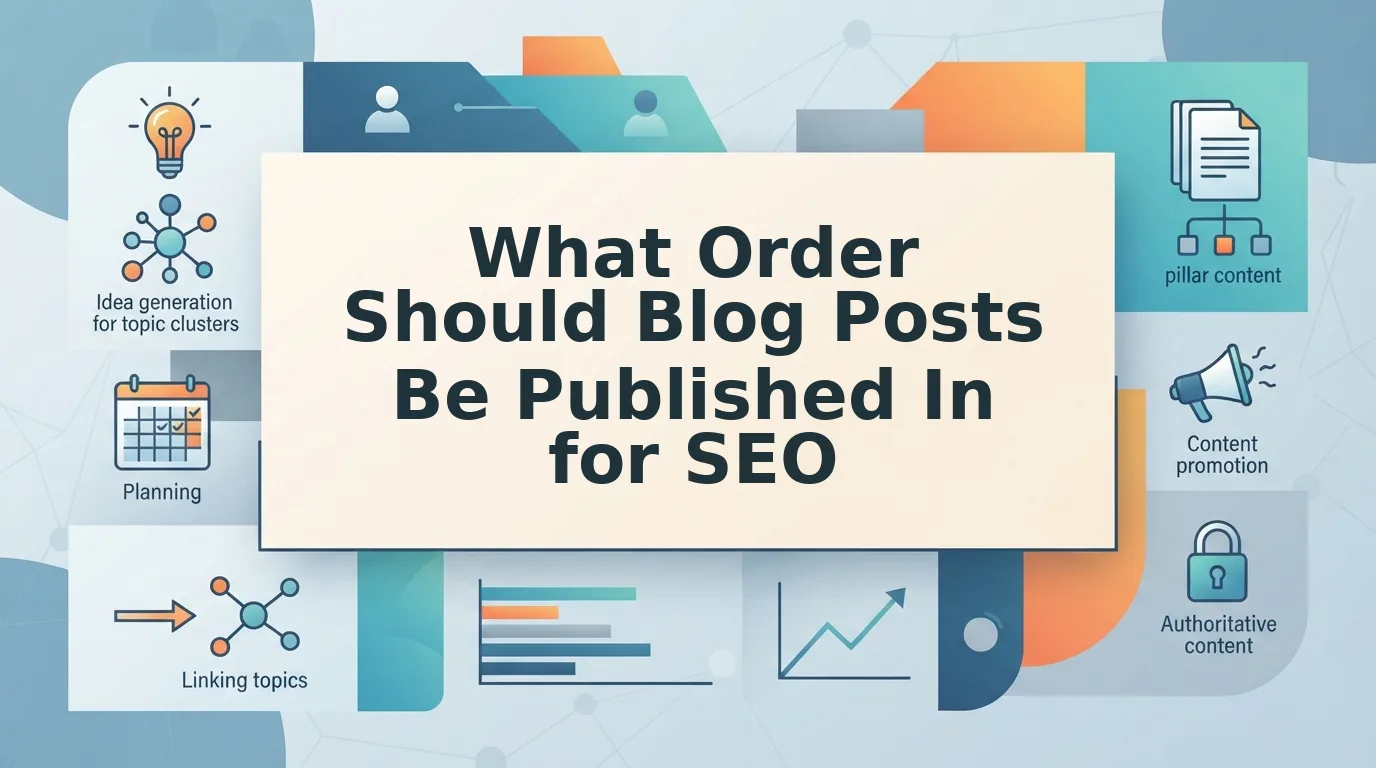
To determine what order should blog posts be published in, prioritize content by dependency: publish foundational pillar pages first, followed by supporting subtopic spokes that link back to them, or publish fully drafted spokes simultaneously with their parent hub to prevent dead-end crawling.
Managing an editorial schedule across a 12-tab content stack often leads to burnout and broken 404 links when queued articles launch out of sequence. You schedule five drafts, but early readers and web crawlers encounter dead internal links pointing to unpublished sibling articles. This guide details the exact sequence for rolling out your topical assets cleanly without retroactive maintenance loops.
Below, explore the structural mechanics of link equity, compare top-down versus bottom-up scheduling methods, and discover the hidden crawl behavior that dictates whether your drafts get indexed or stalled in search engines.
Why Internal Link Architecture Dictates Publishing Sequence
An internal linking architecture is the structured network of hyperlinks connecting pages within the same website domain. This directional crawl map determines the sequence of post deployment, ensuring search engines crawl and pass authority to live URLs rather than dead-end draft targets.
Think of an internal link network like electrical wiring in a home. Connecting switches to outlets that lack power leaves the circuit dead; similarly, pointing published pages to pending drafts creates broken loops that waste crawler attention. When a drafted spoke references an unreleased sibling article, search bots encounter broken connections or empty anchor text anchors that cannot resolve to live content.
A sequential publishing workflow prevents broken paths by resolving page dependencies before launch. When cluster content follows an ordered directed acyclic graph, every hyperlink published within body copy connects exclusively to an active 200 HTTP status response. This setup distributes page authority smoothly across new pages, helping search engines recognize contextual topical relevance right from initial discovery.
Publishing out of order risks exhausting your site's crawl budget on broken links and soft-404 redirects instead of indexing quality copy. Managing these structural relationships across dozens of scheduled articles can be challenging. An automated publishing platform like BloGoose extracts brand structure and automates outbound linking rules directly into your CMS queue to eliminate broken dependencies.
Trunk-First vs Leaf-First Content Cluster Publishing Models
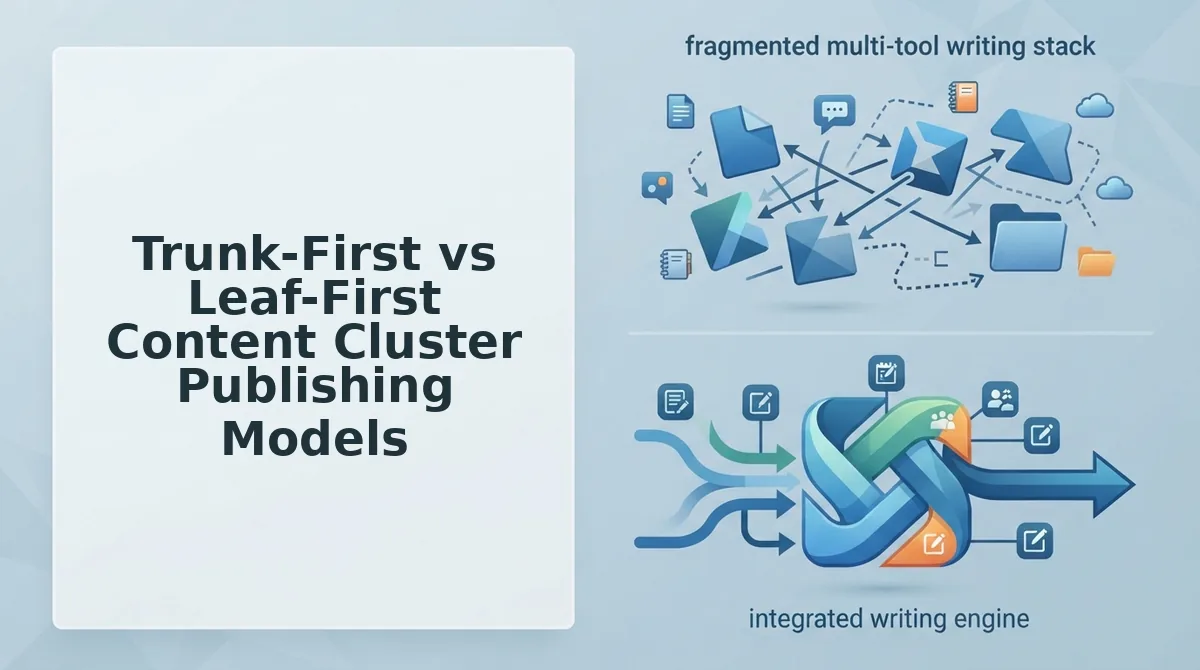
The trunk-first publishing model launches the broad pillar page before releasing supporting cluster spokes, whereas the leaf-first model publishes all granular subtopics prior to indexing the core pillar. Selecting the correct method depends on existing site domain authority, internal editing resources, and link distribution requirements.
Publishing the broad trunk page first alerts search crawlers to core entities quickly, allowing the root URL to start accumulating topical tenure. However, this approach requires returning to the live pillar article later to manually insert hyperlinks to newly published subtopics as they go live. Conversely, the leaf-first strategy builds a complete foundation of supporting subpages first. This lets you launch the comprehensive pillar page with every supporting hyperlink active from minute one, though it delays primary entity targeting until the entire batch is completed.
| Publishing Strategy | Primary Advantage | Operational Trade-Off | Best For |
|---|---|---|---|
| Trunk-First (Top-Down) | Immediate indexing and authority accumulation for high-volume pillar terms. | Requires retroactive link editing as queued subtopic drafts go live. | Best for established sites seeking fast rank signals on broad topics. |
| Leaf-First (Bottom-Up) | Eliminates post-launch link editing; pillar launches with complete internal links. | Delays pillar URL discovery until all supporting spoke pages are drafted. | Best for solo operators building interconnected topic clusters without manual update overhead. |
| Batch-Sync (Simultaneous) | Full cluster link equity flows immediately across all root and spoke nodes. | Demands high production bandwidth to draft every cluster asset together. | Best for publishers using an AI SEO content engine to deploy complete sets. |
Implementing an automated map of your internal links helps organize and sequence these drafts efficiently across your publishing calendar.
How to Sequence Queued Drafts Using an Internal Links Map
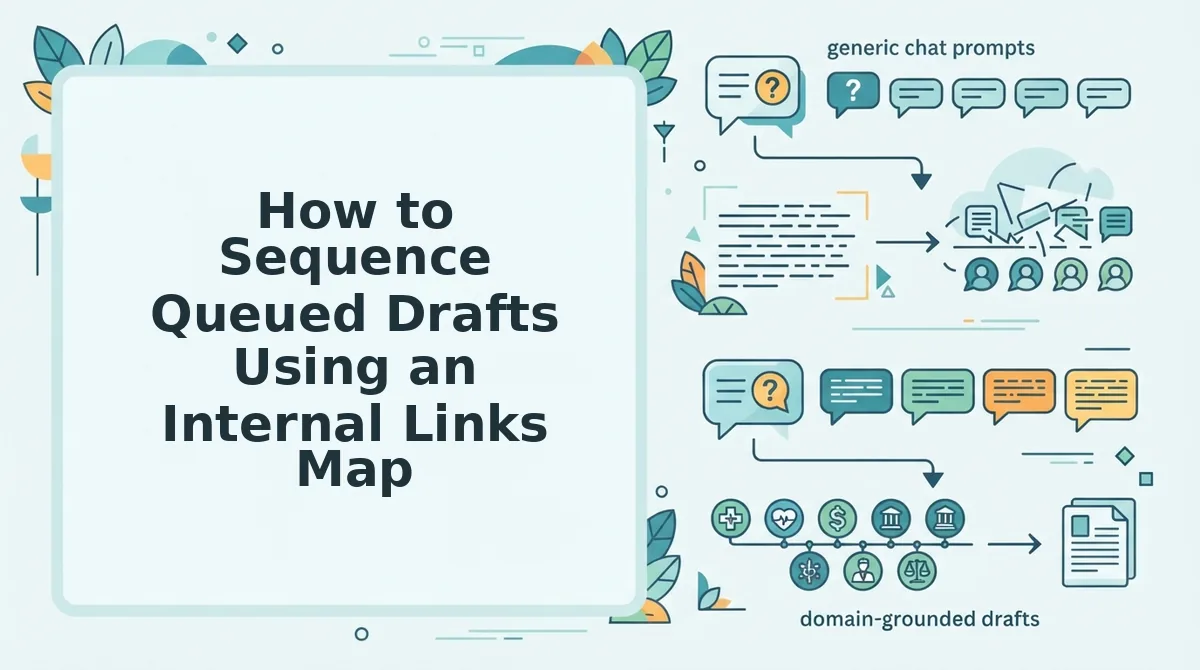
To sequence queued blog posts without broken links, schedule every draft based on a dependency-first map where child articles go live only after their designated target URLs return active 200 HTTP response codes. This prevents draft link 404s and eliminates retrofitting links into previously published articles.
Before beginning this 15-minute workflow, ensure you have an active spreadsheet or context document listing every draft slug, its primary target pillar, and its intended outbound cluster links.
To automate the sequencing of queued drafts using an internal links map, resolve URL targets before assigning release dates to each article in your CMS queue. Crawlers penalize dead-end nodes, making it essential to schedule parent pages first when using top-down structures, or supporting spokes first when executing reverse clusters. Verifying target slugs against existing live paths ensures every hyperlinked anchor points immediately to an indexable resource upon publication. Running an automated pipeline prevents manual edits across your CMS post-launch and keeps crawl paths clear for search engine discovery.
- Export your planned URLs to an internal links context map. Open your content calendar or text editor, create a document named
internal-links-map.md, and paste every scheduled title alongside its exact planned URL slug. This produces an inventory of inbound and outbound links for every scheduled post. - Run the three-step validation pipeline on queued anchors. Execute three sequential checks across your drafts: resolve each anchor URL against the map, insert reciprocal placeholder links for pending cluster spokes, and perform live status verification to confirm targeted root pages respond with a 200 status code. You should see all outbound URLs verified as valid live destinations or confirmed future endpoints.
- Configure release timestamps inside your publishing queue. Open your CMS dashboard, select Posts, then click Scheduled, and apply publication dates that release independent parent nodes 24 to 48 hours ahead of dependent child posts. You should see each draft displaying an automated release date organized strictly by link dependency order.
Instead of manually auditing spreadsheets to prevent broken links, connect BloGoose to handle the deployment. The platform utilizes automated sitemap context extraction to learn your live architecture, map inter-article dependencies, and schedule cluster posts directly to your CMS.
How to Verify Your Publishing Order Preserved Link Equity
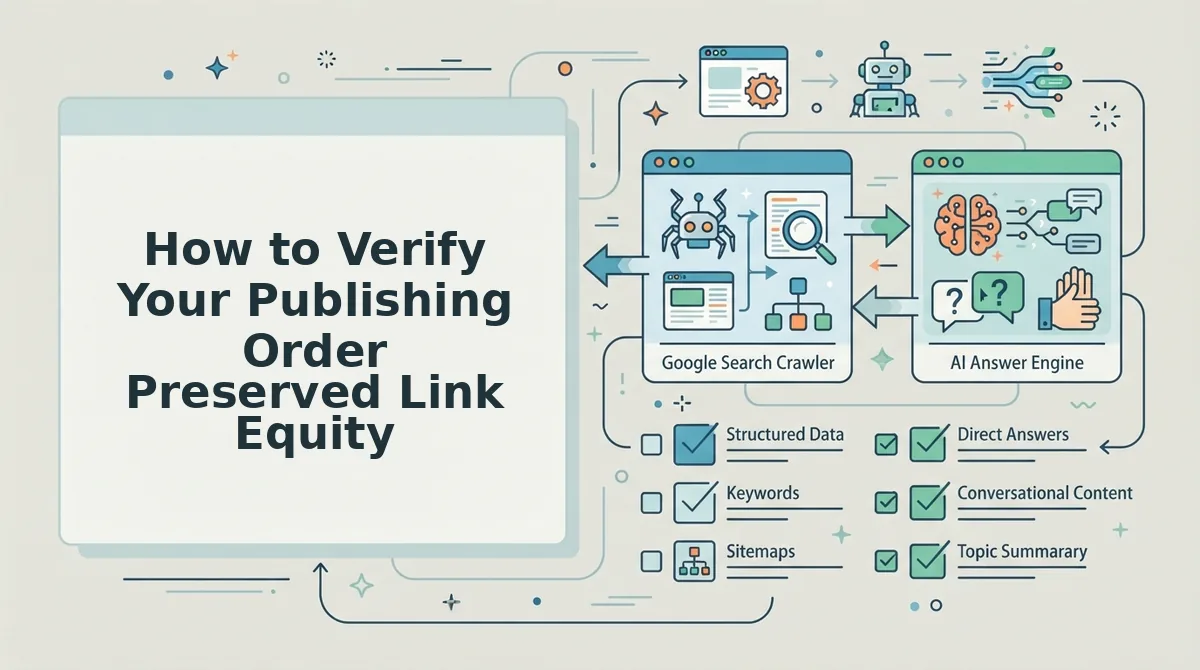
You can verify that your publishing order preserved link equity by running crawl diagnostics and link status checks across newly launched URLs immediately after indexation. Executing post-publish validation ensures search engines discover every node without encountering 404 redirects, orphan pages, or link equity leaks.
- Inspect live HTTP response codes across all inbound and outbound anchors to catch 404 errors immediately. Broken anchors waste search engine crawl allocations and trap PageRank inside disconnected drafts. Use a site audit crawler to confirm that every internal link returns a clean 200 status code.
- Run Google Search Console URL inspection to confirm that Googlebot discovers incoming internal links during its initial crawl sweep. Delayed link discovery slows cluster topic validation and defers ranking momentum. Enter your new URL into the inspection bar and verify that designated internal referring pages appear in the coverage report.
- Analyze crawl tree depth to verify that every supporting post sits within three clicks of the root domain. Unbalanced publishing sequences frequently isolate secondary articles, leaving them orphaned from topic hubs. Review your site architecture visualizer to confirm that parent-child hierarchies resolve symmetrically.
- Conduct live SERP analysis to track indexation speed and rank movements across the newly deployed cluster. Monitoring query positions reveals whether algorithmic systems recognize the topic cluster as a cohesive entity. Review weekly search impressions to verify that core pillar pages gain authority from supporting spokes.
Automate Your Publishing Sequence Without Manual Link Repairs
Automating your content cluster deployment permanently eliminates broken internal paths and post-publish editing loops. By relying on deterministic dependency mapping, your publishing cadence automatically guarantees that every outbound reference, reciprocal spoke, and thematic anchor lands on an active 200 URL the moment it goes live.
Moving away from manual 12-tab editorial tracking saves hours of administrative overhead and shields your organic crawl budget from 404 redirects.
Drop your website domain into BloGoose to auto-build your calendar and publish citation-ready automated SEO content directly to your site.