Byword alternatives for niche blogs that need brand voice
You've spent months building a niche blog with a voice your readers recognize instantly, then you run a Byword-generated draft and get back something that sounds like every other AI article on page three. That's the core problem with programmatic generators: they optimize for volume, not for the brand voice that makes niche blogs convert. If you're searching for Byword alternatives for niche blogs, you're not alone. Many niche publishers discover that Byword's SERP-assembly approach produces competent but generic content that still needs heavy manual editing to sound like them.
You're right to want better. This guide gives you a practical framework for evaluating alternatives based on one question: does the tool extract your brand voice before it drafts, or after? We'll walk through what Byword gets right, the two categories of alternatives, and seven specific tools worth testing.
Here's the surprising part: most roundups miss the distinction entirely, and one category produces dramatically better results for niche blogs than the other. Keep reading to see which one.
What Byword Gets Right (and Where It Falls Short for Niche Blogs)
Byword is an AI article generator that assembles content from search engine results page (SERP) data and templates, producing SEO-oriented drafts at scale without first crawling your site for brand context. It excels at volume, but niche blogs need something it doesn't offer: voice rules applied before drafting, not as post-hoc editing.
Start with the simple truth: Byword solves a real problem. If you need 50 articles on related keywords fast, its programmatic approach, pulling SERP data, identifying common headings, and generating templated drafts, gets you publishable content in hours, not weeks. For a content farm or a broad horizontal site, that's a legitimate win.
Now the intermediate layer. Think of Byword like a fast-food assembly line: consistent, scalable, and efficient, but every burger tastes the same regardless of who ordered it. Niche blogs are more like a neighborhood bistro, the specific flavor is the entire reason customers come back. When a tool doesn't inspect your existing pages, your tone, your recurring phrases, or your audience's vocabulary, it can only approximate your voice from generic training data.
Here's the advanced problem: brand voice rules must be applied before drafting, not as post-hoc editing. Byword's workflow is generate-then-edit. You get a draft, then you manually rewrite sentences to sound like you. That's not automation; that's a first draft with extra steps. A context-grounded alternative reverses the sequence: it crawls your XML sitemap, extracts brand context from your published pages, and only then generates drafts that already carry your voice.
For a niche blog where every article needs to reinforce a specific perspective, that sequence difference is the entire game.
The Two Categories of Byword Alternatives
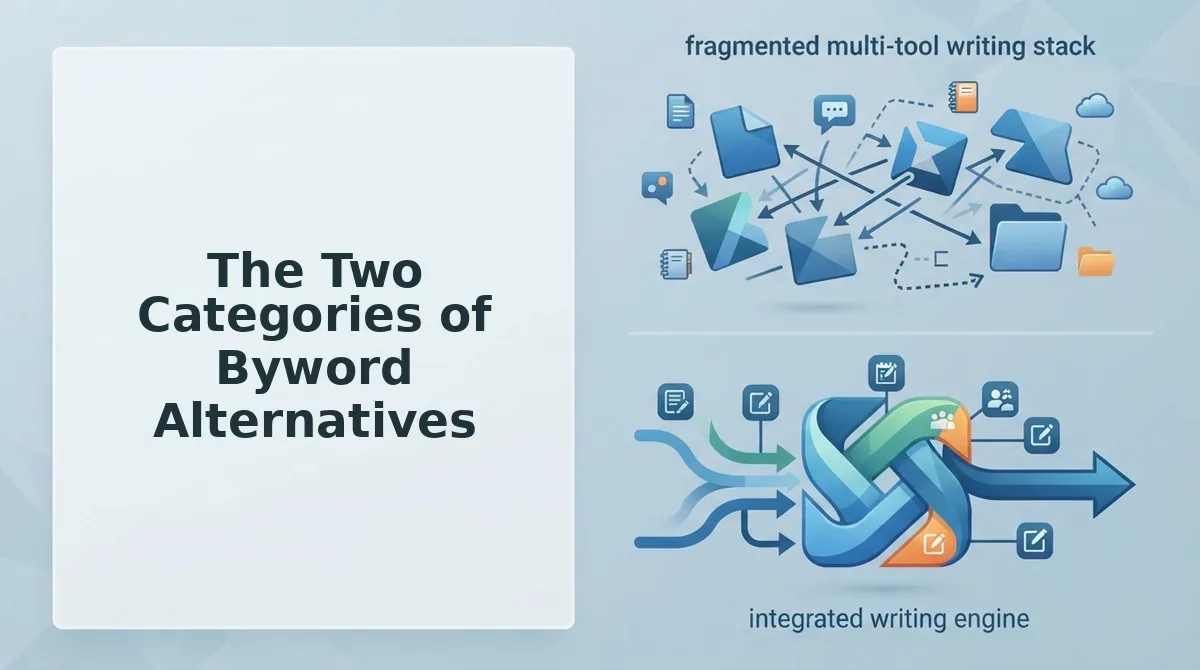
Byword alternatives split into two distinct categories: programmatic generators that assemble articles from SERP data at high volume, and context-grounded engines that crawl your site, extract brand voice rules, and apply them before drafting. Most roundups miss this distinction and treat "brand voice" as a prompt feature rather than a workflow difference.
Programmatic generators, including Autoblogging. ai, Agility Writer, and SEOWriting. ai, share Byword's core approach. They pull search results, identify content gaps, and generate articles quickly. Their strength is throughput: if you need hundreds of articles across many keywords, they deliver. Their weakness for niche blogs is the same as Byword's: no pre-draft understanding of your site's voice, structure, or audience.
Context-grounded engines work differently. They start by crawling your XML sitemap, inspecting your published pages, and extracting brand context files, tone, vocabulary, formatting habits, recurring arguments. Only then does drafting begin. This is the category where sitemap context extraction vs Byword becomes the decisive comparison: one approach knows your site before writing; the other discovers your site after writing.
Here's the self-contained answer to the core query: Which Byword alternative is best for a niche blog that needs brand voice? A context-grounded engine that crawls your XML sitemap, extracts brand voice rules from your existing pages, and applies those rules before generating drafts, because niche blogs depend on a consistent, recognizable voice that programmatic SERP assembly cannot replicate without manual editing. Tools that only offer "brand voice" as a prompt field are still programmatic generators in disguise.
| Category | How It Works | Brand Voice Handling | Best For |
|---|---|---|---|
| Programmatic generators | Assemble articles from SERP data and templates | Post-hoc editing or prompt fields | High-volume publishers who edit heavily anyway |
| Context-grounded engines | Crawl your sitemap, extract voice rules, then draft | Applied before drafting | Niche blogs where voice consistency drives conversions |
Now let's look at seven specific tools across both categories.
7 Byword Alternatives Compared
These seven tools are ranked by how well they preserve niche brand voice, publish without friction, and optimize for AI answer citations, the three criteria most comparison posts ignore.
- BloGoose, crawl-first brand voice extraction, WordPress-native publishing, and AEO optimization built in. BloGoose crawls your sitemap and extracts brand context files before drafting a single word, so every article sounds like your site, not a generic AI. It publishes natively to WordPress with no Zapier dependency and includes AI content engine with brand voice extraction plus AEO features that target chatbot citations. Use it when brand voice consistency and AI visibility are non-negotiable.
Brand voice extraction WordPress path AEO optimization Crawl-first, pre-draft Native Built in - Autoblogging. ai, programmatic high-volume generation with no pre-draft brand voice extraction. Autoblogging. ai prioritizes bulk output over voice fidelity, so niche bloggers must manually inject tone and terminology after generation. It suits content farms and aggregators more than voice-sensitive niche sites. Use it only if volume trumps brand consistency.
Brand voice extraction WordPress path AEO optimization Prompt-only Zapier/manual None - Agility Writer, programmatic and SEO-focused, but brand voice editing is manual. Agility Writer produces well-structured, keyword-targeted drafts, yet you must hand-edit every article to match niche terminology and tone. It works for bloggers with an editorial pass built into their workflow. Use it when you have time for voice correction but want strong on-page SEO scaffolding.
Brand voice extraction WordPress path AEO optimization Prompt-only Zapier/manual None - SEOWriting. ai, programmatic multi-language generation without native WordPress publishing. SEOWriting. ai handles 50+ languages and bulk drafts, but its publishing path relies on integrations rather than a direct WordPress connection. Niche bloggers targeting non-English markets may find the language coverage valuable. Use it for multilingual clusters, then export manually.
Brand voice extraction WordPress path AEO optimization Prompt-only Zapier/manual None - KoalaWriter, programmatic and SERP-informed, with brand voice as prompt only. KoalaWriter pulls live SERP data to shape drafts, which helps topical relevance, but brand voice lives entirely in your prompt. If you change prompts between articles, consistency drifts. Use it for research-informed drafts when you maintain a strict prompt library.
Brand voice extraction WordPress path AEO optimization Prompt-only Zapier/manual None - ZimmWriter, desktop-based and cost-effective, but no context-grounded workflow. ZimmWriter runs locally for a flat fee, which appeals to budget-conscious bloggers, yet it cannot crawl your site to ground drafts in existing brand context. You supply all voice rules manually per session. Use it when cost control outweighs automation depth.
Brand voice extraction WordPress path AEO optimization Prompt-only Manual None - Cuppa, programmatic bulk-focused generation with no AEO features. Cuppa targets high-volume publishers who need many drafts quickly, but it offers no citation optimization for AI answer engines. Niche blogs chasing chatbot visibility will need a separate tool. Use it for bulk draft production when AEO is not a priority.
Brand voice extraction WordPress path AEO optimization Prompt-only Zapier/manual None
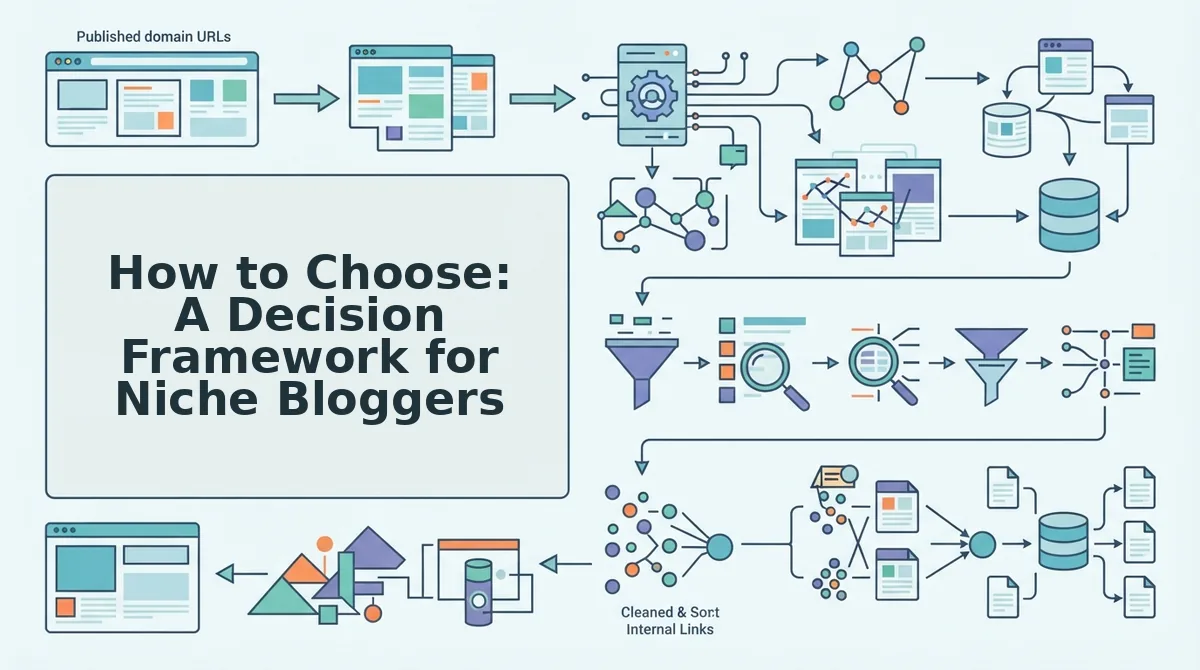
How to Choose: A Decision Framework for Niche Bloggers
Match your publishing volume, brand voice requirements, and AI citation goals to the right tool using this three-step framework.
Prerequisites: Know your monthly publishing target, have one representative article that captures your brand voice, and confirm whether you need AI chatbot citations.
- Set your publishing volume threshold. Write down your monthly post target. If you publish 20+ posts per month and brand voice is non-negotiable, choose a context-grounded engine like BloGoose that extracts voice rules before drafting. You should see a clear yes/no on whether volume demands automation depth or allows manual editing.
- Test brand voice extraction, not just output quality. Run the same niche topic through two tools and compare how closely each matches your existing site tone. Check whether the tool crawls your sitemap and builds a brand context file, or whether voice lives only in your prompt. Success looks like drafts that need minimal tone edits without you re-explaining terminology every session.
- Verify the publishing path and AEO features. Open the tool's integrations page and confirm whether WordPress publishing is native or requires Zapier. Native WordPress publishing eliminates manual upload and Zapier dependencies. If you want AI chatbot citations, look for AEO content optimization features, not just Google ranking. You should see a direct WordPress connection and a named AEO or citation-optimization module before committing.
If your workflow demands voice consistency at scale plus AI answer visibility, an autopilot SEO content platform that combines crawl-first extraction, native publishing, and AEO optimization resolves all three decision points in one stack.
FAQ: Byword Alternatives for Niche Blogs
Direct answers to the questions niche bloggers ask most when evaluating Byword replacements.
Which Byword alternative supports custom brand voice rules?
BloGoose supports custom brand voice rules by crawling your sitemap and extracting brand context files before drafting. Most alternatives, including Autoblogging. ai and KoalaWriter, treat brand voice as a prompt you must rewrite for every article. Crawl-first extraction means your terminology, tone, and formatting rules persist across all generated content without manual re-entry.
Can these tools publish directly to WordPress?
BloGoose publishes natively to WordPress with no Zapier dependency. Most programmatic generators, including SEOWriting. ai and Agility Writer, require Zapier integrations or manual copy-paste uploads. Native publishing removes a failure point and lets you schedule posts without maintaining third-party automation workflows.
Do any alternatives optimize for AI answer citations?
BloGoose includes AEO content optimization features designed for AI chatbot citations, not just Google rankings. Competitors like Cuppa and ZimmWriter focus solely on traditional search. If you want your niche content quoted in ChatGPT, Perplexity, or Google AI Overviews, look for a tool that explicitly names AEO or citation optimization in its feature set. Learn more about how to get cited in AI answers.
Why does my niche blog sound generic after switching from Byword?
Generic output happens when a tool drafts from prompts alone without grounding in your existing site content. Byword alternatives that skip site crawling cannot learn your niche terminology, audience assumptions, or formatting habits. Choose a tool that extracts brand context from your published pages before generating the first draft.
How much manual editing do Byword alternatives require?
Editing load depends on whether the tool extracts brand voice pre-draft or post-draft. Prompt-only tools like Autoblogging. ai and KoalaWriter require a full tone pass on every article. Context-grounded engines like BloGoose reduce editing to fact-checking and minor polish because voice rules are applied during generation, not after.
Brand voice is the filter that makes every other feature matter
Byword alternatives split into two camps: fast generic drafters and context-grounded publishing engines. For niche blogs, the second category wins every time. Your audience can smell a generic article from the first sentence.
The decision framework from earlier reduces to one question: does the tool extract your brand voice before it writes a single word? If the answer is no, you are buying speed at the cost of trust.
BloGoose is the only option in this comparison that combines crawl-first brand extraction, WordPress-native publishing, and AEO optimization in one workflow. That means your niche blog gets articles that sound like you, publish without manual copying, and get structured for AI answer engines from the first draft.
Your next step: review the AI content engine with brand voice extraction and see how crawl-first context changes the output quality before you commit to any alternative.
The tools are converging on speed. The differentiator is context. A niche blog that sounds like itself will outrank a generic blog that publishes twice as fast.