
Jasper vs automated blog engines for hands off publishing
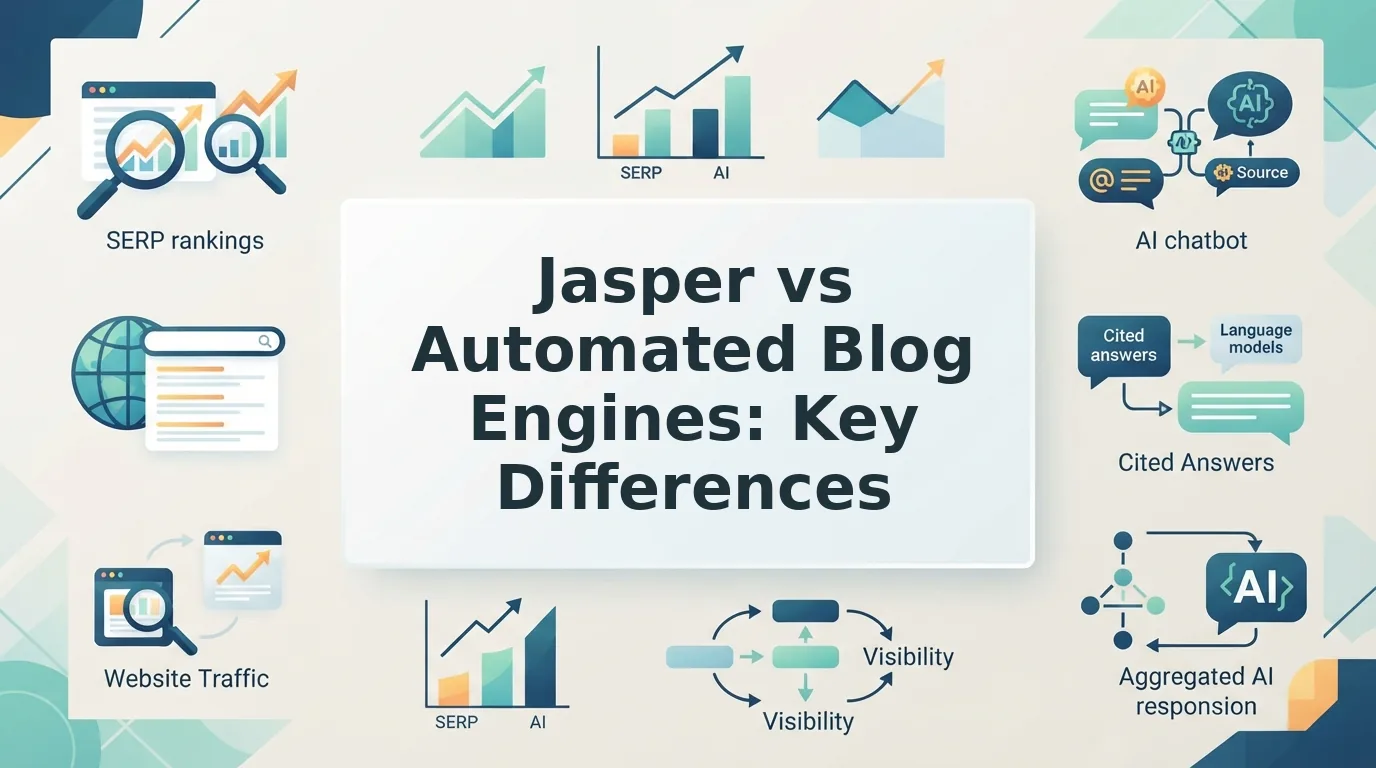
You just spent 45 minutes prompting Jasper to match your brand voice, exported the draft, reformatted it in WordPress, and manually submitted the URL to Google Search Console, only to realize you have 11 more articles to publish this week. That manual handoff is the quiet killer of content velocity, and it's exactly why the Jasper vs automated blog engines debate matters more in 2026 than ever before.
You're not wrong to want AI-assisted writing. Jasper produces solid drafts. But if your goal is hands-off publishing, the gap between "AI wrote it" and "it's live and indexed" is where your time actually disappears. Automated blog engines close that gap by crawling your site, extracting your brand voice, writing, publishing to WordPress or a custom API, and triggering search indexing, all without a single copy-paste.
Here's what you'll learn: exactly where Jasper's workflow stops, what an automated blog engine does differently at each stage, and which one fits your publishing reality. Stick around for the cost comparison, the per-seat vs. per-pipeline math flips the decision for most teams, and the reason isn't what you'd expect.
What Jasper Actually Does (and Where It Stops)
Jasper is an AI writing assistant that generates marketing copy and long-form drafts from prompts, templates, and brand voice settings you configure manually. It produces the words, and then hands the rest of the publishing workflow back to you.
Think of Jasper like a talented freelance writer who only works inside a notebook. The notebook produces excellent pages, but someone still has to type those pages into your website, format them, add images, and tell Google the page exists. Jasper's job ends at the notebook.
The workflow looks like this:
- Prompt engineering homework: You build and maintain brand voice prompts, tone guidelines, and content templates yourself. Jasper doesn't crawl your existing site to learn how you actually write.
- Draft generation: Jasper produces the article text based on your inputs. Quality depends heavily on how well you've engineered the prompt.
- Manual export: You copy the draft out of Jasper, paste it into your CMS, reformat headings, add internal links, and upload images.
- Manual indexing request: After publishing, you open Google Search Console and submit the URL for indexing, a step most teams forget or batch weekly.
Where Jasper stops is the draft. Everything after the draft. CMS upload, formatting, image placement, internal linking, and search indexing, is manual labor. For teams publishing 10+ articles per month, that manual handoff becomes the bottleneck, not the writing itself.
Jasper's brand voice feature also requires ongoing maintenance. You tell it how to sound; it doesn't extract voice rules from your published pages. If your brand voice evolves or you onboard a new writer, you update prompts manually. For a deeper look at how brand context extraction compares to Jasper's approach, see Jasper vs brand context extraction.
An automated blog engine like BloGoose inverts this model: it crawls your sitemap, extracts brand voice from your live pages, drafts, publishes to WordPress or a custom API, and triggers indexing, removing the export-upload-submit loop entirely.
What an Automated Blog Engine Does Differently
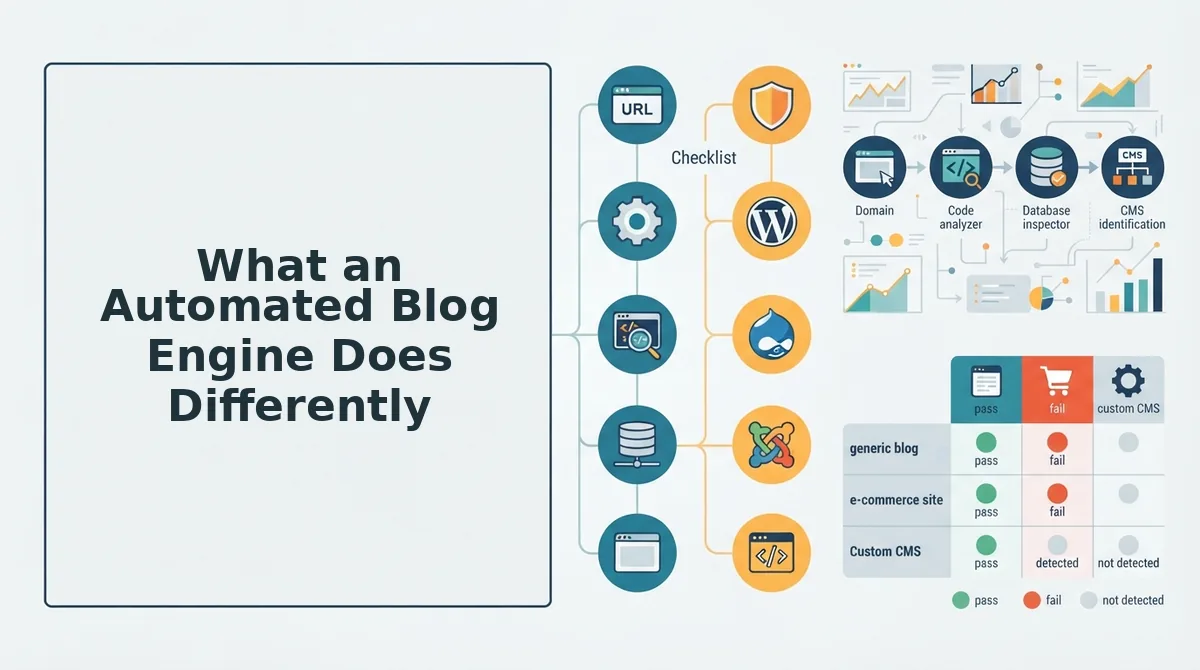
An automated blog engine is a platform that handles the full content pipeline, site crawling, brand voice extraction, SERP research, drafting, image generation, CMS publishing, and search indexing, without manual handoffs between tools. Where Jasper stops at the draft, an automated engine carries the article through to a live, indexed URL.
To be fair, Jasper is genuinely strong at what it does. Its draft quality is high when prompts are well-engineered, and its template library saves time for teams that already have a publishing workflow. If you only need written copy and have a dedicated person handling WordPress and indexing, Jasper works.
The difference becomes clear when you map the full pipeline side by side:
| Pipeline Stage | Jasper | Automated Blog Engine |
|---|---|---|
| Site crawl | Not included, you describe your brand manually | Automatically crawls your XML sitemap and published pages |
| Brand voice extraction | Manual prompt engineering and tone settings | Extracts voice rules from your live content |
| SERP research | Limited; you supply keywords and context | Built into the content planning and drafting stage |
| Drafting | Strong, prompt-dependent output | Automated, voice-accurate drafts |
| Image generation | Available in some plans | Included in the publishing pipeline |
| CMS publishing | Manual copy-paste and reformatting | Direct push to WordPress or custom API |
| Search indexing | Manual submission via Search Console | Automatic indexing trigger after publish |
Best for solo writers and small teams with a dedicated publisher: Jasper. If you have one person who owns formatting, uploading, and indexing, Jasper's draft quality is enough.
Best for founders, growth leads, and content publishers who need hands-off output: an automated blog publishing engine. If your goal is rank-ready articles live on your site without copy-pasting, the pipeline automation is the point, not a nice-to-have.
The framework to remember is the Draft-to-Publish Pipeline: draft to publish to auto-index. Jasper covers stage one. An autopilot SEO content platform covers all three. If you're publishing at volume, the bottleneck isn't writing speed, it's everything after the draft.
That bottleneck has a price tag, and it shows up in a place most teams don't look: per-seat software costs versus per-pipeline output.
The Real Cost Difference: Per-Seat vs. Per-Pipeline
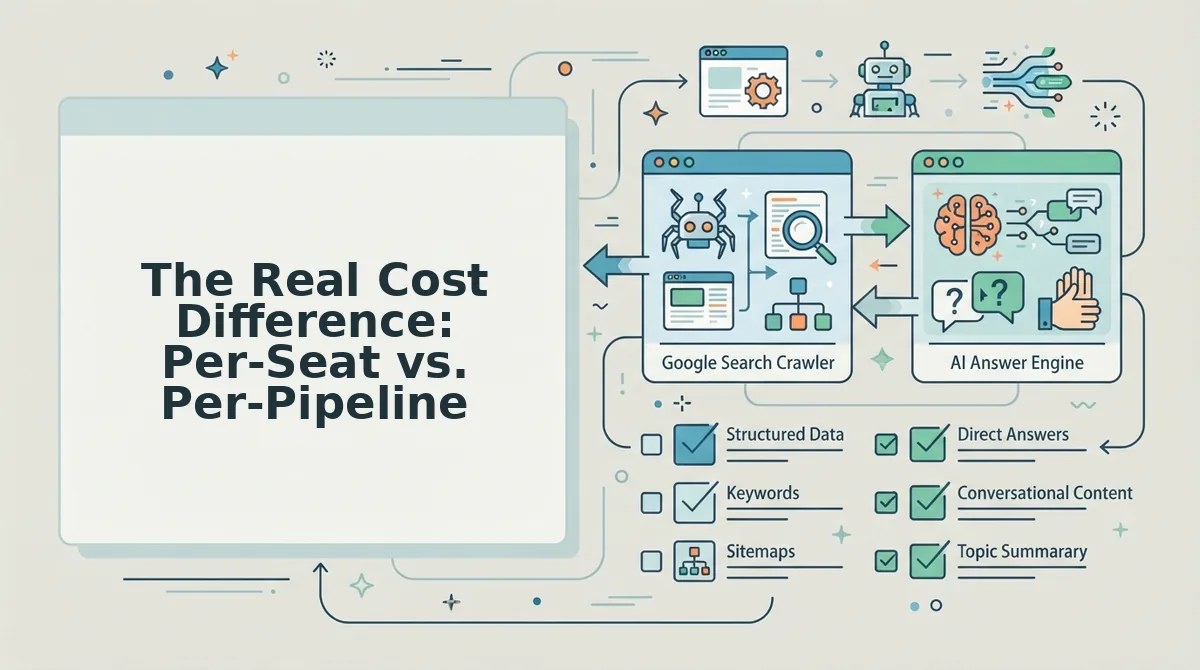
Jasper's pricing model charges per seat for access to its AI writing assistant, while automated blog engines like BloGoose bundle the entire pipeline, research, drafting, optimization, and publishing, into a single workflow cost. The difference becomes material when you calculate cost per published article rather than cost per user.
Jasper is a strong tool for teams that want a collaborative AI writing assistant with brand voice controls and template flexibility. Its per-seat structure works well when multiple humans actively craft and refine copy together. What it does not include is the publishing layer: exporting finished drafts, formatting them for your CMS, and triggering search indexing all remain manual steps that consume editor time.
Automated blog engines invert this model. You pay for the pipeline, not the seat. The engine crawls your site, extracts your brand voice, drafts articles, and ships them to WordPress or your API, with indexing requests included. The cost is tied to output volume, not headcount.
Consider a publisher producing 20 articles per month. With Jasper, a content manager spends roughly 15 - 20 minutes per article exporting, reformatting, uploading to the CMS, and manually requesting indexing in Google Search Console. That is 5 - 7 hours of labor per month on top of the subscription. With an automated engine, those steps are eliminated because the pipeline handles them end-to-end.
| Cost Factor | Jasper (Per-Seat Model) | Automated Blog Engine (Per-Pipeline Model) |
|---|---|---|
| Pricing structure | Per-user LLM subscription | Bundled pipeline cost per output volume |
| Manual export and CMS upload | Required per article | Automated |
| Indexing request | Manual via Search Console | Automated via Indexing API |
| Brand voice extraction | Manual setup and tuning | Automatic from site crawl |
| Labor cost at 20 articles/month | 5 - 7 hours of manual publishing work | Near zero |
Best for agency teams and multi-writer editorial rooms: Jasper, where collaborative drafting and human oversight justify the per-seat cost. Best for solo operators, founders, and lean content teams: an automated engine like BloGoose, where publishing volume matters more than seat count. Check BloGoose pricing to compare pipeline-based plans against your current per-seat spend.
Which One Gets You Indexed and Cited?
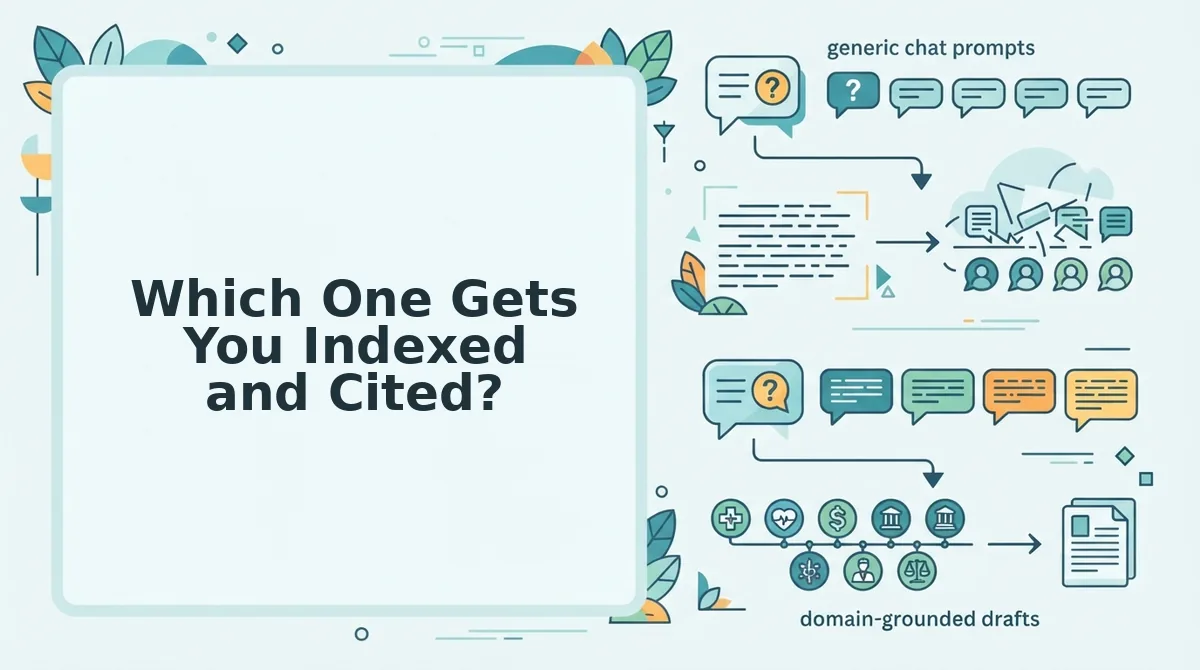
Search indexing is the process by which Google discovers, crawls, and adds your page to its searchable database, and it is the step most AI writing tools leave entirely to you. Jasper produces the draft; getting it live and indexed is your job. Automated engines close that loop.
Think of indexing like a library catalog. Writing a brilliant article but never submitting it for indexing is like printing a book and leaving it in a storage closet, no one can find it because it was never added to the catalog. Jasper hands you the manuscript. An automated engine files the catalog card for you.
Automated blog engines integrate with the Google Indexing API to request crawling immediately after publishing. Instead of waiting days or weeks for Google to discover a new URL organically, the engine pings Google the moment the article goes live. This shortens the gap between publish and visibility.
Citation-ready formatting is the second differentiator. AI answer engines like ChatGPT, Perplexity, and Google's AI Overviews pull from passages that are self-contained, clearly structured, and easy to quote. An automated engine formats content with this in mind: direct-answer sentences, scannable headings, and standalone paragraphs that an AI can lift verbatim without losing context. Jasper can produce well-written prose, but structuring every article for AI citation remains a manual editorial task.
The workflow difference is concrete. With Jasper, you write, export, upload, then manually request indexing in Search Console, and hope the formatting survives your CMS. With an automated engine like BloGoose's AI content engine with search indexing, publishing and indexing requests happen in one automated step, and the content is structured for AI citation from the first draft. If your goal is to be quoted in AI answers, start with how to get cited in AI answers and evaluate whether your current tool formats for that outcome.
How to Choose: A 3-Question Decision Matrix
Three questions route you to the right tool. Answer them honestly about your publishing workflow, not your aspirations.
Prerequisites: Know your monthly publishing volume, your CMS platform, and whether you currently handle indexing manually.
- Ask: Do you publish to a CMS like WordPress or via API? If yes, note whether you currently export drafts manually. If you publish directly to a CMS or API and want that step automated, an automated engine is the better fit. If you publish across many non-CMS channels (social, ads, email) and need a general writing assistant, Jasper works well.
- Ask: Do you need indexing automation? Open your Google Search Console and check how long new pages take to get indexed. If you manually request indexing for every article and it adds hours per month, an automated engine with Indexing API integration removes that step. If indexing is already fast and painless for you, this factor matters less.
- Ask: Do you want brand voice extracted automatically? If you want the tool to crawl your existing site and learn your tone without manual prompt engineering, choose an automated engine. If you prefer to define and refine voice guidelines yourself with a collaborative team, Jasper's manual brand voice setup is a legitimate strength.
If you answered yes to CMS publishing and indexing automation, an automated blog engine is the better fit. If you answered no to both, Jasper's per-seat writing assistant may serve you well. Ready for the most common questions readers ask when comparing these two approaches?
FAQ: Jasper vs Automated Blog Engines
Jasper is an AI drafting assistant that requires manual prompting, editing, and publishing; an automated blog engine crawls your site, builds a content calendar, writes on-brand articles, and publishes them to your CMS without per-article human intervention.
What is the difference between Jasper and automated blog engines?
Jasper generates text from prompts you write and refine, then you copy the output into your CMS. An automated blog engine handles the entire pipeline: site crawling, keyword planning, drafting, on-page optimization, and direct publishing to WordPress or an API. Jasper stops at the draft; an engine ships the finished article.
Do I still need to prompt-engineer with Jasper?
Yes. Jasper's output quality depends heavily on the prompts, brand voice settings, and context you supply for each piece. Automated engines extract brand voice rules from your existing site during setup, so you do not rewrite prompts per article. The engine applies those rules automatically across every piece it publishes.
Can an automated engine actually publish to WordPress without copy-pasting?
Yes. Automated blog engines connect directly to WordPress via API and push finished, formatted articles into your post queue as drafts or scheduled posts. You approve a calendar upfront, and the engine handles drafting, internal linking, meta tags, and publishing without any manual copy-paste step between tools.
Which one gets content indexed faster?
Automated engines typically get content indexed faster because they publish directly to your CMS with sitemap updates and internal links already in place. Jasper requires you to export, format, and publish manually, which adds hours or days per article. Faster publishing cadence signals freshness to search engines and accelerates crawl frequency.
Why does Jasper feel slow for hands-off publishing at scale?
Jasper is a per-seat drafting tool, so every article still needs a human to prompt, review, export, and publish it. At 10+ articles per month, that manual loop becomes the bottleneck. Automated engines treat publishing as a pipeline: one setup, then the system produces and ships articles continuously without per-piece human touchpoints.
For teams publishing more than four articles per month, the core question is whether you want a better drafting assistant or a publishing pipeline. Jasper improves the writing step but leaves research, scheduling, optimization, and CMS publishing as manual tasks. An automated blog engine collapses those steps into one connected workflow, which is why it suits hands-off publishing at scale while Jasper remains a strong fit for high-touch, low-volume content where a human reviews every sentence.
The Bottom Line: Drafting Tools Write, Engines Publish
Jasper sharpens the sentence. An automated blog engine closes the loop from draft to indexed article. That distinction matters more than any feature comparison: if publishing is the bottleneck, a better drafting tool does not fix it. If every article needs a human eye, an engine's automation is overkill.
For hands-off publishing at scale, the pipeline wins. You set the brand voice once, approve the calendar, and the engine ships optimized, internally linked articles straight to WordPress without copy-pasting, prompt rewriting, or manual meta tag work. That is the difference between producing content and operating a content system.
If you are publishing four or more articles a month and want the research-to-index loop automated, start with BloGoose and connect your site to see what a full publishing pipeline produces from your existing content structure.
The teams winning organic search in 2026 are not the ones with the best prompts. They are the ones whose content engine never stops publishing.