How to Remove Generic AI Phrasing From Long-Form Blog Sections

Read a section of your draft alone and it holds. Paste it back between its neighbors and it goes flat â the same -ing opener, the same three-item list, the same "not just X, it's Y" turn three paragraphs apart. No sentence is broken. The shape is, and shape is invisible in a scrolling draft.
That is why the usual advice misses. Searchers ask this at the section level; nearly every result answers at the document level or the tool level. To remove generic AI phrasing from blog sections, the unit of work has to be the section.
Below: a three-class taxonomy â frequency, structural, evidential â with a different fix for each, then the gate to run before assembly. BloGoose learns voice rules from your published pages and drafts section by section against them, so the review becomes a comparison instead of a hunch. One caveat first: a single tell survives every word swap.
Why does generic phrasing survive a full-draft cleanup?
Because a full draft collapses every section into one continuous rhythm, and a repeated sentence shape three paragraphs apart is invisible to the person reading straight through â only to the person who typed it twice.
Section-level editing is the practice of judging one block of prose on its own screen against a fixed reference before it rejoins the post. Think of it like tuning a single instrument in a quiet room rather than inside the full band: the wrong note is obvious alone and masked in the mix.
Start simple â open the section on a blank page with nothing above or below it. Intermediate â keep two files open, your style guide and two or three published sections that already sound right. Advanced â read for shape rather than vocabulary, and flag every sentence that mirrors the one before it. Those two files and one habit are the prerequisites the steps later assume, and no subscription substitutes for them.
The contrast is easiest to feel. Read cold inside a 1,800-word draft, "By streamlining the workflow, teams unlock faster publishing" passes. Read alone, it is the third trailing participle on the page.
Phrasing is a citation problem too. Answer engines skip vague, unattributed passages when choosing what to quote, so a section that sounds generic loses the citation as well as the reader â precisely the gap optimizing sections for AI answer engines closes. BloGoose extracts those style rules once from your crawl and applies them per section, so the comparison stays consistent across a calendar.
AI phrases to avoid in blog writing, sorted by the fix each one needs
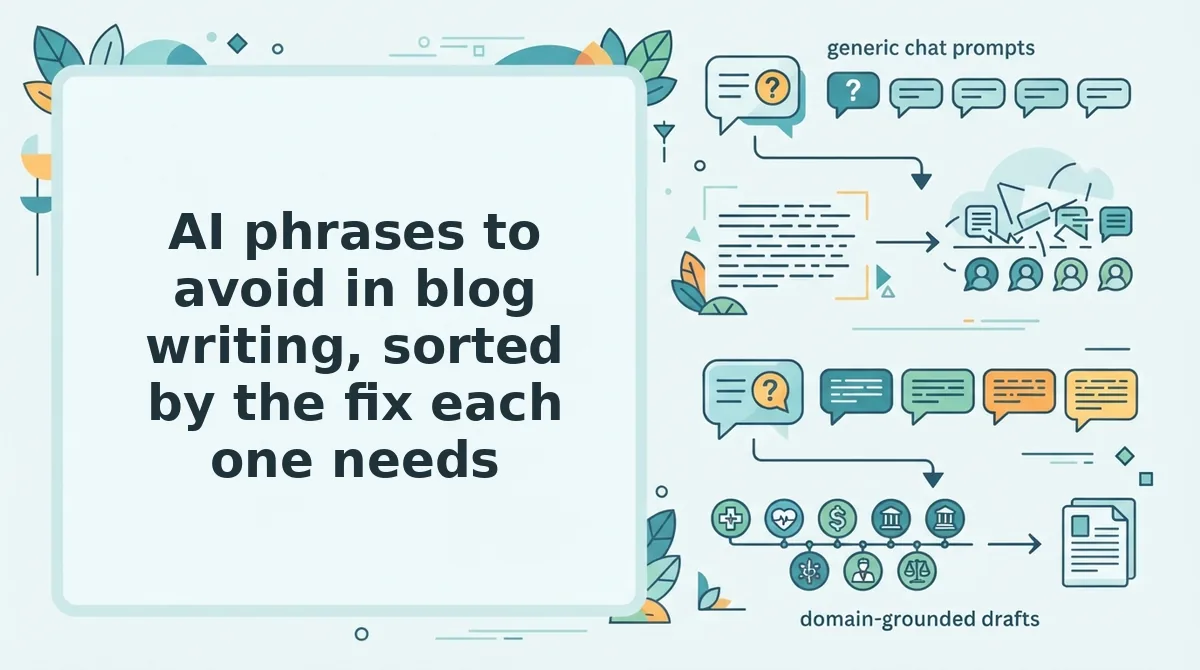
Generic phrasing needs three different fixes, not one banned-word list: overused terms get swapped, sentence shapes get restructured, and unsourced claims get attributed or cut.
| Class | Examples | Fix | Risk if ignored |
|---|---|---|---|
| Frequency | delve, robust, landscape, leverage, seamless, tapestry | Swap, under a per-term budget rather than a ban | The section reads like every other result on the query |
| Structural | Trailing present-participle clauses, "not just X, it's Y", three-item tricolons, "In today'sâ¦" openers | Restructure the sentence, not the words | Survives every thesaurus pass, so the edit never lands |
| Evidential | "studies show", "experts agree", "many believe" | Name the source or delete the claim | Costs trust and gives answer engines nothing quotable |
Frequency tells: swap them under a budget
Overuse, not existence, is what marks text as generic â most of these words are ordinary English. Cap each term at one appearance per section and spend the slot where it earns its place, which keeps the vocabulary varied without gutting meaning.
How to run the section gate, step by step
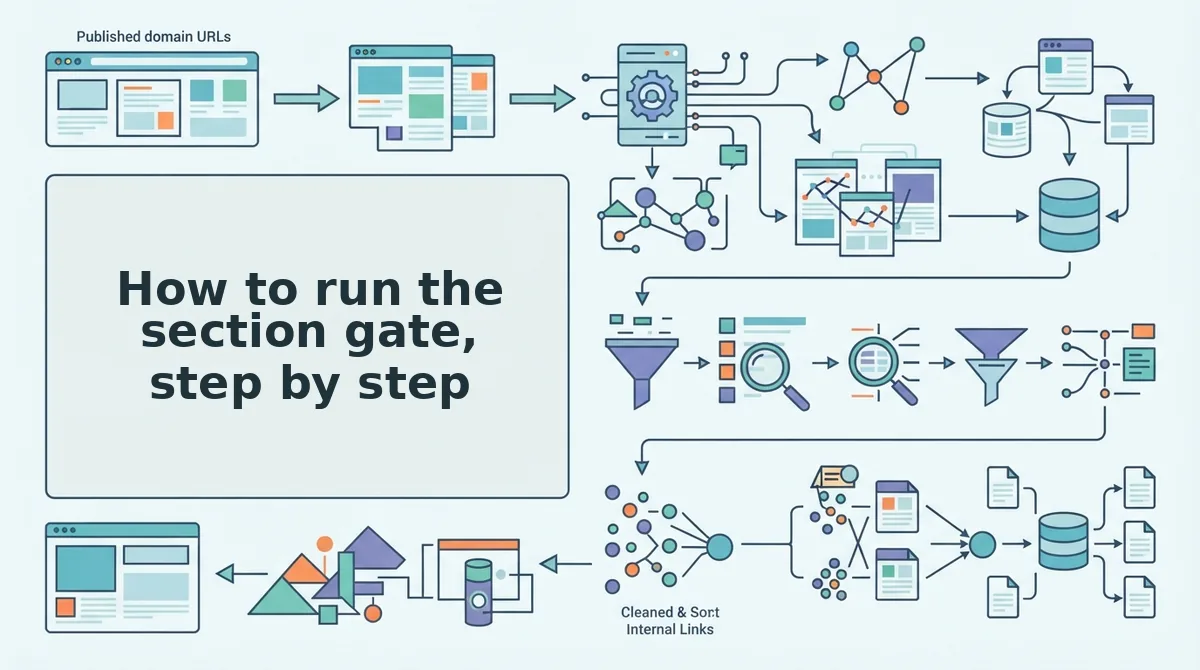
The section gate is a repeatable pass you run on one section in isolation, before it joins the draft: sweep for frequency, structural, and evidential tells in that fixed order, apply the delete test to every clause, then rewrite until a clean sweep comes back. One section takes five to ten minutes.
Have four things open before you start: the section pasted into a blank document, your style guide, that section's target keywords, and a find-all function or word-frequency counter.
- Open a blank document and paste in the section alone, with no surrounding headings. You should see repeated openers and matching sentence lengths that were invisible inside the full draft.
- Find each frequency tell on your list, one at a time, and swap only the ones where a plainer word says the same thing. You should end with no unmotivated use of "leverage," "robust," "landscape," or "delve."
- Read for structural tells second: tricolons, "not just X, it's Y," "In today'sâ¦" openers, and trailing present-participle clauses. You should be able to name the pattern behind every sentence you changed.
- Delete each clause and reread the sentence. If no claim disappears, leave it deleted; that is the delete test, and it clears filler faster than any thesaurus.
- Repeat steps 2 through 4 until a full sweep returns nothing â usually two passes on a first draft. Only then paste the section back into the draft.
Here is the diff, with both fixes named. Before: "The platform leverages robust automation, streamlining workflows and delivering value across the content lifecycle." After: "The platform drafts, checks, and publishes an article without a human touching the file." The rewrite removed the trailing participle clause and collapsed three abstractions into three verbs that name what happens.
One rule overrides the rest: a sentence carrying a target keyword gets restructured, never deleted. Skipping the gate is how quality drift compounds, since a whole post from one prompt repeats the same tells in every section.
What to check before the sections get assembled, and what not to cut
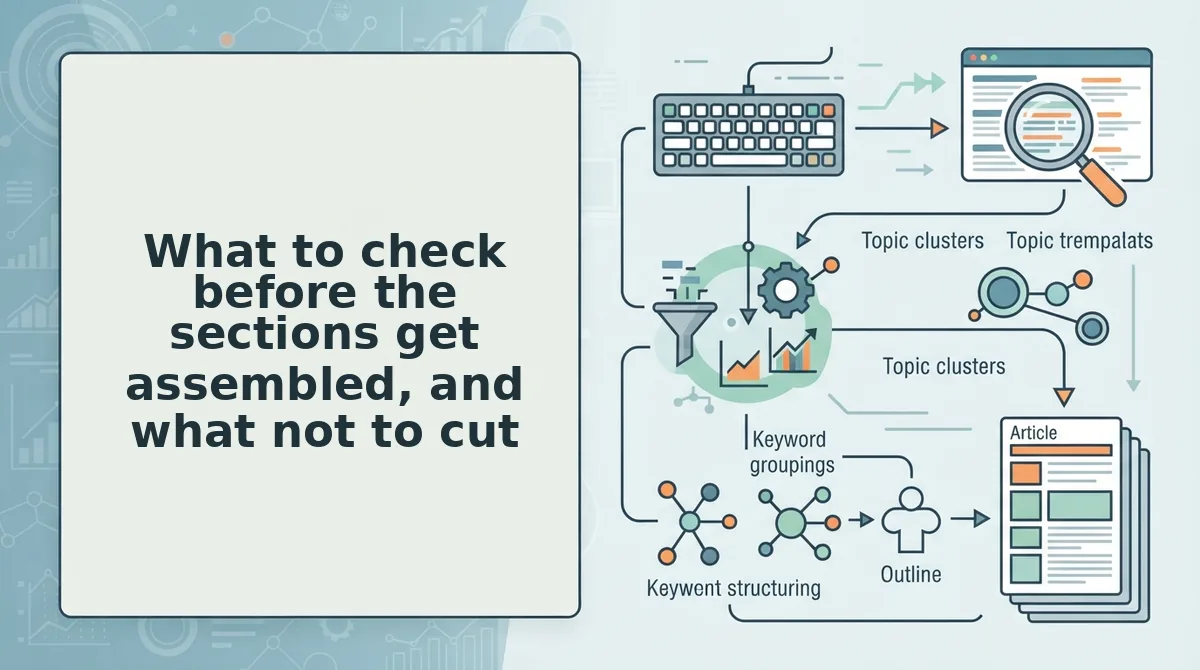
Check four things before assembly: read-aloud rhythm, named sources per section, your own word frequencies, and surviving keywords.
- Read every section aloud. Monotone rhythm is the tell the eye skips, and a readability check surfaces it numerically when you cannot hear it.
- Count named sources per section. Zero sources plus three adjectives means the section is generic by construction, not by word choice.
- Run the word-frequency sweep on your own draft. Your repeats are exactly the ones no generic-phrase list contains.
- Confirm each target keyword still sits in a sentence you kept. Restructured is fine; missing is not, and that check removes the fear that voice edits break SEO.
Detector scores are not a stable target: the same paragraph can be classified differently across tools, and this procedure has no control over any of them. Chasing a zero also pushes writers into unnatural avoidance. Several widely banned words are ordinary English with centuries of use, so refusing them outright creates a new tell â sentences bent around a word that was never wrong. Judge the section by whether each sentence carries a claim a reader could verify.
When a cut is arguable, the delete test breaks the tie: if nothing is lost, it was filler; if a claim vanishes, you have a missing source rather than a missing synonym. BloGoose extracts your voice rules from your published pages and drafts against them section by section, so the gate has less to catch.
Make the cleanup a rule, not a rescue
Three classes of tell, three kinds of fix, one gate applied before assembly. The finding worth keeping is that most generic phrasing is a missing source wearing a thesaurus â the sentence read vague because nothing specific had been gathered to put in it.
Every diff you wrote is also a rule. Move it into the two files your drafting step reads, the style guide and the writing examples, and the next draft arrives closer to clean instead of waiting for a rescue pass. Find-and-replace cannot do that, because it cannot see sentence structure.
Today, gate one section. This week, add three of your diffs as rules. Ongoing, have the drafting step apply them per section â an automated pipeline that enforces your rules while it writes is the difference between editing and re-editing. Point BloGoose at your own domain and it reads your published pages for the voice rules the first draft should already follow.