Why Single Prompt Blog Posts Lose Quality After the Intro
Put paragraph one next to paragraph twelve and read both aloud. The flattest drafts repeat the most nouns â the same "content," the same "strategy," the same three adjectives circling back like a carousel.
That repetition is the visible symptom of a single prompt blog post quality problem most publishers feel before they can name it. The draft holds its shape for a few hundred words, then quietly stops arguing and starts restating. You watched an article open sharp and finish sounding like a summary of itself.
This piece gives you the four structural causes behind that collapse, then a sectional method for rebuilding the same article one brief at a time. Bring two things: one flattened draft and the outline that produced it.
Past a threshold we will name shortly, the output stops degrading and starts running backwards â paraphrasing its own introduction as if it were a conclusion. Understanding that inversion saves you from rewriting the prompt a fourth time. BloGoose drafts section by section from your outline by default, which is the structural fix applied for you.
Why do single prompt AI blog posts get worse after the introduction?
Because the failure is structural, not a matter of model capability. Past roughly 600 words the model stops writing from your brief and starts writing from the text it has already produced, weighted by whichever instruction landed last.
That collapse has a name. Context rot is the measurable drop in output fidelity as the material a model must weigh grows longer. Think of it like dictation: whatever you said thirty seconds ago is still ringing in the transcriber's ears, while the style guide you read out at the top has faded into a general impression.
Three separate pressures stack as the draft lengthens:
- Recency bias â the last line of your prompt outranks the thesis on line three.
- Self-reference â the model imitates its own sentences instead of your brief.
- Attention thinning â the same finite spread of attention now covers far more text.
This is not a vendor problem. A publisher's write-up on dev.to ran an identical prompt through GPT-4o, Claude Sonnet and Gemini 1.5 Pro; all three drifted past roughly 1,200 words. Context-rot testing across 18 frontier models found degradation on longer inputs as a general pattern rather than a quirk of one release.
The shape is consistent enough to plot. For scale: a 2,000-word article is roughly 3,000 tokens before you append a 1,500-token style guide.
| Word count | What holds â and what breaks |
|---|---|
| 0â600 | Voice, thesis and sentence rhythm stay inside the brief. |
| 800â1,200 | Drift: sections restate the introduction instead of advancing it. |
| 1,800+ | Inversion: the draft paraphrases its own opening as if concluding. |
Nothing in that curve responds to a better adjective. It responds to shorter, self-contained passages â the same principle behind AEO optimization, where each block has to survive being lifted out of context and still answer the question.
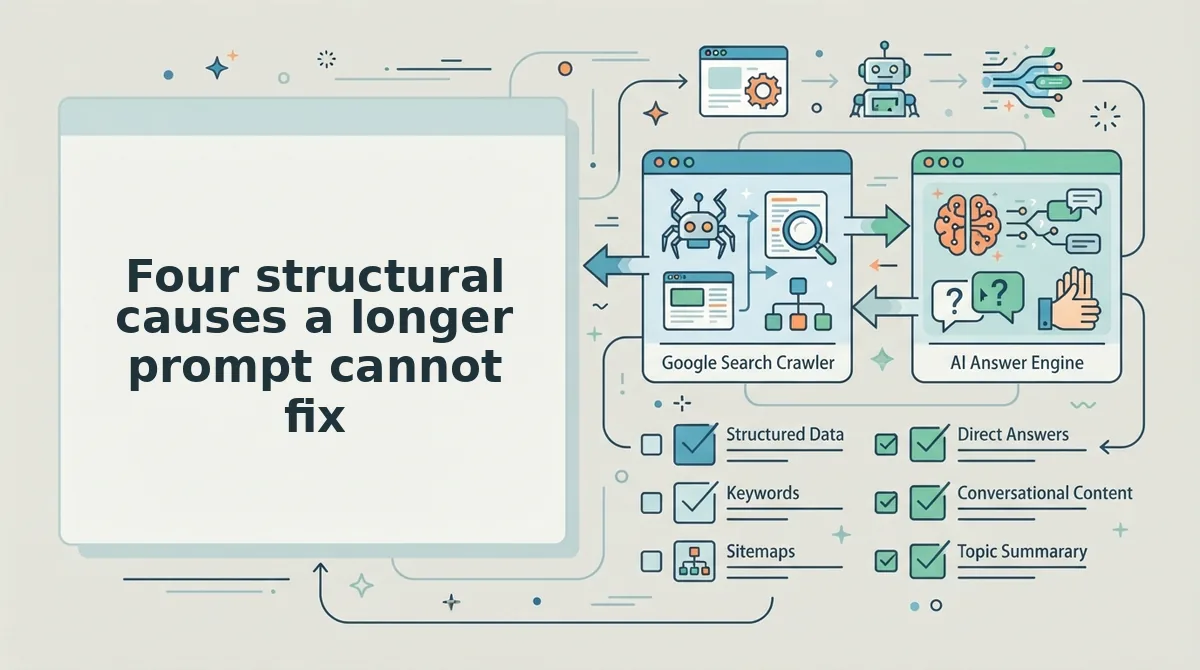
Four structural causes a longer prompt cannot fix
These break because of how generation works, not because your instructions were vague. Adding a fifth paragraph of guidance makes every one of them worse.
- One prompt asked to hold thesis, voice and ending at once. A publication pipeline cannot live inside a prompt. Thesis, tone rules and closing argument compete for the same attention budget, and the earliest instruction loses. Split them into separate briefs per section, and the developer consensus on the OpenAI forums lands where practitioners already are: build a pipeline, do not prompt one.
- Trusting a bigger context window. Advertised capacity is storage; effective attention is what actually gets read. "Lost in the middle" findings show material buried between the top and bottom of a long input receives the least weight, so extra instructions stop earning compliance.
Band Advertised window vs. effective attention 600 words 200k tokens advertised â full compliance in practice 1,200 words 200k tokens advertised â partial, middle instructions decay 1,800 words 200k tokens advertised â late sections override the brief - Each section re-summarizing the last one. The model treats its own prior paragraphs as source material, so summary compounds into paraphrase. Before: "Churn spiked 34% after the pricing change." After the model re-reads its own draft: "Churn, as we have seen, is a significant challenge facing many businesses." Give each section a fresh brief and the loop closes.
- Reviewing the finished article instead of the outline. By the time you read the draft, a structural error sits 2,000 words deep and no line edit repairs it. Audit the outline against your helpful content standard first, one claim per section, then draft.
Fixing the structure means changing where the instructions live, not how long they are â which is exactly what section-by-section drafting does.
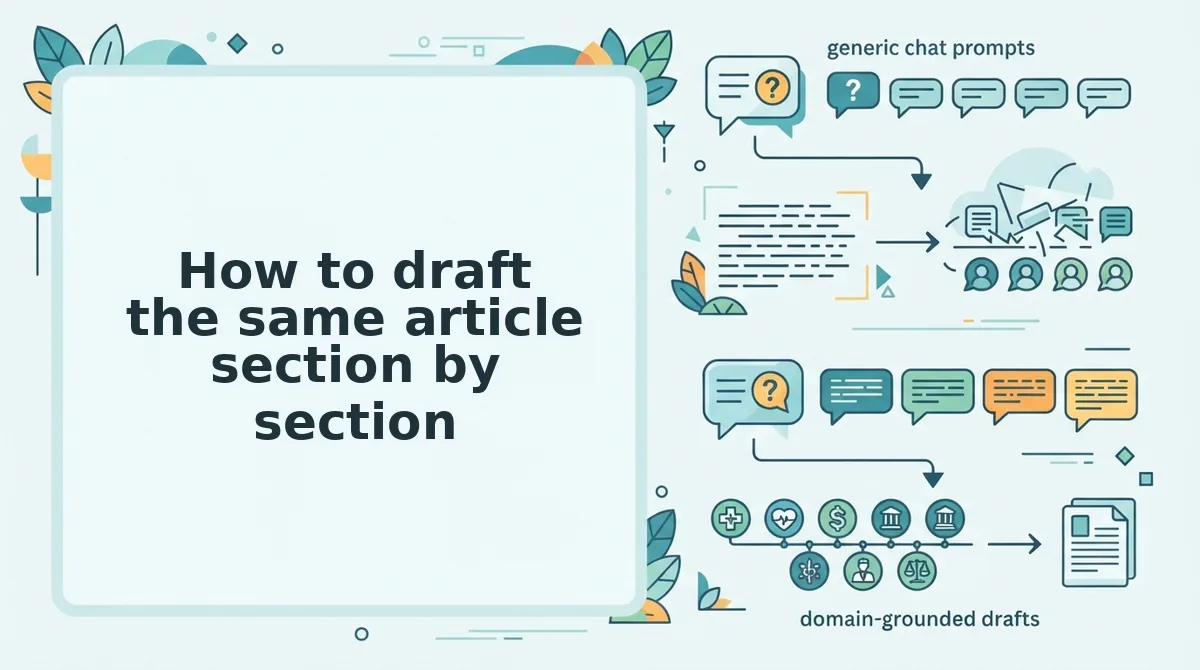
How to draft the same article section by section
Sectional drafting costs roughly 20 minutes of setup, then about four minutes per heading. Prerequisites: a frozen outline, a draft document, and a model you can prompt one heading at a time â either a chat window or an engine that runs the loop for you.
- Freeze the outline first (5 minutes). Open your draft and lock the H2 order so no heading moves mid-draft. Success looks like 6â12 headings with no two carrying the same job.
- Write one brief per heading (15 minutes). Type three lines under each H2 â job, length, prohibition. It is a standard SEO content brief cut down to section size.
- State the single job. Select one verb per heading: teach, compare, prescribe, or summarize. A heading that needs two verbs needs splitting into two headings.
- Cap the length. Divide your target by heading count and write that number into the brief. A 1,700-word article across seven headings gets 240 words each, which is why the back half stops stretching.
- Name the prohibition. Add one line stating what the section must not do, usually re-teaching the previous heading. You should see a brief that could only produce this one section.
- Pass only adjacent context. Upload the current heading plus the heading before and after â never the whole draft, so the model cannot recycle material it has not been shown a use for.
- Assemble without a global rewrite. Paste sections in order and read the seams only. Run no final "smooth this out" pass; that pass reintroduces the drift you just removed.
Pro tip: the must-avoid line is the highest-leverage eight words in the brief. Write it as three lines â Job: explain the mechanism. Length: 240 words. Avoid: restating the threshold already covered. The prohibition is what stops a section from re-teaching the one before it.
Assembled this way, the piece reads as one argument instead of seven summaries of the same point. For the agent-driven version of the loop, see draft blog posts section by section with AI agents.
BloGoose runs this loop end to end: it crawls your site, extracts voice rules, and drafts each heading against its own job, length and prohibition before publishing to WordPress or your API.
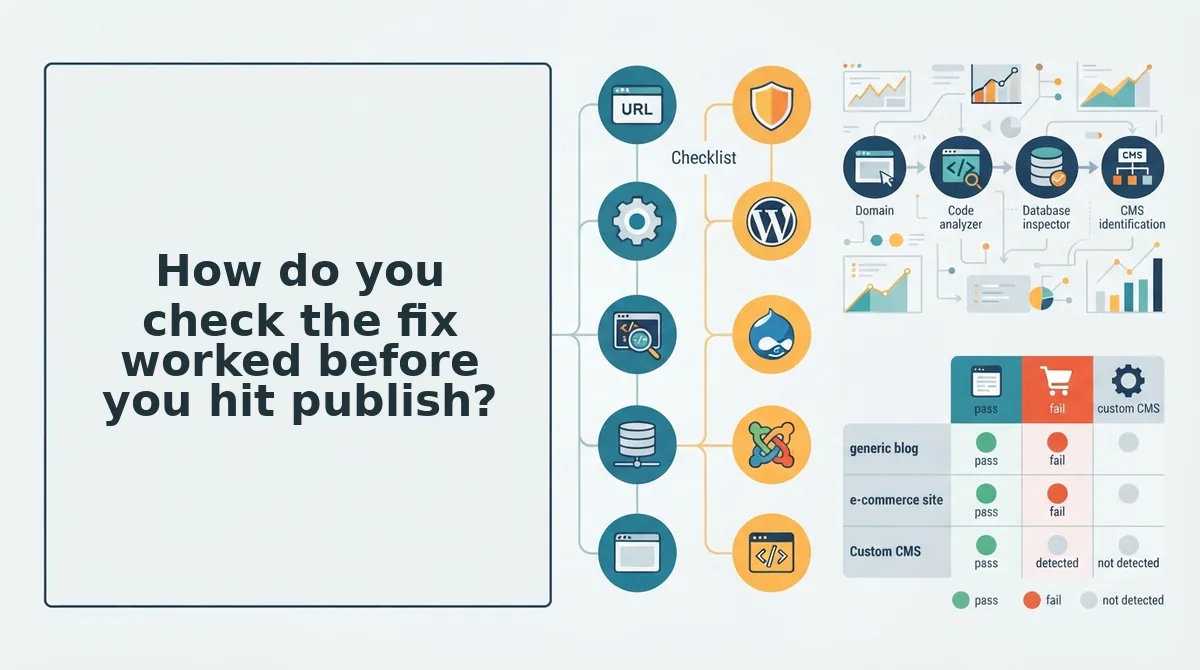
How do you check the fix worked before you hit publish?
The 60-second decay check: read paragraph one, then paragraph twelve, and count the nouns appearing in both. Three or more repeated content nouns means the back half is restating the front rather than advancing it. You need only the assembled draft and your editor's find function.
- Open the draft and compare paragraph twelve to paragraph one (60 seconds). Highlight every shared content noun. You should find two or fewer.
- Audit each H2 seam (2 minutes). Read the last sentence of one section and the first of the next out loud, in isolation. A boundary that only makes sense alongside earlier text is a seam to rewrite.
- Check entity consistency (2 minutes). Search each product or concept name and confirm it never changes form between sections.
- Cut repeated recaps (3 minutes). Flag any point made twice and delete the weaker version. Success looks like every H2 opening with a sentence that points forward.
What to change on your next post
The threshold is the takeaway: quality holds to roughly 600 words, so the back half of every draft needs a plan rather than momentum.
Run one sectional draft on your next post with a brief per heading, then compare paragraph twelve against your last single-prompt version.
A single prompt stays genuinely fine for sub-800-word posts and templated pages where every heading does the same job.
BloGoose runs the brief-per-heading loop as an AI SEO content engine: it crawls your site, learns the voice, and drafts each heading against its own job, length and prohibition. Point it at your next sectional AI writing workflow and read the seams yourself.