How Do I Use Social Research to Validate Blog Topic Intent?
You can rank for the right keyword with the wrong article. The SERP shows you what Google rewards, but it rarely tells you why people search, what frustrates them, or which format they actually finish. That gap is the reason to use social research to validate blog topic intent before you write a word.
To check search intent with social research, read the live SERP for content type, format, and angle. Then search Reddit, YouTube, and niche forums for the same keyword to confirm pain language, preferred format, and exact question phrasing. The outcome is a validated brief that matches what searchers want.
If you have ever shipped a well-optimized post that stalled, you have probably made one of the classic topic research mistakes. This guide shows you how to avoid it in four steps. Before you start, have these ready:
- Your target keyword
- A live SERP (incognito, set to your market)
- 15-20 minutes across Reddit, YouTube, and forums
Keep one scenario in mind as you read. A topic brief returns 0 Reddit threads and 5 YouTube tutorials. Most writers would call that a dead topic. Step 3 explains why it can be the clearest green light you get.
Steps 1 and 2: How Do You Read the SERP and Pull Social Language?
Read the top results with Ahrefs' 3C formula first, then mine Reddit, YouTube, and forums for the language and format the SERP doesn't show. Together, the two steps take about 20-25 minutes per keyword.
You'll need: an incognito browser, your target keyword, and a blank SEO content brief to record what you find.
- Open the SERP and score the 3Cs (5-10 minutes). Ahrefs defines the 3C formula in "Keyword Research Pt 1: How to Analyze Searcher Intent" (154,085 views). Note the dominant content type (blog post, product page, video), the format (how-to, list, comparison), and the angle (beginner, fastest, cheapest). If 7 of the top 10 results share a format, record it. That's your baseline.
- Search each social source and log one signal per source (10-15 minutes). Type the keyword into Reddit search, YouTube, and Google with site: plus a niche forum. Copy phrases word for word into your brief. Use the table below to know what each source tells you.
| Source | Signal to capture | What to copy |
|---|---|---|
| Pain language | Complaints, "I tried X andâ¦" phrasing | |
| YouTube | Format demand | Titles and structure of top-viewed videos |
| Forums | Exact question phrasing | Thread titles written as questions |
Pro tip: Sort YouTube results by view count to read format demand. For keyword research queries, Miles Beckler's Google Trends tutorial (183,843 views) and a step-by-step keyword research video (175,172 views) lead, and both are procedural. That tells you viewers want walkthroughs, not theory.
Social research adds a fourth C to Ahrefs' three: concern. This is a BloGoose extension, not part of the original Ahrefs formula. Concern is the specific worry or frustration behind the search, such as fear of wasting a budget or confusion about a setup step. You find it in Reddit complaints and forum follow-up questions, not in SERP titles. Recording concern alongside content type, format, and angle lets your article answer the question searchers typed and the anxiety they didn't type. You should finish Step 2 with four filled fields: type, format, angle, and concern.
Save the 3C + concern checklist as a reusable template in your brief. If you want the voice side handled too, BloGoose crawls your site and extracts brand voice rules, so every validated brief drafts in your tone.
Step 3: What Should You Do When SERP and Social Signals Disagree?
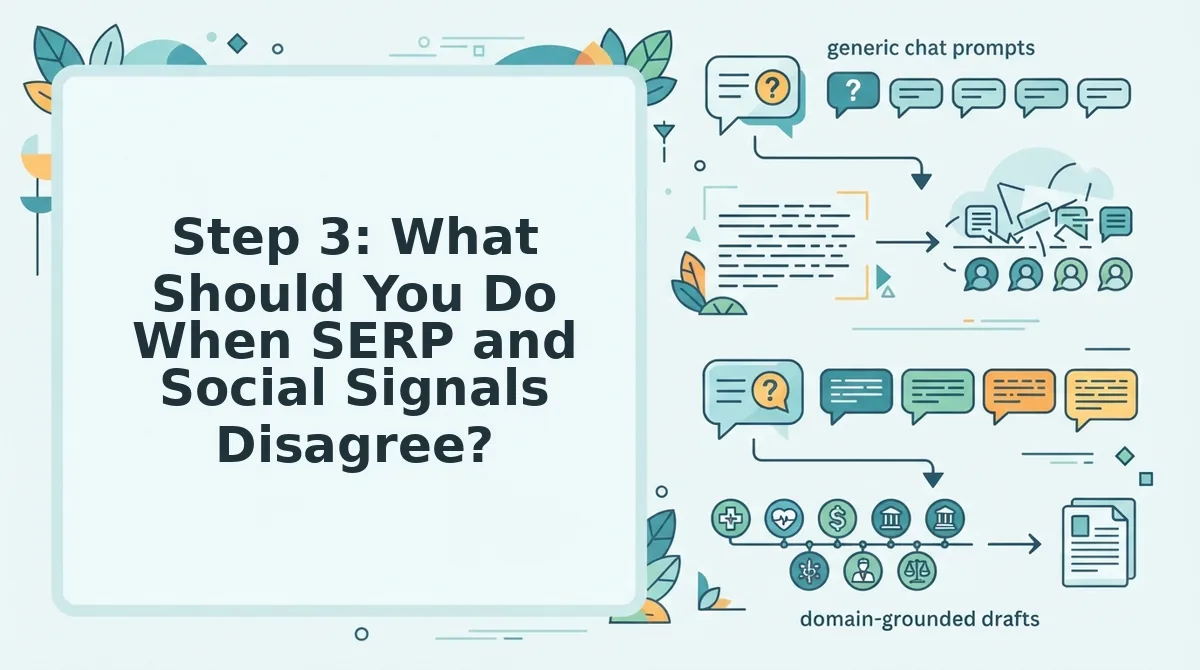
Compare SERP intent (clear or mixed) against social intent (agrees or conflicts), then pick one of four actions. Write as planned, reframe the angle, split into two articles, or skip the topic. This Intent Agreement Matrix turns conflicting signals into a single decision.
A mixed-intent SERP is a results page where no single content type or format dominates, such as guides, product pages, and videos competing for the same keyword.
| SERP intent | Social intent agrees | Social intent conflicts |
|---|---|---|
| Clear | Write as planned | Reframe the angle |
| Mixed | Split into two articles | Skip |
- Write as planned: Best for solo operators who need a fast, low-risk publish.
- Reframe the angle: Best for growth leads who can win by addressing the concern competitors ignore.
- Split into two articles: Best for publishers building topic clusters who can cover each intent with its own URL.
- Skip: Best for small teams whose calendar slots are worth more on a cleaner keyword.
Return to the thin-signal case from the introduction. A topic with 0 Reddit threads and 5 procedural YouTube videos sits on an informational SERP. Zero Reddit threads does not mean zero demand. It means people aren't debating the topic, they're following instructions. The SERP is clear, and YouTube confirms a procedural format, so it lands in the agree quadrant. The right move is to write a procedural playbook with numbered steps, time estimates, and screenshots. Treat silence on Reddit as a missing debate, not a missing audience, whenever video demand and the SERP point the same way.
SERP tools like Ahrefs remain the stronger source for volume and difficulty data. Social research doesn't replace them. It fills in the why.
Running this matrix across dozens of keywords by hand is slow. BloGoose builds pillar-focused 30-day calendars from your site structure, so each validated topic slots into a cluster instead of a spreadsheet.
With the quadrant chosen, the last job is capturing it in writing.
Step 4: How Do You Turn Validated Intent Into the Brief?
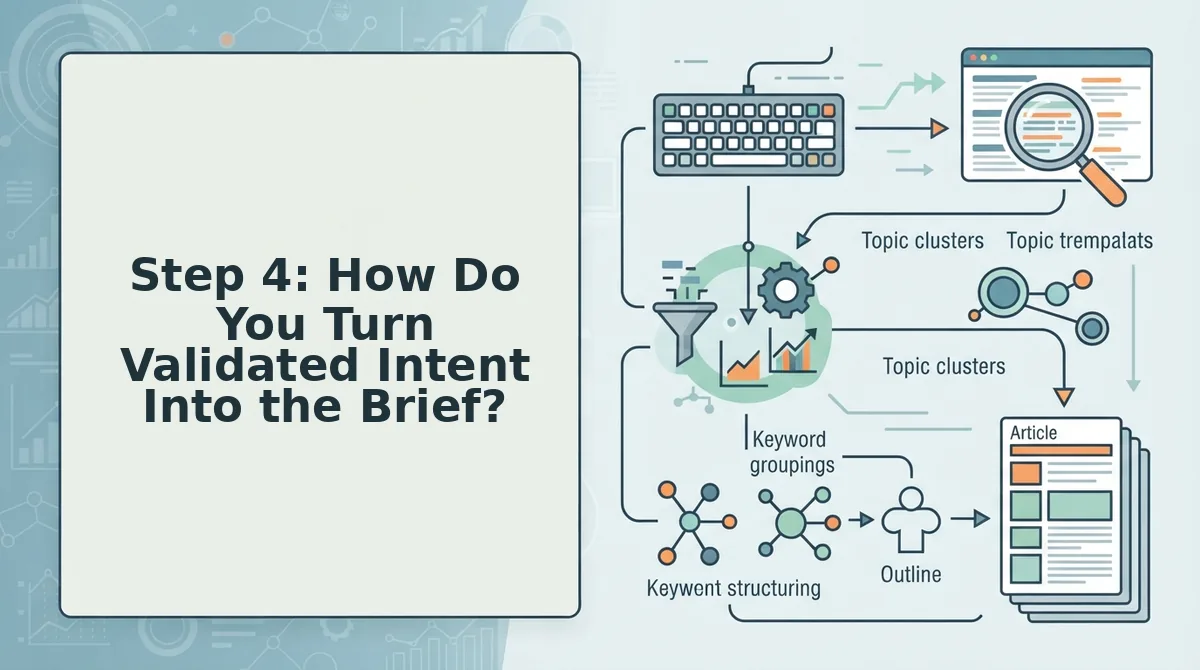
Map each piece of evidence to a specific brief component. Social question phrasing becomes your H2s, concern language becomes the hook, the format signal sets the content type, and leftover questions become the FAQ.
- Write H2s in the audience's question phrasing. Copy the exact wording people used in threads, comments, and video titles, then frame each H2 as that question. Answer engines match user prompts to headings, so real phrasing raises the odds that a passage gets lifted into an AI answer.
- Place a 40-60 word direct answer under each H2. Open every section with a self-contained answer that still makes sense when quoted on its own. This passage is what chatbots cite, and it sits at the core of AEO content optimization.
- Turn concern language into the intro hook. Use the worry or frustration that appeared most often in your social pull as the opening problem statement. Readers stay when the first lines name their actual pain rather than a generic topic summary.
- Set the content type from the format signal. If the top-viewed results are tutorials, brief a step-by-step guide. If they are comparisons, brief a table-led comparison, because a format mismatch loses to pages that deliver what searchers expected.
- Route unanswered questions into the FAQ. List every question that came up in social research but has no H2 in your outline, then answer each one in two or three sentences. These answers capture long-tail prompts and round out the blog outlines answer engines cite.
How Do You Check It Worked, Even When Social Research Comes Back Empty?
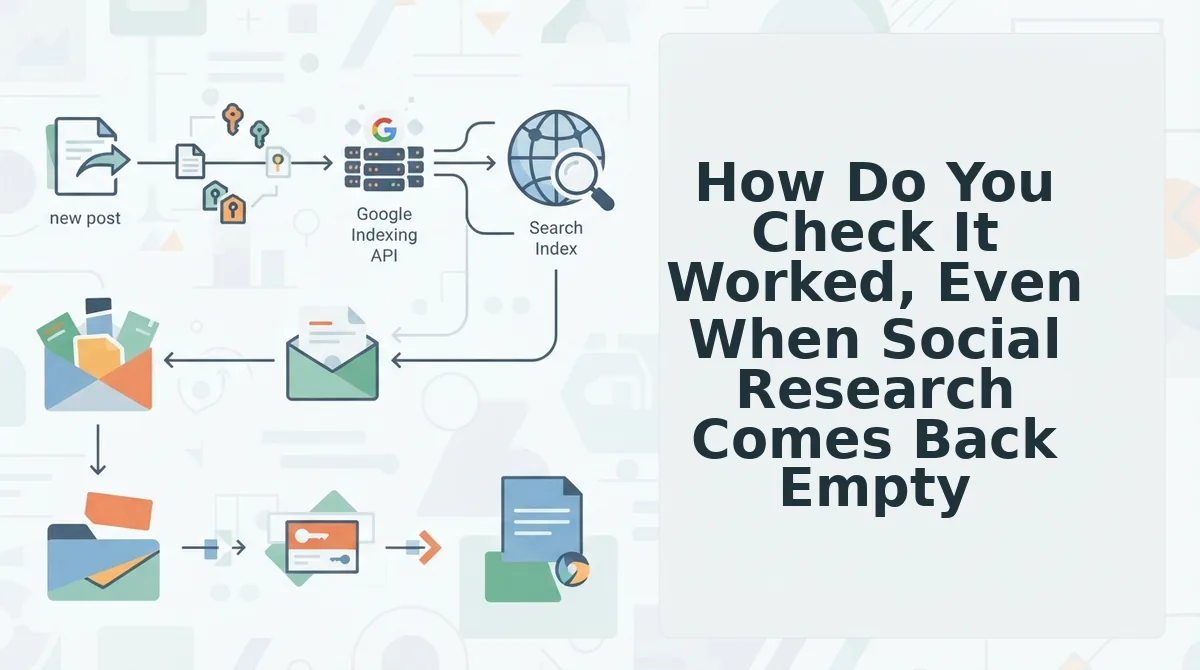
Run a 3-point verification check on the finished brief. If social research returns nothing, treat the silence as a signal about how people learn the topic, not as a failure.
Intent verification is the process of confirming that a brief's structure, format, and angle match what searchers actually want. Think of it like checking a recipe against the photo before you serve the dish.
The 3-point check
- Headings: Every H2 maps to a real SERP or social phrasing.
- Format: The content type matches the top-viewed results.
- Angle: The hook and framing address the concern you found.
The thin-signal protocol
An empty Reddit pull suggests practitioners learn the topic through tutorials rather than debate. When that happens, shift weight to video and SERP evidence.
This exact brief followed that path. The pull returned 0 Reddit threads plus 5 YouTube results, and all five were tutorials or lessons, so the playbook format stayed.
The least-viewed result, from Marketing Fundas, had 1,303 views. That gap shows low-authority tutorials on AI topics leave room for a stronger procedural guide.
Validate Intent Before You Draft
Intent is evidence you collect, not a guess you make, and an empty social pull is still evidence. The playbook format survived here because silence pointed to tutorials, not because the format was assumed.
Run the 3C plus concern check, then classify your topic in the matrix. After that, build the brief directly from social phrasing.
Final checklist: signals agree, so write; SERP leads, so match format; social leads, so test the angle; both thin, so follow the tutorial signal.
To skip the manual loop, drop your domain into the setup wizard of the AI SEO content engine. BloGoose reads your site and generates briefs with live SERP context. Validated intent then flows straight into rank-ready, citation-optimized drafts.