How to Consolidate SEO Research Writing and Publishing
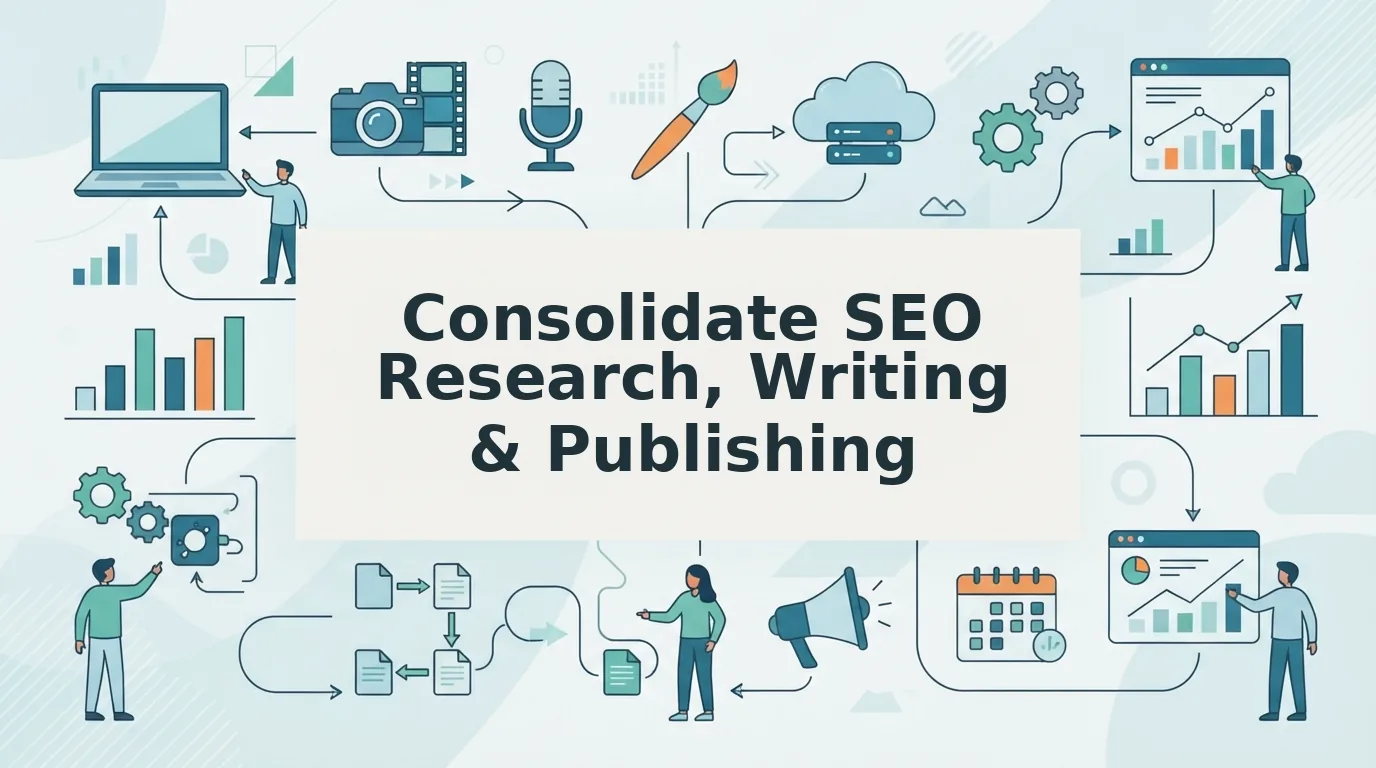
Your content team doesn't have a writing problem, it has a logistics problem. Most SEO systems are slow, manual, and fragmented, and the average publisher still juggles a 12-tab content stack just to ship one article. That's the reality BloGoose was built against: not another chat window with hopes, but a single pipeline that lets you consolidate SEO research writing and publishing into one continuous flow.
You already know the pain. Research lives in one tab, drafting in another, optimization in a third, and publishing requires a fourth login you've forgotten the password to. You agree it's unsustainable, and you're right.
This guide promises a clear path out: a three-stage framework that merges live SERP analysis, brand-aware drafting, and automated WordPress publishing into one workflow. You'll learn why fragmented stacks fail, what a consolidated pipeline actually looks like, and how to build one step by step. Along the way, you'll see how to replace your 12-tab SEO stack with a single dashboard, and why the final stage of the pipeline contains a surprising indexing step almost nobody covers.
Why Fragmented SEO Workflows Fail
A fragmented SEO workflow is any content production process that splits research, writing, optimization, and publishing across disconnected tools with no shared context. Fragmented workflows fail because every handoff between tools introduces friction, context loss, and silent errors that compound across a publishing calendar.
Think of a fragmented SEO stack like cooking a meal in five different kitchens. You chop vegetables in one building, boil water in another, and hope the sauce you started three blocks away hasn't burned by the time you arrive. Each kitchen has the right tool for one step, but the commute between them destroys the dish. A consolidated pipeline is one kitchen with every station within arm's reach.
The Ahrefs SEO Copywriting Tutorial, with over 131,954 views, demonstrates the problem in practice. Even an excellent manual workflow still requires separate research, writing, and optimization steps, each demanding its own tool, tab, and mental reset. The tutorial is genuinely useful, but it implicitly normalizes the very fragmentation that slows publishers down.
Here's what a typical five-tool stack costs compared to one consolidated pipeline:
| Stage | Five-Tool Stack | Consolidated Pipeline |
|---|---|---|
| Keyword & SERP research | Separate SERP tool + manual spreadsheet | Live SERP analysis built into the workflow |
| Drafting | AI chat window + copy-paste | Brand-aware drafting from extracted context |
| Editing & optimization | Standalone editor + on-page checklist | SEO and AEO baked into the draft |
| Images | Separate image generation tool | Image creation included in the pipeline |
| Publishing | Manual CMS upload + indexing request | Direct WordPress publishing + indexing automation |
Every additional tool adds a context switch, and every context switch is an opportunity for a keyword to slip out of an H2, a brand voice rule to get ignored, or a publish date to slip by a week. The alternative to manual keyword tools is live SERP research that feeds directly into drafting, no export, no reformatting, no re-reading a spreadsheet you built last Tuesday.
The Three Stages of a Consolidated SEO Pipeline
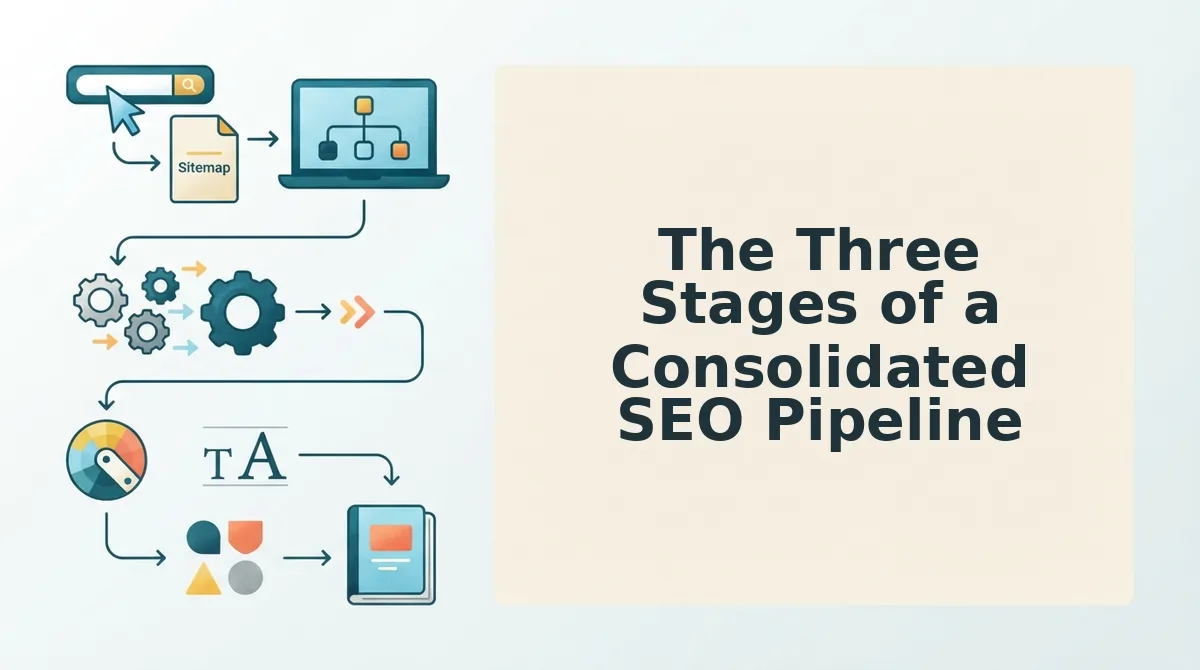
A consolidated SEO pipeline has three stages: research, drafting, and publishing. Each stage feeds the next automatically, so context never leaves the system and every article ships with the same quality bar.
- Stage 1, Live SERP Research. Live SERP analysis is the process of examining the actual search engine results page for a target query at the moment of content planning, rather than relying on a static keyword export. It matters because search intent shifts as Google updates rankings, featured snippets, and AI overviews, and a keyword list from last month won't tell you what's ranking today. Use it by feeding current top-ranking pages, their headings, and their content gaps directly into your draft brief, so your article targets what searchers actually see right now.
- Stage 2, Brand Context Extraction. Brand context extraction is the process of crawling your existing website to identify the voice, terminology, and structural patterns that make your content recognizably yours. It matters because generic AI drafts read like every other AI draft, and readers, plus AI answer engines, reward distinct, consistent voices. Use it by generating a Brand Context File: eight Markdown context documents built from a sitemap crawl that capture tone rules, product language, and formatting conventions, then feeding those files into every draft so the output sounds like you without manual prompt engineering.
- Stage 3, Direct Publishing with Indexing Automation. Direct publishing is the process of sending a finished article to your CMS through an API or native integration instead of manual copy-paste. It matters because the gap between "draft complete" and "live on the site" is where articles die, and where competitors who publish faster win the SERP. Use it by connecting your pipeline to publish directly to WordPress, then triggering the Google Indexing API immediately after publication so Google crawls your new URL within hours, not weeks. This post-publish indexing step is the most overlooked lever in consolidated SEO, most publishers stop at publishing and wonder why their content sits unindexed for a month.
Each stage removes a handoff, and each removed handoff removes a failure point. That's the whole game, and the next section shows you exactly how to build this workflow step by step.
How to Build Your Consolidated Workflow Step by Step
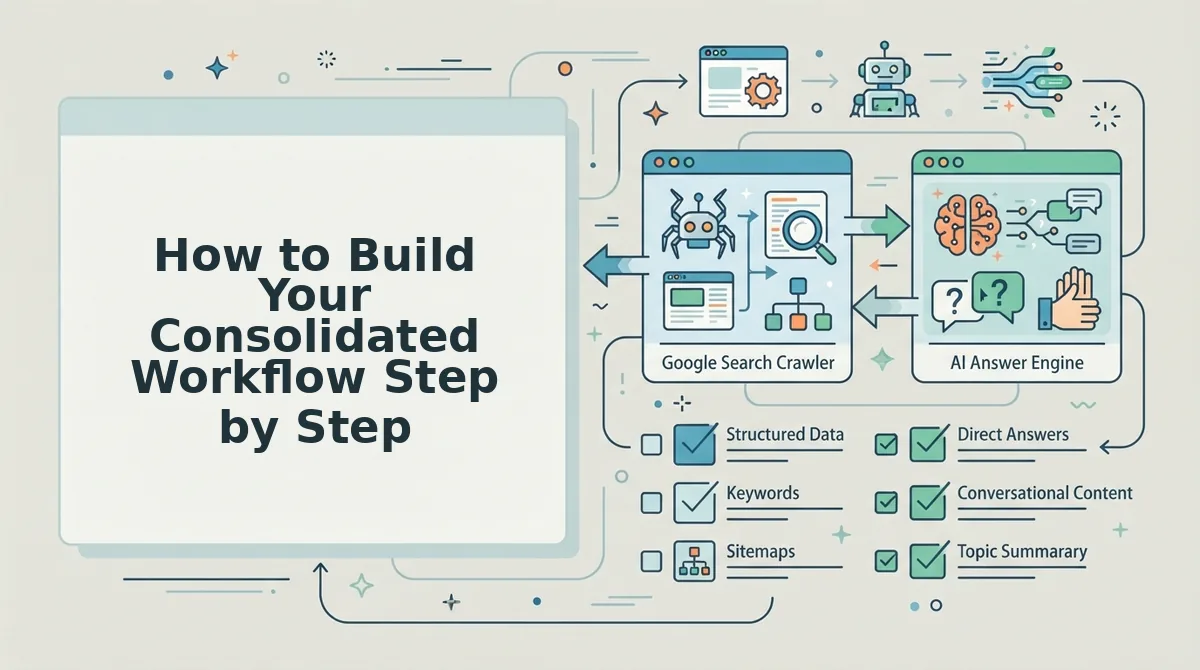
A consolidated SEO workflow replaces manual handoffs between research, drafting, and publishing with a single pipeline that moves from sitemap crawl to live article in under an hour. You need a domain with an XML sitemap, access to a CMS (WordPress or a custom API endpoint), and an AI content engine that handles all three stages.
- Open your AI SEO content engine and drop your domain into the setup wizard. The engine locates your XML sitemap automatically and crawls every published page. You should see a crawl progress indicator followed by a green checkmark confirming the sitemap was parsed.
- Wait for brand context generation to complete. The engine extracts tone, terminology, formatting preferences, and citation patterns from your existing pages. You should see a downloadable brand context file appear, review it once, then reuse it for every future article.
- Select your target keyword cluster and let the engine research live SERPs. It pulls current ranking pages, People Also Ask questions, and featured snippet formats. You should see a research summary listing competitor headings and content gaps before drafting begins.
- Approve the generated outline, then let sectional drafting write each block sequentially. Sectional drafting produces tighter, more coherent articles than one-shot generation because each section is drafted against the outline and the previous section's context. You should see each section appear with a status badge: drafted, optimized, or needs review.
- Click Publish, then choose WordPress or your custom API from the destination dropdown. The engine formats the article, injects internal links, and pushes it live. You should see a publishing confirmation with the live URL and an indexing request logged.
Here is the decision flowchart showing where automation replaces manual handoffs:
- Research: Manual SERP review and keyword spreadsheets to Automated: Engine crawls sitemap, generates brand context, and researches live SERPs without handoff.
- Draft: Manual prompt engineering and copy-paste between tools to Automated: Sectional drafting writes against the outline and brand context file.
- Publish: Manual CMS login, formatting, and image upload to Automated: Direct push to WordPress or API with indexing request included.
A Wooninjas video (342 views) demonstrates Claude paired with Ahrefs MCP as an emerging live-data-plus-AI practice, but that workflow stops at research, it has no drafting or publishing stage. Consolidation closes that gap. If you want the calendar built before you start drafting, use a 30-day blog calendar from site crawl as your first step.
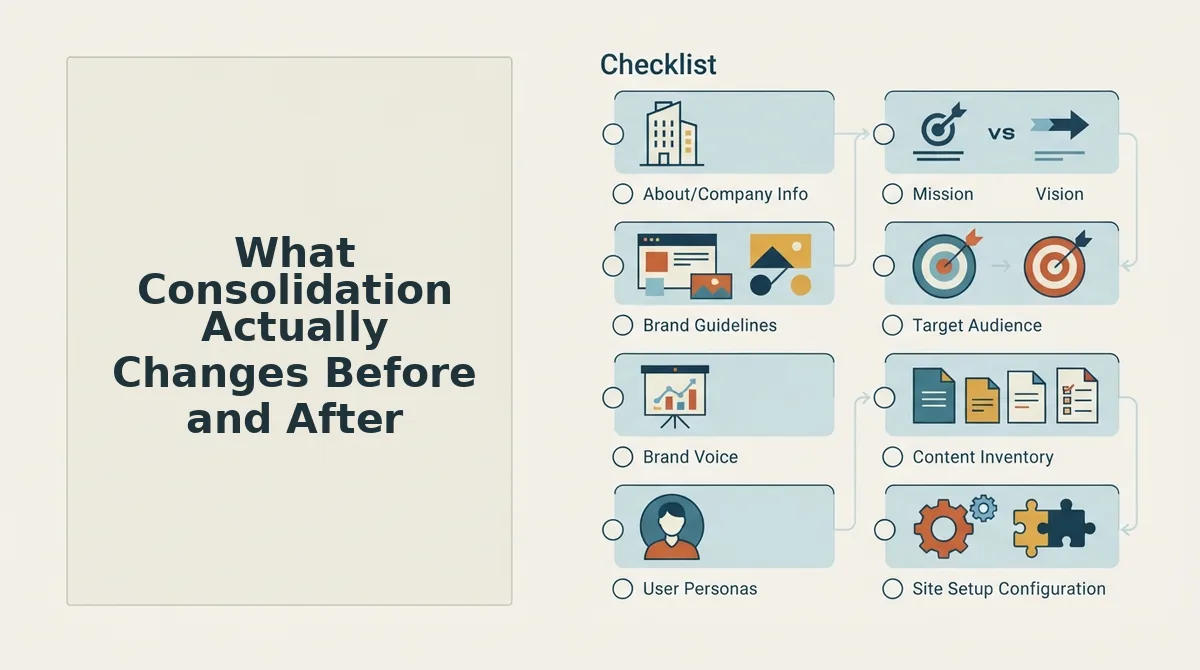
What Consolidation Actually Changes Before and After
Consolidation removes the handoffs where context leaks: brand voice drifts in copy-paste transfers, keyword intent gets lost between spreadsheet and draft, and publishing delays pile up when five tools each need a login. The measurable differences show up in time per article, voice consistency, and indexing speed.
| Stage | Fragmented Workflow | Consolidated Pipeline |
|---|---|---|
| Research | Manual SERP review, keyword exports, competitor tab sprawl | Engine crawls sitemap, generates brand context, researches live SERPs in one pass |
| Drafting | Prompt engineering per section, copy-paste between chat and doc | Sectional drafting writes against outline and brand context file |
| Publishing | Manual CMS login, formatting, image upload, internal linking | Direct push to WordPress or custom API with indexing request logged |
| Indexing | Manual Search Console submissions, waiting on crawl queues | Publishing confirmation includes indexing request at the moment of publish |
Competitor strengths are real: standalone AI writers like Jasper and Copy.ai offer strong brand voice training, and Surfer SEO remains a solid on-page optimization tool. What they lack is the publishing layer, you still export, format, and upload manually. Automated SEO content platforms close that loop.
Best for solo operators and small teams: A consolidated engine like BloGoose, where dropping a domain into the setup wizard triggers crawl, brand context generation, SERP research, drafting, and publishing without a single manual handoff.
Best for large enterprises with custom CMS requirements: A hybrid stack, keep your existing research tools, but add an API-based publishing layer to eliminate the final manual step.
Frequently Asked Questions About Consolidating SEO Workflows
Consolidating SEO workflows means replacing a multi-tool stack with one pipeline that handles research, drafting, optimization, and publishing. The questions below come from real searches by content managers and SEO leads evaluating whether consolidation is worth the switch.
How do I stop juggling five tools for one blog post?
Replace the tool stack with a single AI SEO content engine that crawls your site, researches live SERPs, drafts with your brand voice, and publishes directly to WordPress or your API. One login replaces the spreadsheet, the chat window, the optimizer, the image tool, and the CMS session.
Can AI actually write content that matches my brand voice?
Yes, when the engine extracts brand context from your existing published pages first. It learns your tone, terminology, and formatting patterns from real content, then applies those rules to every draft. The output stays consistent because the brand context file is reused, not re-prompted each time.
What happens after I hit publish, how do I get indexed fast?
A consolidated engine logs an indexing request at the moment of publishing, rather than waiting for you to manually submit the URL in Search Console. Faster submission means faster crawl queue entry, which shortens the gap between publish and first appearance in search results.
Why does my content lose quality when I move it between tools?
Quality drops because each handoff strips context: keyword intent gets flattened in spreadsheets, brand voice gets lost in copy-paste, and formatting breaks in CMS imports. A single pipeline preserves context from crawl to publish because the same engine holds the brand file, the research data, and the draft.
How long does it take to consolidate an existing SEO workflow?
Setup takes under an hour: drop your domain into the setup wizard, review the generated brand context file once, and connect your CMS. After that, each article moves from keyword selection to published post without manual handoffs, typically in under an hour per piece.
The Bottleneck Was Never Your Content
Every section of this article points to the same uncomfortable truth: your content stack is the bottleneck, not your content. You already have the expertise, the audience insights, and the topical authority. What you lack is a pipeline that moves an idea from research to published page without a dozen handoffs in between.
Consolidation isn't a productivity hack. It's a structural fix. When research, writing, and publishing live in one workflow, the compounding effects show up within weeks: faster indexing, more consistent voice, and articles that actually get cited in AI answers.
Here's the pattern interrupt: stop asking which tool to add. Start asking which tools to remove.
Your next step is concrete. Map your current pipeline on paper, circle every handoff between tools, and eliminate at least three of them this week. Then evaluate whether a single engine like BloGoose can replace the remaining fragments, crawl, extract brand voice, draft, optimize, and publish in one pass.
The teams winning organic search in 2026 aren't writing more. They're consolidating faster. Every tool you remove from your content pipeline is a ranking factor you just gained.